


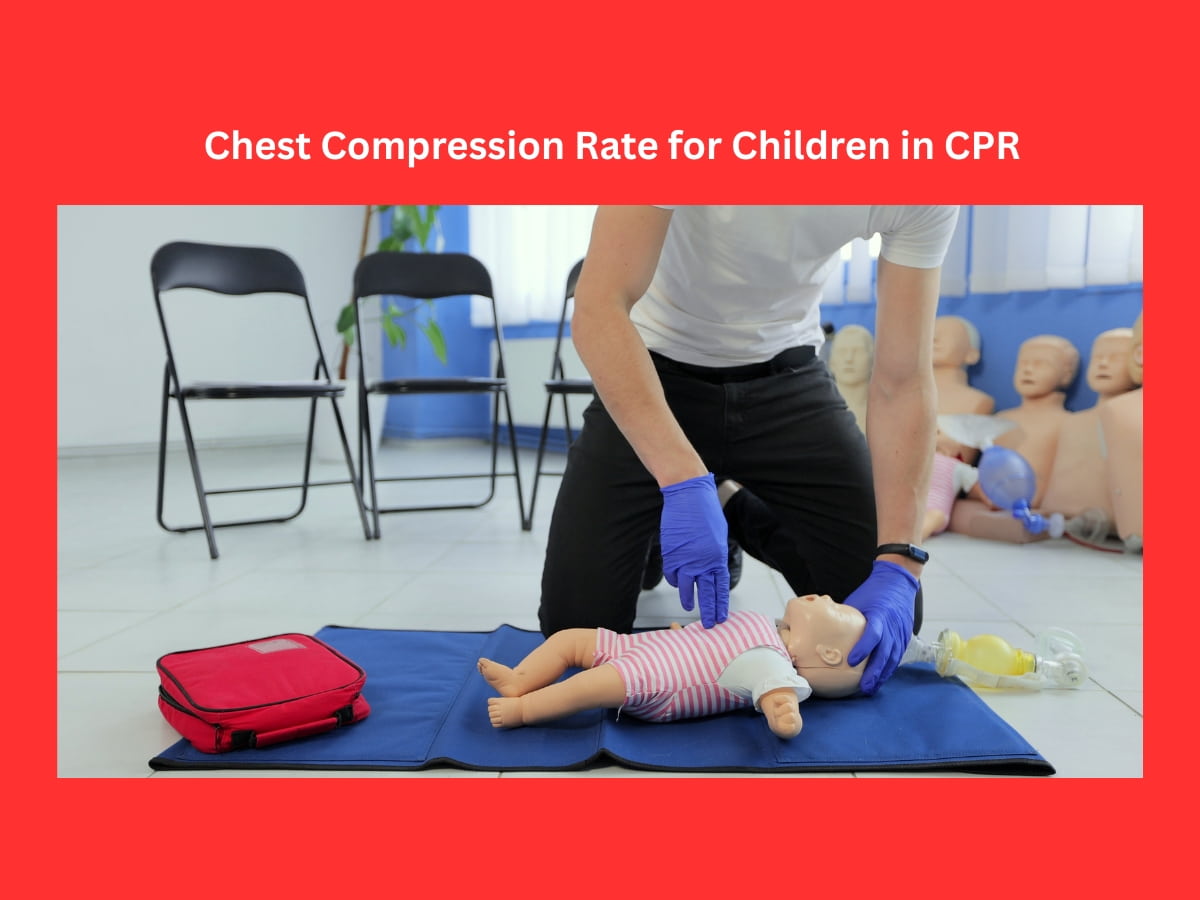
Cardiac arrest in children is a medical emergency that requires fast and effective action. One of the most important steps in saving a child’s life during such an event is performing chest compressions correctly. The quality of chest compressions, including their depth, rate, and consistency, plays a major role in whether the child survives and recovers well.
In this guide, we will explain what the target rate for chest compressions in children is, why it matters, how to perform it properly, and what other points rescuers need to remember. The information here is based on current guidelines from the American Heart Association (AHA) and other recognized medical bodies, but presented in simple words so it is easy to understand.
Why Chest Compressions Are Important in Children
When a child’s heart stops beating effectively, oxygen is no longer delivered to the brain and other organs. Chest compressions manually pump blood through the body and help keep oxygen flowing until advanced care arrives or the heart starts beating again.
Unlike adults, children often go into cardiac arrest because of breathing problems, choking, or trauma. That is why both rescue breaths and compressions are important. However, chest compressions remain the foundation of resuscitation, and the way they are done makes a huge difference in the outcome.
The Recommended Compression Rate for Children
The recommended target rate for chest compressions in children is 100 to 120 compressions per minute.
This rate is the same as for adults and older teenagers. Going slower than 100 compressions per minute may not create enough blood flow, while going faster than 120 can make compressions shallow and less effective. The correct range strikes the balance between speed and quality.
If you imagine a steady rhythm, it is about two compressions each second. Many people find it helpful to think of a simple beat or count in their head to stay within the right pace.
Compression Depth for Children
Rate and depth go together. Pushing at the right speed but not deep enough will not move blood effectively. For children, the recommended compression depth is:
- At least one third of the chest’s front-to-back size
- Usually about 2 inches (5 cm) in most children
For infants, the depth is also about one third of the chest, which is roughly 1.5 inches (4 cm).
This combination of rate and depth ensures that blood is circulated effectively while reducing the chance of injury.
Hand Placement During Chest Compressions
Proper hand placement is just as important as rate and depth. Here is how to position your hands:
Infants (under 1 year old):
Use two fingers in the center of the chest just below the nipple line if you are a single rescuer. If there are two rescuers, use the two-thumb encircling hands technique for more effective compressions.
Children (1 year to puberty):
Place the heel of one hand on the lower half of the breastbone. Depending on the size of the child and the rescuer, you may need to use both hands, one on top of the other, similar to adult CPR.
This hand placement allows you to deliver compressions with control and enough force without causing unnecessary harm.
Allowing Full Chest Recoil
Another key point that relates to compression rate is full chest recoil. After pushing down, you must allow the chest to return completely to its normal position before the next compression.
If the chest does not recoil fully, blood will not refill the heart properly. At higher rates, rescuers sometimes fail to allow full recoil because they are rushing. That is why keeping within the 100–120 compressions per minute range is so important—it helps balance speed and technique.
Coordinating Compressions With Rescue Breaths
For children, rescue breaths are usually more critical than in adults, because many pediatric arrests begin with breathing problems. If you need a complete overview of the process, learn what are the 7 steps of CPR for a child to understand how compressions, rescue breaths, and other CPR steps work together. The recommended ratio is:
- 30 compressions to 2 breaths if there is only one rescuer
- 15 compressions to 2 breaths if there are two trained rescuers
Even while giving breaths, the overall goal is to keep compressions going as much as possible and at the correct rate. Interruptions should be as short as possible.
Tips to Maintain the Correct Compression Rate
Keeping compressions between 100 and 120 per minute can be difficult in a stressful situation. Here are some helpful tips:
- Use a rhythm in your head – count steadily or think of a simple beat that matches the rate.
- Avoid rushing – pushing too fast usually leads to shallow compressions.
- Switch rescuers if tired – if more than one rescuer is available, change roles about every 2 minutes to maintain quality.
- Focus on both depth and rate – do not sacrifice one for the other.
- Practice during training – CPR practice with manikins helps build muscle memory for the right rate and depth.
Why the Correct Rate Matters
The target rate of 100–120 compressions per minute has been studied carefully. Research shows that:
- Slower rates lead to reduced blood flow to the brain and heart.
- Faster rates make it hard to compress deeply enough and reduce chest recoil.
- Correct rates increase the chance of survival and reduce the risk of brain damage.
This evidence is why current CPR guidelines emphasize this specific range.
Differences Between Children and Adults in CPR
While the target compression rate is the same for children and adults, there are some important differences:
- Cause of arrest: Adults usually collapse due to heart problems, while children often collapse from breathing issues.
- Compression-to-breath ratio: Two rescuers use 15:2 for children, compared to 30:2 for adults.
- Hand size and force: Rescuers need to adjust their technique to avoid using too much or too little force depending on the size of the child.
Understanding these differences helps rescuers apply the correct method for the patient’s age and size.
Training and Practice for Parents and Caregivers
Parents, teachers, and caregivers can benefit greatly from taking a certified CPR class. Knowing the correct compression rate and practicing it on a manikin makes it easier to act quickly and correctly in an emergency.
Organization, like the American Heart Association offer CPR training courses specifically designed for child and infant care. These courses cover not only the correct rate but also airway management, rescue breaths, and use of automated external defibrillators (AEDs).
The Role of AEDs in Pediatric Resuscitation
An AED can be life-saving when a child suffers sudden cardiac arrest. AEDs are designed to guide rescuers with simple voice instructions, and many models have pediatric pads or settings that adjust the energy level for smaller patients.
While chest compressions at the correct rate should start immediately, using an AED as soon as it becomes available can improve survival chances even further. For reference, see how a child is defined in terms of CPR/AED care to understand age-specific considerations and guidelines.
Common Mistakes to Avoid
Even trained rescuers can make mistakes during CPR. The most common errors related to compression rate include:
- Compressing too slowly – often due to fatigue or hesitation.
- Compressing too quickly – usually when rescuers are anxious and rush.
- Not compressing deep enough – especially when going too fast.
- Pausing too long for breaths or other tasks – reducing the overall number of compressions.
Being aware of these mistakes and focusing on proper technique helps maintain effective CPR.
Conclusion
The correct chest compression rate for children is 100 to 120 compressions per minute, with a depth of about one-third of the chest, roughly 2 inches for children and 1.5 inches for infants. Maintaining this rate helps circulate blood effectively while ensuring proper depth and chest recoil. When combined with correct hand placement, rescue breaths, and minimal interruptions, these steps give children the best chance of survival during cardiac arrest. Practicing these skills through certified CPR training is the most effective way for parents, caregivers, and healthcare professionals to be prepared for emergencies.
Same Day CPR offers AHA BLS, ACLS, PALS, CPR, and First Aid certification. Begin with the included online course, then join a short hands-on session. Complete your training and receive your official American Heart Association certification card immediately. Enroll today and take the first step toward being ready to save a child’s life.