



Sudden cardiac arrest during pregnancy is rare, occurring in about 1 in 30,000 pregnancies, but it is extremely serious. Both the mother and baby are at immediate risk, making rapid, coordinated intervention crucial. Pregnancy introduces unique physiological and anatomical changes that influence resuscitation, so healthcare providers must understand these differences to recognize, respond to, and manage arrest effectively. While the primary focus is on saving the mother, the presence of the fetus adds consideration. Resuscitation follows the same general principles as in non-pregnant patients, with a few adjustments to account for the changes of pregnancy.
Understanding Sudden Cardiac Arrest in Pregnancy
SCA occurs when the heart suddenly stops pumping blood effectively. In pregnancy, it can result from a variety of causes, including obstetric complications, cardiovascular conditions, and other medical emergencies. While the underlying mechanisms may be similar to those in the general population, pregnancy creates additional challenges for resuscitation. The enlarged uterus, increased blood volume, elevated heart rate, and reduced lung capacity can all influence the effectiveness of CPR and other interventions. Recognizing the cause quickly and tailoring treatment accordingly is critical for both maternal and fetal survival.
Causes of SCA in Pregnancy
Understanding the potential triggers of SCA during pregnancy helps clinicians anticipate complications and address reversible causes promptly. These can be grouped into three categories: obstetric, cardiovascular, and other medical causes.
1. Obstetric Causes
Pregnancy can sometimes put extra strain on the body and the heart. Certain conditions during pregnancy or childbirth can lead to SCA if not treated quickly.
- Hemorrhage: Severe bleeding during pregnancy or childbirth can quickly lower blood pressure and reduce blood flow to the heart. This sudden loss can trigger cardiopulmonary arrest if it is not treated right away.
- Hypertensive Disorders: High blood pressure during pregnancy can strain the heart and blood vessels. Conditions like preeclampsia can sometimes cause the heart to stop if complications are severe.
- Amniotic Fluid Embolism: Amniotic fluid can rarely enter the mother’s bloodstream and block blood flow to the lungs. This sudden event can cause the heart to stop and requires immediate medical action.
2. Cardiovascular Causes
Heart problems can sometimes appear or get worse during pregnancy. These conditions can suddenly affect the heart’s function and cause cardiac arrest if not managed quickly.
- Cardiomyopathy: Sometimes the heart muscle becomes weak during or after pregnancy, making it hard to pump blood. This can lead to sudden heart failure and cardiopulmonary arrest if not managed quickly.
- Acute Coronary Syndromes (ACS): Blockages in the heart’s blood vessels can happen even during pregnancy. These blockages can trigger a heart attack and sudden cardiac arrest if the blood flow is blocked completely.
- Valvular Heart Disease: Problems with the heart valves can make it harder for blood to move through the heart. Severe valve issues can overload the heart and sometimes cause it to stop suddenly.
3. Other Causes
Besides heart and pregnancy-related issues, other health problems can also trigger sudden cardiac arrest. Being aware of these risks helps doctors act fast and protect both mother and baby.
- Anesthesia Complications: Some medications used during labor or surgery can affect the heart or breathing. Rarely, these complications can cause the heart to stop suddenly.
- Pulmonary Embolism: A blood clot can travel to the lungs and block blood flow. This sudden blockage can put extreme strain on the heart and trigger cardiopulmonary arrest.
- Sepsis: A serious infection can make the blood pressure drop dangerously and affect the heart. If untreated, sepsis can lead to sudden heart failure.
Physiological Changes in Pregnancy Affecting Resuscitation
Pregnancy creates unique challenges for resuscitation, and understanding these changes is essential:
- Aortocaval Compression: After 20 weeks, the enlarged uterus can compress the inferior vena cava and aorta when the patient is lying on her back. This reduces venous return, cardiac output, and the effectiveness of chest compressions.
- Increased Oxygen Demand: Pregnant patients have higher metabolic demands and reduced lung capacity, making airway management and ventilation more critical.
- Elevated Heart Rate and Blood Volume: The natural increase in heart rate and blood volume may mask early signs of deterioration.
- Higher Aspiration Risk: Pregnancy increases the likelihood of regurgitation and aspiration, requiring careful airway management, including early intubation if needed.
These factors underline why standard resuscitation must be modified for pregnant patients.
Rapid Response and Modified ACLS Approach
The principles of Advanced Cardiovascular Life Support (ACLS) still apply, but certain modifications are essential to improve maternal and fetal outcomes:
- Maternal Survival is Priority: Saving the mother gives the fetus the best chance of survival. All interventions should focus first on effective maternal resuscitation.
- Early CPR and Defibrillation: Compressions should be initiated immediately, and defibrillation should not be delayed when indicated. AEDs are safe for use in pregnant patients.
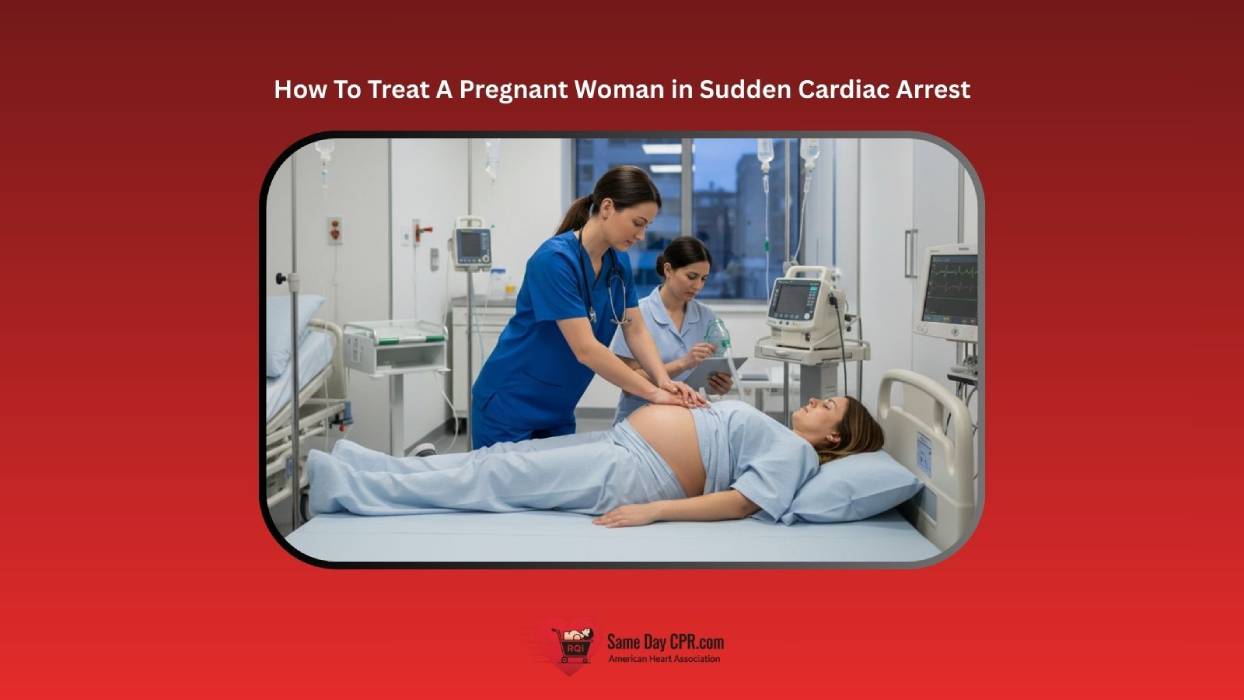
- Manual Left Uterine Displacement (LUD): To counteract aortocaval compression, manually displace the uterus to the left during CPR or tilt the patient 15–30° if feasible.
- Team Coordination: Rapid involvement of obstetrics, anesthesia, critical care, and neonatal teams ensures timely interventions like resuscitative cesarean delivery if needed.
- Identify Reversible Causes: Follow the standard “H’s and T’s” algorithm to address conditions such as hypoxia, hypovolemia, tension pneumothorax, and thromboembolism. Review the reversible causes of cardiac arrest (H’s and T’s) for a complete checklist to give the mother the best chance of recovery.
Step-by-Step Management of SCA in Pregnancy
When a pregnant woman experiences sudden cardiac arrest (SCA), quick action can save both her and the baby. Following the right steps ensures care is fast, safe, and effective.
Step 1: Ensure Safety and Activate the Emergency Response
Immediately confirm that the scene is safe. Call for emergency medical services (EMS) and alert the hospital code team. Early coordination with obstetric, anesthesia, and critical care teams is essential.
Step 2: Checking Responsiveness and Breathing Status
Check the patient’s responsiveness and pulse. If she is unresponsive or not breathing normally, initiate CPR without delay. Avoid laying the patient completely flat; use manual left uterine displacement or lateral tilt to maintain blood flow. Learn more about the components of a pulse check in an unresponsive victim to ensure you do it correctly.
Step 3: Perform Modified CPR
- Hand Placement: Center of the chest, lower half of the sternum, the same as standard adult CPR.
- Compression Rate and Depth: 100-120 compressions per minute, at least 5 cm (2 inches) deep.
- Left Uterine Displacement: Manually push the uterus to the left or tilt the patient 15–30° to reduce aortocaval compression.
- Airway Management: Pregnancy increases aspiration risk. Early intubation is recommended when available.
Step 4: Advanced Life Support Interventions
- Defibrillation: You are wondering whether you can use an AED on a pregnant woman. It is safe during pregnancy; do not delay if indicated.
- Medications: Administer according to standard ACLS protocols. Intravenous (IV) or intraosseous (IO) access should be placed above the diaphragm to optimize circulation.
- Reversible Causes: Rapidly identify and correct potential triggers using the H’s and T’s algorithm (hypoxia, hypovolemia, hypothermia, acidosis, tension pneumothorax, tamponade, toxins, thrombosis).
Step 5: Consider Emergency Cesarean Delivery
If maternal circulation is not restored after four minutes of CPR, prepare for an emergency cesarean (resuscitative hysterotomy). The goal is to deliver the baby within five minutes of arrest, which improves outcomes for both mother and child. Ensure roles are clearly assigned, and the procedure is performed swiftly.
Step 6: Post-Resuscitation Care
Once circulation returns:
- Stabilize maternal vital signs.
- Continuously monitor the fetus if viable.
- Transfer the mother to the ICU (Intensive Care Unit) for ongoing management.
- Document events thoroughly and debrief the team to identify areas for improvement.
Key Considerations for Cardiac Arrest in Pregnancy
These final points help guide your decisions once the immediate emergency is under control. They keep the team focused on what matters most for both the mother and the baby.
- Stage of Pregnancy: Gestational age influences resuscitation decisions and the feasibility of neonatal resuscitation.
- Team Communication: Clear roles and closed-loop communication enhance outcomes.
- Equipment and Environment: Ensure rapid access to obstetric, neonatal, and critical care resources.
- Psychosocial Support: Families and the healthcare team benefit from support and debriefing after these high-stress events.
Also, Read: Importance of Lifesaving Trio: CPR, AED, and First Aid Training
Essential Takeaways for Treating Maternal Cardiac Arrest
Managing sudden cardiac arrest in a pregnant patient calls for quick, well-coordinated care that accounts for the unique physiological changes of pregnancy. Providers must recognize the emergency immediately, start modified CPR with left uterine displacement, use defibrillation without delay, follow ACLS medication protocols, and address reversible causes as fast as possible. If circulation does not return, an emergency cesarean may be necessary, followed by careful stabilization and close monitoring. Although complex, pregnancy-specific resuscitation is highly rewarding, and focusing on the mother’s survival gives both her and the baby the best chance of a positive outcome.
If you want to learn life-saving skills, Same Day CPR makes it easy. We offer CPR, AED, First Aid, BLS, ACLS, and PALS courses that teach you what to do in real emergencies. Start with the online course included with your registration, then complete a short hands-on session at one of our 80+ self-guided cpr verification stations, and get your official American Heart Association certification card right away. The self-guided stations and realistic equipment help you feel confident and ready to act in an emergency. Check our locations to find one near you and start your training today.
FAQs
How common is sudden cardiac arrest during pregnancy?
Sudden cardiac arrest during pregnancy is rare, occurring in about 1 in 30,000 pregnancies, but it is extremely serious for both mother and baby.
Can you use an AED on a pregnant woman?
Yes. Defibrillation is safe during pregnancy, and you should not delay if indicated. AEDs can be used on pregnant patients without hesitation.
How does CPR differ in a pregnant patient?
CPR modifications include manual left uterine displacement (pushing the uterus to the left) or tilting the patient 15–30° to reduce aortocaval compression. Hand placement, compression rate (100-120/min), and depth (at least 2 inches) remain the same as standard adult CPR.
Is defibrillation safe during pregnancy?
Yes. Defibrillation should not be delayed when indicated. The shock does not significantly affect the fetus, and restoring maternal circulation is the priority.
What causes cardiac arrest in pregnant women?
Causes fall into three categories: obstetric (hemorrhage, hypertensive disorders, amniotic fluid embolism), cardiovascular (cardiomyopathy, acute coronary syndromes, valvular heart disease), and other causes (anesthesia complications, pulmonary embolism, sepsis).
Should you prioritize the mother or the baby during resuscitation?
Maternal survival is the priority. Saving the mother gives the fetus the best chance of survival. All interventions should focus first on effective maternal resuscitation.
What is the "5-minute rule" for emergency C-section during cardiac arrest?
If maternal circulation is not restored after four minutes of CPR, prepare for an emergency cesarean (resuscitative hysterotomy). The goal is to deliver the baby within five minutes of arrest to improve outcomes for both mother and child.
What are the main physiological changes in pregnancy that affect resuscitation?
Aortocaval compression (after 20 weeks), increased oxygen demand, elevated heart rate and blood volume (which may mask deterioration), and higher aspiration risk requiring early intubation.