

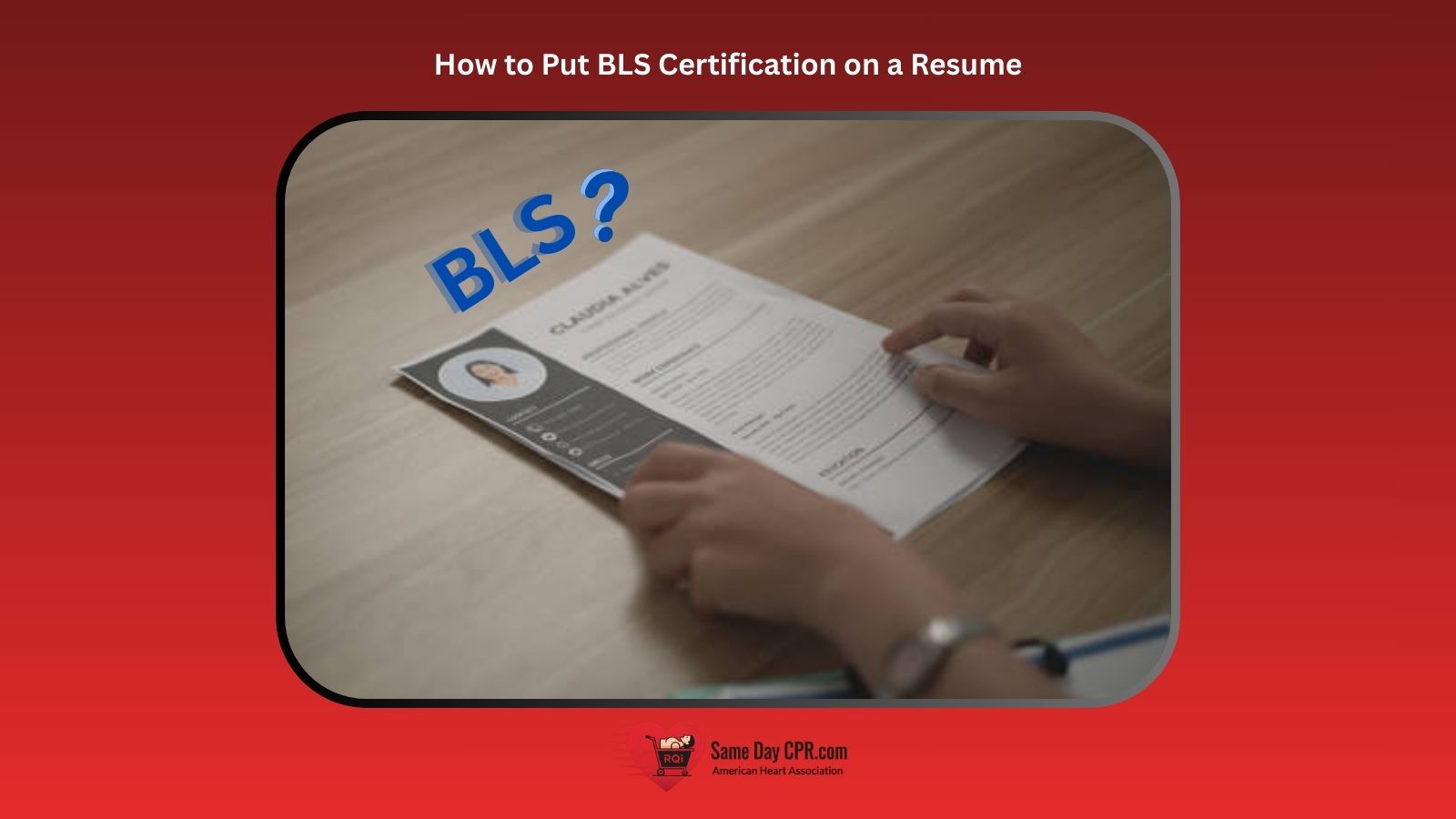
Including your BLS certification on a resume demonstrates that you can respond promptly and remain calm in emergencies. It indicates you’re trained in basic life support, CPR, and how to operate an automated external defibrillator, skills that many employers find valuable even outside healthcare roles. List it in a clear, concise line under a Certifications or Skills section, or as part of a brief bullet point list with the month and year earned. Use straightforward phrasing like: “BLS Certification, American Heart Association (AHA), issued MM/YYYY.” If space allows, add a brief note on its relevance, such as “Prepared to respond to medical emergencies and support patient care.” This approach keeps your resume tidy and easy to read while emphasizing your preparedness to assist in emergencies.
What is Basic Life Support (BLS) Certification
Basic Life Support (BLS) certification training teaches responders and medical staff how to care for individuals in critical need, including during heart attacks, blocked airways, and other cardiopulmonary emergencies in adults and children. The course covers essential techniques for pre-hospital and in-facility settings, such as single- and multiple-rescuer resuscitation, with a focus on teamwork. It also teaches how to recognize life-threatening situations like cardiac arrest and demonstrates the proper use of automated external defibrillators, effective ventilation, and high-quality chest compressions. Healthcare workers, including EMTs, paramedics, and nurses, can provide BLS outside a hospital. This certification is recommended for public safety personnel and medical professionals.
Why is BLS Certification Important
BLS certification teaches you how to act quickly and confidently in emergencies. It gives you practical skills to help others and stay calm when time matters.
- Increase Survival Rates: BLS training shows you how to act fast and correctly in an emergency. By knowing how to check a scene, give chest compressions, and use an AED, you can help keep a person alive until professional help arrives.
- Develop Confidence: Learning step by step builds your confidence. You know what to do, when to do it, and how to stay calm, which helps you stay focused during a real event.
- Promote Team Work: BLS teaches you to communicate well and follow a plan with others. Working smoothly with teammates makes the rescue easier and safer for everyone involved.
- Enhance Career Opportunities: Holding BLS training shows you care about safety and readiness. It can open doors or help you stand out when employers look for people who can handle emergencies.
- Differentiate Candidates: Having BLS certification sets you apart from others who do not. It shows a commitment to learning practical skills that save lives and support teamwork.
How to Earn BLS Certification
If you want to earn a BLS certification, start by picking a trusted provider and a course format that fits you, then finish the training and pass the assessments to receive your certification.
1. Choose a BLS Provider
- American Heart Association (AHA): Provides multiple course options, such as traditional in-person classes, blended learning (Heart Code BLS followed by a skills session), and access to course materials.
- American Red Cross (ARC): Offers both traditional in-person options and blended learning, merging online coursework with on-site skills sessions.
2. Select a Course Format
- In-Person Course: A conventional instructor-guided course in which you study the content, observe demonstrations, and practice skills all in one session.
- Blended Course (Hybrid): Blend self-paced online instruction for theoretical material with a mandatory in-person skills session to practice hands-on techniques under a certified instructor.
- Fully Online: Some providers offer fully online courses that cover the materials, but you will still need to complete a hands-on skills assessment, which may be in person or virtual with an instructor.
3. Complete the Training
- Study the Course Material: Learn essential BLS techniques, CPR, AED usage and managing breathing and cardiac emergencies for adults, children, and infants.
- Participate in Skill Sessions: You join hands-on practice sessions to learn chest compressions, rescue breaths, and other BLS skills with guidance from instructors. You stay engaged, ask questions, and repeat the skills until you can perform them smoothly.
4. Pass the Assessments
- Written Exam: You answer questions on BLS theory and steps, showing you understand the material clearly and accurately. You review each item carefully, then move on with confidence after checking your work.
- Hands-On Skill Assessment: You demonstrate chest compressions, rescue breaths, and use of an AED under supervision to prove your skills work. You perform smoothly and safely, listening to feedback and correcting any mistakes right away.
5. Receive Your Certifications
After you pass all parts, you receive your BLS certification card from the training organization. The card shows your name, the date, and a valid period so you can use it for BLS, CPR, and safety jobs.
Where to Include BLS Certification in Your Resume
If you’re in healthcare or any field where emergency response skills matter, a Basic Life Support (BLS) certification isn’t just another line on your resume; it can be the difference between landing an interview or getting passed over. But where exactly should you put it? That depends on your career stage, your industry, and how critical the certification is for the role. Here are the best places to highlight your BLS certification on your resume.
1. Certifications Section (Most Common)
The most straightforward way to showcase your BLS certification is by creating a dedicated Certifications or Licenses & Certifications section. This is where hiring managers naturally look for credentials.
For Example,
Certifications:
- Basic Life Support (BLS), American Heart Association – Expires June 2026
Note: If you also hold certifications like ACLS, PALS, or CPR, grouping them in this section makes your resume easy to scan.
2. Education Section (Best for Students & New Graduates)
If you’re early in your career and don’t have much work history yet, your education section is a smart place to include certifications. This shows employers you’re already prepared with essential qualifications.
For Example,
Education: Bachelor of Science in Nursing (BSN), University of XYZ
Certifications: BLS (AHA, valid through 2026)
3. Professional Summary or Headline (When It’s Required)
If the job listing specifically requires BLS, put it right at the top in your professional summary or headline. This way, recruiters see that you meet the requirement immediately.
For Example,
Registered Nurse (RN), BLS Certified, with 3+ years of ICU experience
4. Work Experience Section (When You’ve Used It on the Job)
Did you use your BLS skills regularly in your role? Then mention it under your work experience to show real-world application, not just a certificate on paper.
For Example,
Emergency Department Nurse, XYZ Hospital
- Applied BLS protocols during patient resuscitation and stabilization
Pro Tips for Listing BLS on Your Resume
- Always Include the Issuer (E.g., American Heart Association, Red Cross).
- Add Expiration Dates: Employers want proof that your certification is current.
- Be Consistent: If you list one certification, format all others the same way.
Common Mistakes to Avoid When Including BLS on Your Resume
Adding BLS certification to your resume can boost your chances, but only if it’s done right. Let’s look at some easy mistakes to avoid so your skills shine.
1. Being Vague
Simply writing “BLS certified” doesn’t give employers the full picture. Share a little more, like when you earned it or if you have hands-on experience. Clear details make your resume stronger and show you know what you’re talking about.
2. Listing Expired Certifications
Including a certification that has expired can hurt your credibility. Make sure the date is current, and if it’s close to expiring, consider renewing it first. Employers want to see skills that are ready to use today.
3. Omitting Key Details
Don’t leave out important information like the organization that issued your BLS certificate or the level of training. These details show authenticity and help hiring managers understand your qualifications at a glance.
4. Over-Emphasizing
BLS is important, but it’s usually one part of your skill set. Highlight it, but don’t make it the focus if your role requires a broader range of abilities. Balance makes your resume read naturally.
5. Poor Placement
Where you put BLS on your resume matters. Placing it in the right section, such as Certifications or Skills, ensures it catches the eye without cluttering your experience. A clean layout helps employers find what matters quickly.
Final Thoughts on Effectively Showcasing BLS Certification
Including your BLS certification on your resume shows you’re ready to step in and help during emergencies. It demonstrates hands-on skills in CPR, AED use, and basic life support, qualifications that many employers highly value. Listing your certification clearly with the issuing organization and expiration date highlights your expertise, credibility, and preparedness. It’s a small detail that can make a big difference, showing you care about safety, teamwork, and being ready when it matters most.
Get certified with Same Day CPR in ACLS, BLS, PALS, CPR, and First Aid. Complete the online course, join a brief 30-minute hands-on session, and receive your official American Heart Association certification card immediately. With 60+ convenient locations, it’s never been easier to gain lifesaving skills.