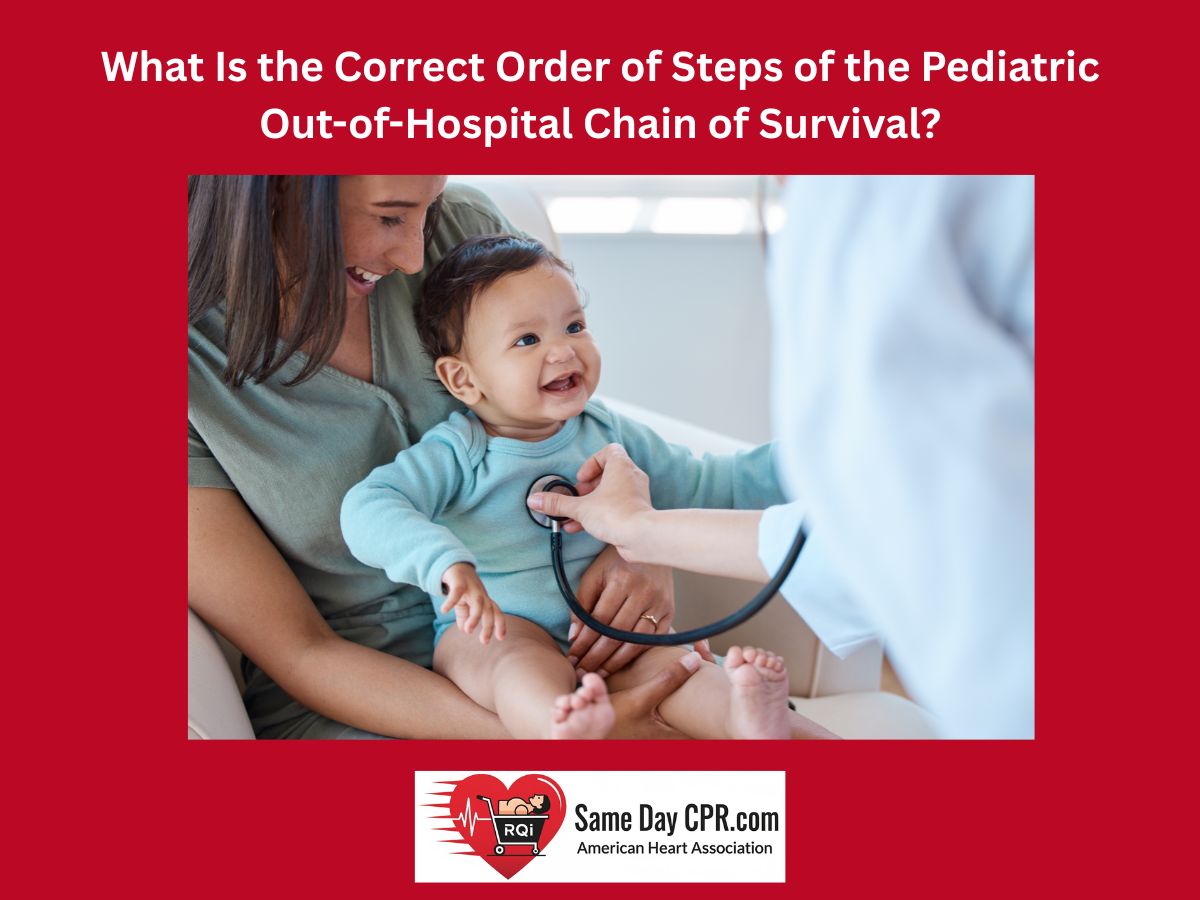
When a child suffers from a sudden cardiac arrest outside of a hospital, every second matters. The pediatric out-of-hospital chain of survival is a set of steps designed to give the child the best chance of survival and recovery. Understanding the correct order of these steps is important for parents, caregivers, teachers, coaches, and anyone who may need to respond in an emergency.
The Correct Order of the Pediatric Out-of-Hospital Chain of Survival
The American Heart Association (AHA) has outlined a clear sequence of actions for pediatric emergencies that occur outside of a hospital. The correct order is:
1. Prevention and Safety
- The first link focuses on preventing cardiac arrest in the first place.
- For children, this means supervising play, using car seats and seat belts properly, teaching water safety, avoiding choking hazards, and managing medical conditions such as asthma or congenital heart disease.
- Prevention saves lives by reducing the chance of emergencies before they happen.
2. Early High-Quality CPR
- If a child collapses or becomes unresponsive, begin cardiopulmonary resuscitation (CPR) immediately.
- High-quality CPR includes pushing hard and fast in the center of the chest at a rate of 100–120 compressions per minute, allowing the chest to fully recoil, and giving rescue breaths if trained.
- Early CPR keeps oxygen flowing to the brain and vital organs until professional
3. Activation of the Emergency Response System (Call 911 or Local EMS)
- As soon as possible, activate the emergency system. In many cases, this means calling 911 or the local emergency number.
- If two people are present, one should start CPR while the other calls for help and retrieves an automated external defibrillator (AED).
- Rapid activation ensures trained responders are on the way quickly.
4. Early Advanced Care by EMS
- When emergency medical services arrive, trained professionals provide advanced interventions.
- This includes airway management, IV medications, and advanced monitoring.
- Their goal is to stabilize the child and prepare for safe transport to the hospital.
5. Post-Cardiac Arrest Care at the Hospital
- The final step focuses on specialized treatment in the hospital to support recovery.
- This care may involve intensive monitoring, ventilators, medications, and sometimes procedures to correct underlying problems.
- Good post-arrest care improves survival and long-term neurological outcomes.
Why the Order Matters
Each step in the pediatric chain of survival builds on the one before it. If any link is weak or delayed, the child’s chance of survival decreases. For example, CPR without calling emergency services may not be enough, and calling for help without starting CPR wastes critical minutes. Following the chain in the correct order ensures that the child receives the right help at the right time.
Key Takeaways
-The pediatric out-of-hospital chain of survival has five steps:
- Prevention and safety
- Early high-quality CPR
- Activation of the emergency response system
- Early advanced care by EMS
- Post-cardiac arrest care at the hospital
-The correct order is important because it gives children the best chance of survival.
-Parents, caregivers, and community members should learn CPR and know how to activate emergency services.
Conclusion
The pediatric out-of-hospital chain of survival is more than just a medical guideline; it is a lifesaving pathway. By knowing the correct order of steps and acting quickly, you can make the difference between life and death for a child in need. Understanding how a child is defined in terms of CPR/AED care is essential, as it guides the appropriate actions for prevention, immediate CPR, rapid activation of help, advanced EMS care, and hospital treatment, together forming the strongest chance of survival.