When someone becomes unresponsive, one of the first steps in an emergency is checking their pulse. This quick action helps determine if their heart is still beating and guides what you need to do next. A pulse check isn’t just about feeling for a beat; it’s about knowing where to check, how long to check, and what to look for. By using the right spot and paying attention for a few seconds, you can decide whether to start CPR or continue with other life-saving care. It’s a simple step, but it plays a crucial role in giving someone their best chance at survival.
This guide will walk you through the main parts of doing a proper pulse check, helping you assess the situation accurately and respond immediately.
When and Why a Pulse Check Is Necessary in Emergencies?
A pulse check is performed when someone is unresponsive and not breathing normally or displaying unusual breathing patterns. In these moments, it’s crucial to determine if the heart is still beating or if the person might be in cardiac arrest. This step helps decide what action to take next, whether initiating CPR immediately or looking for another medical issue. Both healthcare providers and trained bystanders use a pulse check to make urgent decisions. If no pulse is detected, start CPR right away. The check should be brief, no longer than 10 seconds, so lifesaving care can begin as soon as possible.
The Importance of a Pulse Check in an Unresponsive Victim
A pulse check lets you know if the heart is still moving blood through the body, which is vital for keeping the brain and other organs alive. If no pulse is found, it means the heart has stopped, and CPR must begin right away to keep blood flowing and lower the risk of brain injury or organ failure. Without CPR, the person’s chance of survival drops quickly.
If you do find a pulse but notice the person isn’t breathing, rescue breaths are needed to supply oxygen and prevent suffocation. In both cases, what you do in those first moments makes a huge difference. Knowing how to check a pulse the right way helps you act fast and avoid mistakes, guiding you to the right response, whether it’s chest compressions or rescue breaths, and greatly improving the person’s chance of survival.
Key Components of a Pulse Check in an Unresponsive Victim
When someone is unresponsive, knowing how to check for a pulse can make all the difference. It helps you quickly figure out if the heart is still beating and guides your next steps. Here are the key components of a pulse check in an unresponsive victim:
1. Finding the Appropriate Pulse Location Depending on the Victim’s Age
-
Carotid Pulse (Adults/Children):
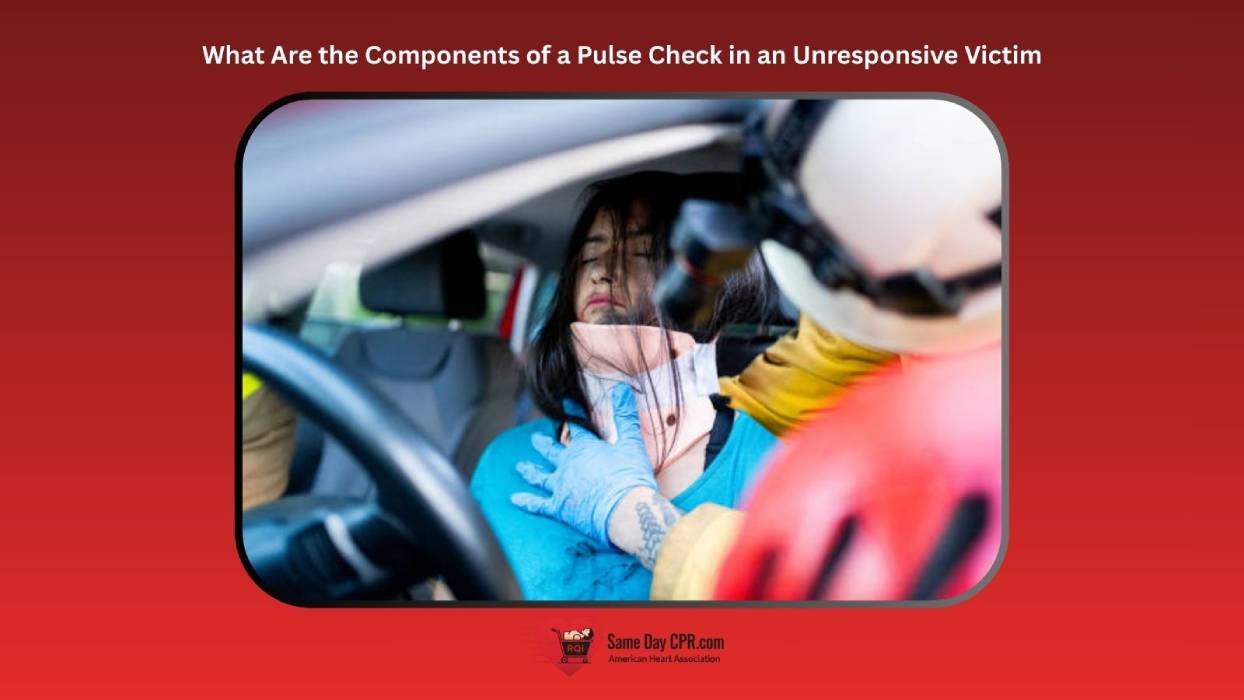
To assess the carotid pulse in an adult or child older than one year, lightly place your index and middle fingers in the groove between the trachea and the sternocleidomastoid muscle on the side of the neck. Apply gentle pressure until you detect the pulse, then take a moment to count the beats. This quick check helps you determine whether the heart is functioning properly and if urgent care is needed. Be careful to remain gentle and steady while feeling the pulse.
-
Brachial Pulse (Infants):
For infants under one year, gently place two or three fingers on the inner part of the upper arm, about halfway between the shoulder and elbow, to locate the brachial pulse. Feeling this pulse allows you to assess the baby’s heart rate. Apply light pressure and take your time, being gentle and careful throughout the check. See pulse check method for infants for more details.
2. Placing Your Hands and Fingers Correctly to Feel for a Pulse
Use correct hand placement by feeling for the pulse with your index and middle fingers. Avoid using your thumb, as it has its own pulse that can confuse. Gently position your fingers over the pulse site and wait until you detect a steady, rhythmic beat.
3. Applying Just Enough Pressure Without Blocking Circulation
Apply firm yet gentle pressure, pressing too hard can obstruct the pulse, while too light a touch may make it difficult to feel. If the pulse isn’t immediately detectable, slightly adjust your finger placement, but don’t spend too much time searching.
4. Limiting the Check to No More Than 10 Seconds
Check for a pulse for no longer than 10 seconds. If you’re uncertain or don’t detect a pulse within that time, assume the patient has no pulse and begin CPR right away.
5. Evaluating the Pulse for Strength, Rhythm, and Rate
A strong, steady pulse indicates that the heart is functioning effectively. A weak, slow, or irregular pulse could signal a serious issue, and the person still requires medical attention. If the patient has a pulse but isn’t breathing, start rescue breaths, one every 5–6 seconds for adults, or every 3–5 seconds for children and infants.
Common Mistakes During Pulse Checks in an Unresponsive Victim
Checking a pulse on someone unresponsive can feel tricky, and small mistakes happen easily. Knowing the common pitfalls helps you act quickly and confidently.
1. Spending Too Much Time Searching for a Pulse
When someone is unresponsive, every second matters. Spending too long trying to find a pulse can waste precious time. If you cannot feel a pulse quickly, it’s better to start CPR right away rather than waiting and guessing.
2. Pressing Either Too Firmly or Too Lightly
Pressing too hard can hurt the person, and pressing too softly can make it hard to feel a pulse. Use gentle, steady pressure with your fingertips so you can detect the heartbeat without causing harm.
3. Using the Thumb Instead of the Fingertips
Your thumb has its own pulse, which can confuse you when checking someone else. Always use your index and middle fingers to feel for a pulse, keeping your assessment accurate and reliable.
4. Hesitating or Failing to Act When Unsure
It’s normal to feel unsure, but hesitation can cost lives. If you are not certain about a pulse, start CPR immediately. Acting quickly is always safer than waiting and risking delay.
Next Steps After a Pulse Check: Deciding Between CPR and Rescue Breathing
After checking for a pulse, your next steps depend on what you find. How you respond can make a big difference. Here’s what to do depending on the results.
1. No pulse detected → Begin chest compressions immediately
If you don’t feel a pulse, the person is in cardiac arrest. Start CPR immediately to keep blood moving to the vital organs, and either call 911 yourself or have someone else do it.
2. Pulse present but no breathing → Provide rescue breaths
If the person has a pulse but isn’t breathing normally, give rescue breaths to supply oxygen. Keep checking their pulse and breathing while you continue providing care.
3. Pulse and breathing present → Position the victim in recovery
If the person is breathing normally and has a pulse, put them in the recovery position to keep their airway clear and prevent choking. Stay close and keep watching their condition until help arrives.
Why CPR & BLS Training Is Vital for Accurate Pulse Checks
In summary, CPR and BLS training are essential; they teach you how to check a pulse quickly and correctly when someone is unresponsive. Knowing the right technique can make the difference between helping someone in time and missing critical signs. During training, you’ll learn how to feel for a heartbeat, recognize when it’s absent, and respond confidently without hesitation. Hands-on practice builds your skills and reduces panic in real emergencies. Being trained gives you the knowledge and calm to act fast, making your help more effective and potentially saving a life.
Same Day CPR provides comprehensive, easy-to-follow AHA Gold Standard certification courses in ACLS, BLS, PALS, CPR, and First Aid. Start with the included online course, then attend a brief 30-minute hands-on session at any of our 60+ convenient locations. Complete your training and receive your official American Heart Association certification card immediately. Sign up today and gain the skills to respond confidently and save lives.