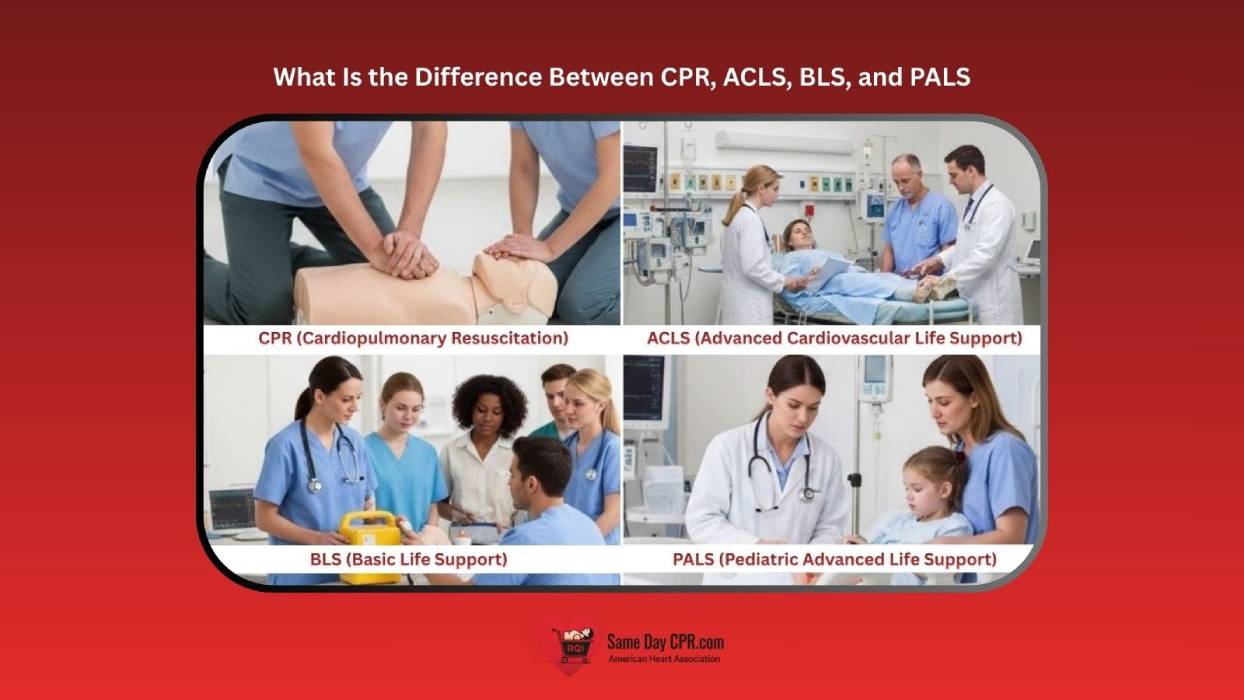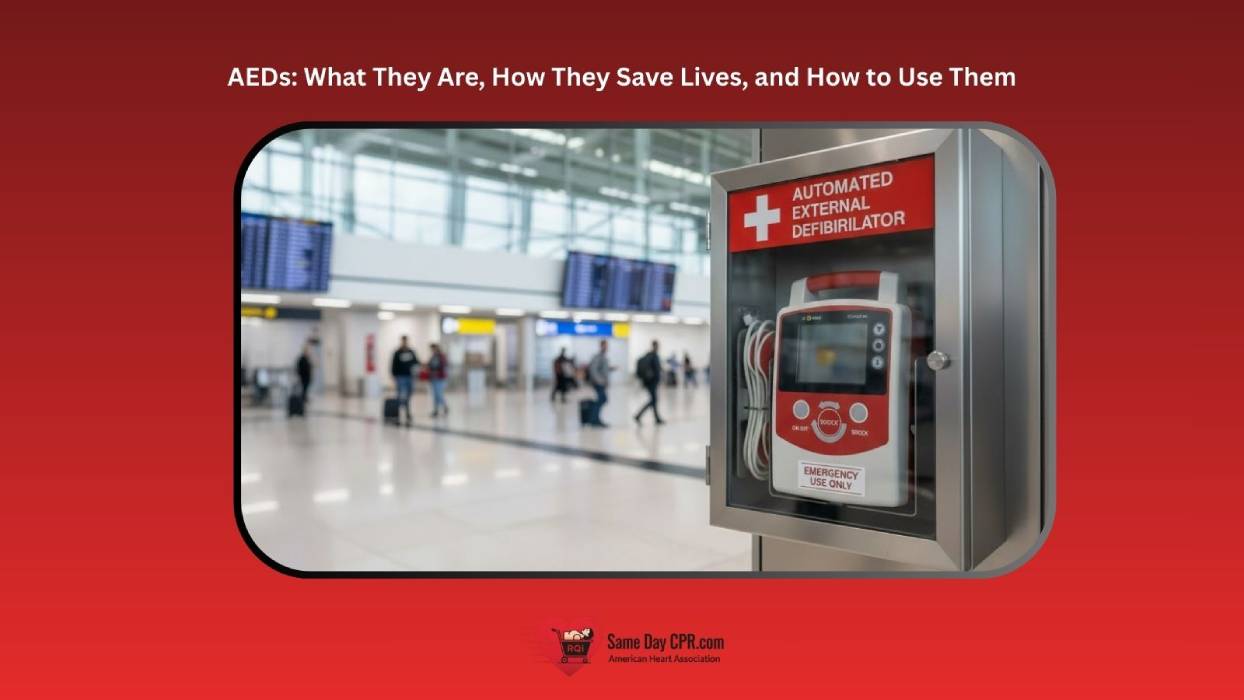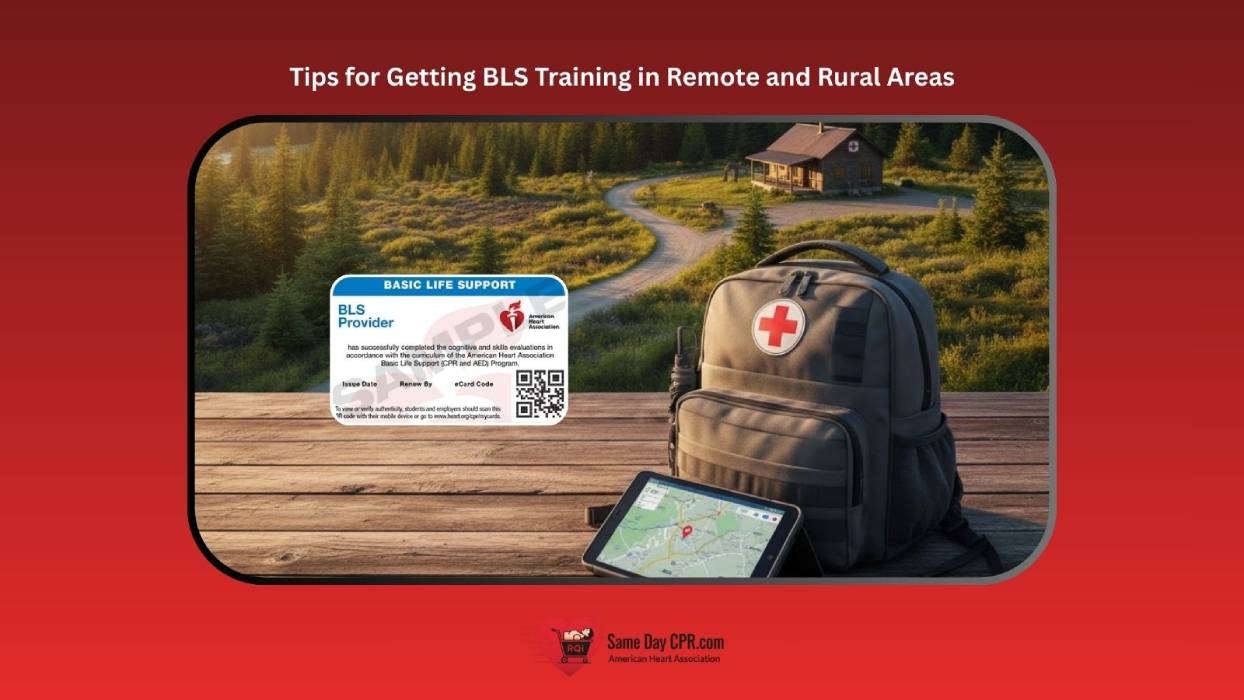
Basic Life Support (BLS) training gives individuals the essential skills to respond to cardiac arrests, choking incidents, and other medical emergencies. Knowing how to perform CPR (Cardiopulmonary Resuscitation), use an AED (Automated External Defibrillator), and assist in life-threatening situations can save lives. People living in remote or rural areas often face challenges accessing BLS training. Limited training centers, long travel distances, and scheduling constraints frequently make it harder for residents to get certified or keep their skills up-to-date. The good news? Lifesaving skills aren’t limited by location. With the right resources, planning, and creativity, anyone—no matter where they live—can gain the knowledge and confidence needed to save a life. If you’re curious about which training fits your needs, check out our guide on the differences between CPR, ACLS, BLS, and PALS to better understand each certification and its applications.
Understanding BLS Training Options
The Basic Life Support (BLS) training comes in two main formats: in-person courses and online or blended learning, the latter combining online and in-person components.
1. In-Person Courses
Traditional classroom-based BLS courses remain the gold standard. These sessions let you practice hands-on with manikins, AEDs, and receive real-time feedback from certified instructors. In-person courses typically last a few hours and require passing both written and practical skills tests. While highly effective, the main challenge for rural learners lies in finding a nearby training center.
2. Online or Blended Learning
Online or blended courses offer flexibility for remote learners. You can complete the theoretical components—like CPR techniques, emergency response protocols, and safety procedures—online at your own pace. Afterward, a short in-person session with a certified instructor ensures hands-on competency. This hybrid approach reduces travel time while maintaining practical skills.
Understanding these options helps make lifesaving skills accessible, even in areas where traditional training centers are lacking.
Finding BLS Training in Remote Areas
Accessing BLS training in remote or rural areas can seem challenging, but with a few strategies, you can get certified. Here’s how to start:
1. Check Local Healthcare Facilities
Hospitals, clinics, and EMS stations often host BLS courses for healthcare professionals and community members. Even if schedules are limited, reaching out directly helps you find upcoming classes or add your name to a waiting list.
2. Contact Regional Training Centers
Some regional centers or larger hospitals offer outreach programs to rural communities. These centers sometimes send instructors to local facilities or organize weekend training sessions to accommodate remote learners. Call or email to ask about options; they may provide solutions you haven’t considered.
3. Look for Online BLS Courses
Accredited online courses deliver the theory portion virtually, making them ideal for those far from a training center. After completing the online modules, you can often schedule a brief local skills session with a certified instructor to fulfill the hands-on requirement. Make sure any online program you choose is recognized by organizations like the American Heart Association (AHA) or your country’s equivalent.
Leveraging Technology and Remote Learning
Technology makes it easier than ever for learners in remote or rural areas to access BLS training. Here’s how technology can help:
1. Online Video Demonstrations and Tutorials
Many accredited programs offer high-quality video lessons that demonstrate CPR techniques, AED use, and other lifesaving skills. These videos allow learners to study at their own pace and review techniques as needed.
2. Virtual Skill Check-Ins with Instructors
Some blended courses include live virtual sessions with certified instructors. During these sessions, instructors observe your technique, provide real-time feedback, and ensure you meet competency requirements.
3. Mobile Apps and Online Quizzes
Several apps and online platforms deliver refresher modules, practice quizzes, and interactive simulations. These tools help you maintain knowledge between formal training sessions and stay updated with the latest BLS guidelines.
By leveraging technology, learners in rural areas can complete theory components online, practice skills independently, and still meet certification requirements—making lifesaving training far more accessible.
Community and Group Training Opportunities
For people in remote or rural areas, community-based initiatives provide an excellent way to access BLS training:
1. Organize Small Group Sessions
Gather neighbors, coworkers, or friends and schedule a BLS training session. Many certified instructors travel to rural locations if a group is organized in advance, reducing individual travel burdens.
2. Partner with Local Organizations
Schools, fire departments, community centers, and local clinics often support BLS training initiatives. Partnering with these organizations helps secure venues, equipment, or even subsidized training costs.
3. Empower Local BLS Champions
Encourage community members who already hold BLS certification to act as trainers or coordinators for recurring sessions. These local champions maintain skills within the community and onboard new learners, creating a sustainable training cycle.
Community and group training initiatives ensure that lifesaving skills spread widely, making remote areas safer and better prepared for emergencies.
Tips for Overcoming Distance and Travel Barriers
Living in a remote or rural area doesn’t have to stop you from getting BLS training. With careful planning and a few practical strategies, you can overcome travel challenges and access certification opportunities:
1. Plan Ahead
Schedule your BLS certification or recertification well in advance. Knowing the dates and locations of available courses helps you coordinate travel, accommodations, and time off efficiently.
2. Combine Trips
If travel is unavoidable, combine your BLS training trip with other appointments or outings in the area. This makes the journey more worthwhile and reduces overall travel burdens.
3. Seek Scholarships or Sponsored Programs
Some hospitals, EMS services, or community organizations offer scholarships, discounts, or sponsored programs for rural learners. Contact local healthcare providers to see if any funding or support is available.
4. Use Online Components When Possible
Take advantage of online theory modules to cut down on travel time. Completing the bulk of the coursework virtually means you only need to attend the in-person skills session.
By following these steps, remote learners can minimize barriers and gain the lifesaving skills they need without excessive travel or cost.
Maintaining Skills Between Trainings
Getting certified in BLS is only the first step—maintaining your skills matters just as much, especially if you live in a remote or rural area where frequent training can be difficult:
1. Practice with Manikins if Available
If you have access to a CPR manikin, even occasional practice reinforces proper hand placement, compression depth, and timing. Some community centers or fire departments lend manikins for practice.
2. Watch Refresher Videos
Online video tutorials and official AHA or local health organization resources demonstrate step-by-step techniques. Watching these regularly keeps your skills fresh.
3. Participate in Peer Practice Sessions
Practice with family, friends, or co-workers. Even simple drills, like chest compressions and recovery position simulations, boost confidence and readiness.
4. Stay Updated on Guidelines
BLS guidelines change periodically. Subscribe to newsletters from recognized organizations or check their websites to keep your knowledge current.
Regular practice and staying informed ensure your skills remain sharp, so you can respond confidently in an emergency—no matter where you live.
Bringing BLS Training Within Reach
In short, no matter where you live, you can gain and maintain strong BLS skills with the right approach. Remote and rural learners can rely on online courses, community sessions, and local champions to make training easier to access. Planning, combining travel, and using technology help reduce distance-related challenges. By practicing often, staying current with guidelines, and supporting one another, anyone can feel confident stepping in during an emergency.
If you’re looking for trusted, hands-on training, Same Day CPR offers CPR, AED, First Aid, BLS, ACLS, and PALS certification. Our team focuses on real-life applications so students feel ready the moment help is needed, with locations across Delaware, the District of Columbia, Georgia, Maryland, Missouri, New Jersey, New York, North Carolina, Pennsylvania, South Carolina, Texas, and Virginia. Lifesaving knowledge remains within reach—wherever you are.