When someone collapses from sudden cardiac arrest (SCA), every minute is crucial: the brain starts to suffer irreversible damage, and survival drops 7-10% for each minute without help. In these critical moments, an automated external defibrillator (AED) can mean the difference between life and death.
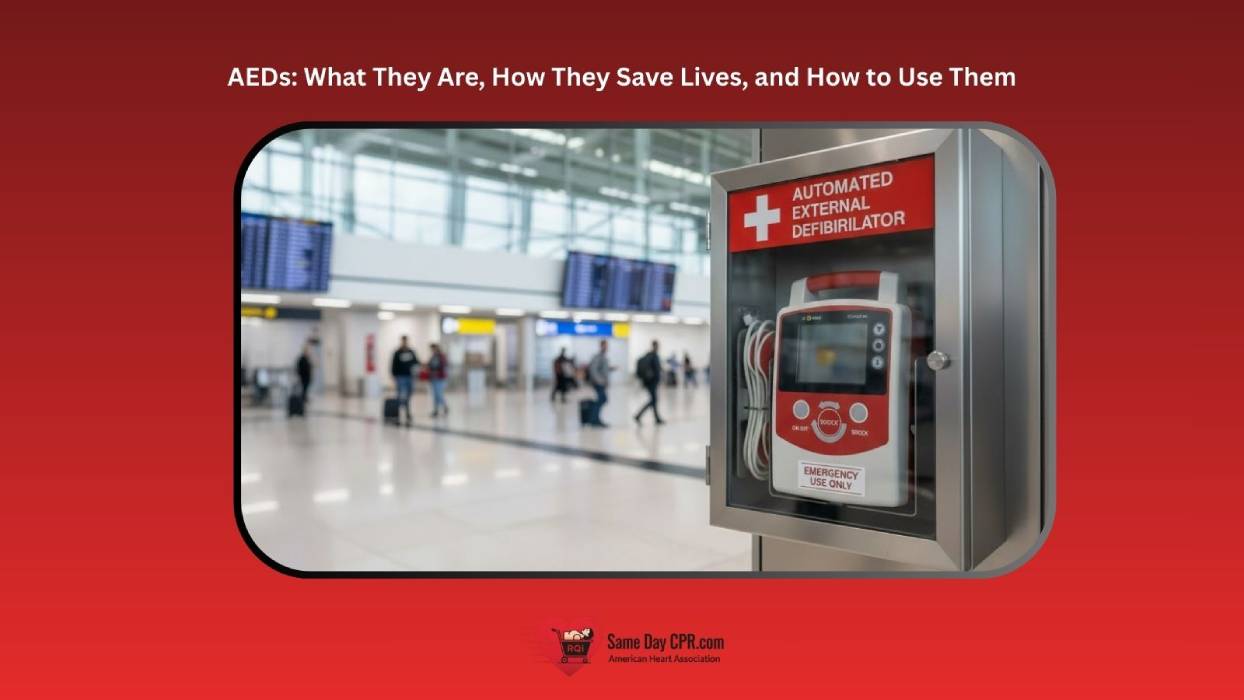
An AED is a portable, user-friendly device that analyzes a person’s heart rhythm and delivers a shock if needed to restore a normal heartbeat. It’s designed for everyday people, not just doctors or paramedics, so you’ll find them in airports, gyms, schools, offices, and even some public parks.
Despite their accessibility, many hesitate to use an AED, worried they might shock someone by accident, aren’t allowed to use one, or could face legal trouble. None of these fears is true. In this guide, you’ll learn what an AED is, how it saves lives, when and how to use it, and special considerations for using an AED safely that will help you act confidently in an emergency. By the end, you’ll see how simple and powerful these devices are, and why knowing how to use one can truly save a life.
Key Reasons Why an AED Is Important
An AED can make a big difference in an emergency by giving quick help when someone’s heart stops. It’s easy to use and can save lives by restoring a normal heartbeat quickly.
- Increases Survival Rates: Applying an AED within the first 3 to 5 minutes of cardiac arrest can boost survival chances to 50-70%. For every minute without defibrillation, the likelihood of survival drops by 7-10%.
- Provide Immediate Assistance: AEDs are lightweight and simple to operate, even for people without medical experience. This allows anyone nearby to begin treatment right away, closing the crucial gap before EMS (Emergency Medical Services) arrive.
- Restore Heart Rhythm: An AED checks the heart’s rhythm and delivers a shock only if it detects a dangerous pattern, such as ventricular fibrillation. It won’t shock unnecessarily, making it safe for anyone to use.
- Simple and User-friendly: An AED is made for everyone, offering clear voice, visual, and text instructions to guide users through each step.
- Saves Lives: When used with cardiopulmonary resuscitation (CPR), an AED can greatly improve a person’s chance of survival. CPR alone may not restart the heart, but adding an AED can double or even triple the odds of living.
How an AED Works
An AED may look like a high-tech gadget, but it’s designed to be simple enough for anyone to use in an emergency. Its main job is to analyze a person’s heart rhythm and deliver a shock if needed to restore a normal heartbeat. Let’s break down how it actually works.
1. Built-In Computer Analyzes Heart Rhythms
Inside every AED is a tiny but powerful computer that constantly monitors the electrical signals of the heart. When you attach the pads to a person’s chest, the device can detect dangerous rhythms like ventricular fibrillation (VF) or ventricular tachycardia (VT). It then decides whether a shock is necessary.
2. Voice and Visual Prompts That Guide the User
- One of the most reassuring features of an AED is its step-by-step guidance. Most devices use:
- Voice prompts that tell you exactly what to do: “Attach pads,” “Stand clear,” “Shock advised.”
- Visual cues or diagrams on the device and pads showing the correct placement.
- This means that even someone with no medical training can confidently operate it.
3. Safety Features That Prevent Accidental Shocks
AEDs are built with multiple safety mechanisms:
- They will not deliver a shock unless it is needed.
- They can detect if someone is touching the patient and pause the shock.
- Some devices automatically adjust the shock energy for adults versus children.
- These safeguards make the device safe for bystanders to use.
4. Role of Pads, Electrodes, and the Device’s Internal Algorithms
The sticky pads you place on the chest do more than just transmit electricity. They do the following:
- Sense the heart’s rhythm.
- Transmit signals to the AED’s computer.
- Deliver the shock safely.
- The device’s internal algorithm interprets this data in real time, deciding whether a shock is necessary and exactly when it should be delivered.
When Should You Use an AED
Knowing when to use an AED is just as important as knowing how. Acting quickly can be the difference between life and death during sudden cardiac arrest (SCA).
1. Signs of Sudden Cardiac Arrest
You should consider using an AED if someone suddenly:
- Collapses and becomes unresponsive.
- Stops breathing or is breathing abnormally (gasping or irregular).
- Has no detectable pulse (if trained to check).
Remember, SCA can happen without warning, and the person may look completely healthy moments before collapsing.
2. When to Call 911 or Activate Emergency Response
Before or while using an AED:
- Call 911 immediately or activate your local emergency response system.
- If possible, send someone to retrieve an AED while you begin CPR.
- The faster professional help arrives, the higher the person’s chances of survival.
3. Why CPR and AED: The Most Effective Lifesaving Combo
- CPR alone helps keep blood flowing to the brain and vital organs.
- AED use addresses the underlying problem, an abnormal heart rhythm, by delivering a shock to restore a normal heartbeat.
- Combining CPR with early AED use dramatically increases survival rates, especially in the first few critical minutes. Understanding what is recommended to minimize interruptions in compressions when using an AED can help ensure continuous, effective CPR while the device is in use.
Special Considerations Before Using an AED
Every situation is a little different, so it helps to know what to look for before using an AED. These quick reminders keep you focused and ready to respond with confidence.
- Children: Use pediatric pads or child settings if available.
- Hairy Chest: Quickly shave or press pads firmly; some AEDs come with razors.
- Pacemakers or Medication Patches: Avoid placing pads directly over these; place pads at least 1 inch away.
- Water: Quickly dry the chest if wet; do not use an AED in standing water.
- Flammable Materials: Move away from fuel, oxygen, or flammable gases.
Do Not Resuscitate (DNR) Orders: Respect legally documented DNR orders if present.
Step-by-Step: How to Use an AED
Using an AED may sound tough, but these devices are designed to guide you every step of the way. Follow these steps calmly and confidently; you can save a life.
Step1: Ensure Scene Safety: Make sure the area is safe for both you and the patient (no traffic, water, or hazards nearby).
Step 2: Check Responsiveness and Breathing: Tap the person and shout. If they are unresponsive and not breathing normally, proceed.
Step 3: Start CPR While Retrieving the AED: If someone else can get the AED, continue chest compressions until it arrives.
Step 4 Turn on the AED: Most devices have a clear “On” button. Voice prompts will guide you.
Step 5: Expose the Chest and Apply Pads: Remove clothing and place the pads exactly as shown on the diagrams (one on the upper right chest, the other in the lower left side).
Step 6: Follow the Prompts: The AED will automatically analyze the heart rhythm.
Step 7: Stand Clear During Analysis: Make sure no one is touching the patient while the AED checks the heart rhythm. Understanding when you should clear the victim while operating the AED ensures everyone stays safe during this critical step.
Step 8: Deliver Shock if Advised: Only press the button if it instructs you (for semi-automatic AEDs). Fully automatic AEDs will deliver the shock on their own.
Step 9: Resume CPR: After the shock, or if no shock is advised, continue CPR until emergency personnel arrive or the person regains normal breathing and responsiveness.
Different Types of AEDs
Not all AEDs are exactly the same. While they all perform the same lifesaving task, analyzing the heart and delivering a shock when necessary, different models are built for various users and situations. Knowing the types of AEDs can help you feel more confident in recognizing and using one.
1. Fully Automatic AEDs
- The shock is automatically delivered without requiring the user to press a button.
- Ideal for bystanders with minimal training, as the device does almost everything itself.
- Provides voice and visual instructions throughout the process.
2. Semi-Automatic AEDs
- Guides the user step-by-step with voice and visual prompts.
- Requires the rescuer to press a button to deliver the shock after the device analyzes the heart rhythm.
- Common in workplaces, schools, and public spaces.
3. Pediatric AEDs
- Specifically designed for infants and children.
- Uses lower-energy shocks suitable for smaller bodies.
- Often comes with special pediatric pads or a child-specific setting on the device.
Also read: How is a child defined in terms of CPR/AED care?
4. Professional AEDs
- Used by medical professionals such as paramedics, nurses, and doctors.
- Can provide more detailed information about heart rhythms.
- Generally found in ambulances, hospitals, and clinics.
5. Wearable Cardioverter-Defibrillator (WCD)
- A special device is worn by patients at high risk for sudden cardiac arrest.
- Continuously monitors heart rhythm and can automatically deliver a shock if needed.
- Not a public-access AED, but it shows how lifesaving defibrillation technology can extend beyond traditional devices.
Common Locations for AEDs
AEDs are becoming increasingly common in public spaces because early access is crucial in saving lives during sudden cardiac arrest (SCA). Knowing where to find one can make all the difference in an emergency.
- Transportation Hubs: Airports, train stations, and bus terminals
- Educational Institutions: Schools, colleges, and universities.
- Public Gathering Spaces: Community centers, malls, and theaters.
- Sport Venues: Stadiums, arenas, and gyms.
- Workplaces: Offices, factories, and corporate campuses.
- Health and Fitness Training Center: Gyms, swimming pools, and wellness centers.
- Other Public Places: Libraries, hotels, religious centers, and government buildings.
Common Fears and Misconceptions About an AEDs
Despite AEDs being designed for safety and ease of use, many people hesitate to use them during an emergency. These fears and misconceptions can delay life-saving care. Understanding the truth about AEDs can help overcome these barriers.
1. Fear of Doing Harm
- Misconception: “I might hurt the person if I use the AED incorrectly.”
- Reality: AEDs are designed to guide you through the process with clear voice prompts and visual instructions. They will not deliver a shock unless it is needed, making it very difficult to cause harm.
2. Fear of Being Sued
- Misconception: “If something goes wrong, I could get into legal trouble.”
- Reality: Most countries, including the U.S., have Good Samaritan laws that protect people who use an AED in good faith to help someone in cardiac arrest. Acting quickly can save a life, and legal consequences are extremely rare.
3. Fear of Electrical Shock
- Misconception: “I might get shocked if I touch the person while using an AED.”
- Reality: AEDs are designed so that the shock is only delivered to the patient. No one else touching the patient or the AED will get shocked. The device even instructs rescuers to stand clear before delivering a shock.
4. Belief That Only Professionals Can Use an AED
- Misconception: “I need to be trained to use an AED.”
- Reality: While training helps, AEDs are made for anyone to use. Voice prompts and diagrams make it easy for untrained bystanders to respond effectively during an emergency.
5. Misunderstanding When to Use an AED
- Misconception: “I should only use an AED if the person is conscious and breathing.”
- Reality: An AED should only be used on someone unresponsive and not breathing normally. It analyzes the heart rhythm and only advises a shock if necessary.
6. Belief That CPR Alone Is Enough
- Misconception: “I can just do CPR; I don’t need an AED.”
- Reality: CPR is critical, but combining CPR with AED use dramatically increases survival rates for sudden cardiac arrest. Early defibrillation is often the difference between life and death.
Also, read: Will You Be Charged If the Person You Administer CPR to Does Not Survive?
Why AED Maintenance Is So Important
An AED can only save a life if it is ready to use when needed. Regular maintenance ensures the device works properly in an emergency and prevents delays that could cost precious minutes or lives.
1. Ensuring Pads and Batteries Are Ready
- Replace AED pads when they reach their expiration date or lose their stickiness.
- Check the batteries regularly, because a dead battery can render the AED useless.
2. Regular Checks and Inspections
- Many AEDs run self-tests that signal when they need maintenance.
- Facilities should perform manual checks at least monthly to ensure the device is in good working order.
3. Why Maintenance Matters
- A malfunctioning AED can delay treatment and reduce survival chances.
- In high-risk areas like schools, gyms, and offices, every AED must be reliable and accessible at all times.
4. Who Is Responsible
- Facility managers, safety officers, or designated staff are usually responsible for AED upkeep.
- Proper maintenance policies should include a log of inspections, pad replacements, and battery checks.
Tips for Feeling More Confident Using an AED
Even though manufacturers design AEDs for anyone to use, it’s natural to feel nervous in an emergency. These tips help you feel prepared, act quickly, and stay calm when it matters most.
1. Take CPR/AED Training
Hands-on training is the best way to build confidence. A certified CPR/AED course teaches you:
- How to recognize sudden cardiac arrest.
- The proper CPR technique.
- Step-by-step AED use
- Practical experience helps you react automatically instead of hesitating in a real-life situation.
2. Practice with Training Units
- Many organizations provide AED training devices that simulate real shocks without delivering electricity.
- Practicing with these units lets you become familiar with pad placement, button operation, and voice prompts.
- Repetition reduces anxiety and increases your comfort level during an actual emergency.
3. Review Your Workplace’s Emergency Response Plan
Knowing the emergency plan for your school, office, gym, or public facility is crucial:
- Locate the nearest AED(s) in advance.
- Identify designated responders or helpers.
- Understand who calls 911 and who retrieves the AED.
- Being familiar with the plan ensures that everyone knows their role, speeding up life-saving actions.
Confidence comes from training, practice, and preparation. By taking these steps, you can feel ready to use an AED effectively and potentially save a life.
From Panic to Action: How AEDs Can Help Anyone
In summary, AEDs are powerful tools that put life-saving help within everyone’s reach. Their design guides you through each step, making it simple to act quickly. Knowing how to recognize sudden cardiac arrest, start CPR, and use an AED can mean the difference between life and death. With a little practice and understanding, anyone can feel confident stepping in to help. These devices don’t just save hearts; they give people a second chance at life, and having one nearby can truly make a life-or-death difference.
Enhance your lifesaving skills with Same Day CPR, which offers AHA ACLS, BLS, PALS, CPR, and First Aid certifications, all with same-day completion. Start by finishing the included AHA online course, then attend a brief in-person skills session at one of our conveniently located centers, which takes roughly 30 minutes. Once completed, you’ll receive your official American Heart Association certification card on the spot. For more details and to register, visit our Locations or Classes page.