


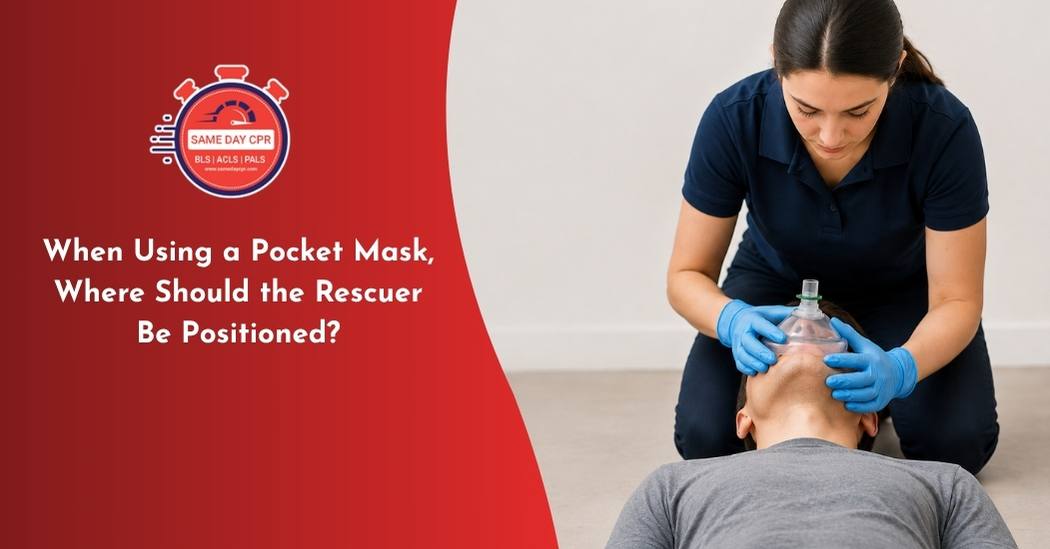
When using a pocket mask during CPR, the rescuer should position themselves at the victim’s head, typically kneeling above the shoulders and facing the airway. This head-end position provides the best access for performing the head tilt–chin lift maneuver, placing and securing the mask, maintaining an effective seal, and delivering rescue breaths while allowing the rescuer to monitor chest rise and correct ventilation problems quickly.
Proper rescuer positioning is essential because an incorrect position can make airway management more difficult, cause air leakage around the mask, and reduce the effectiveness of rescue breaths. By staying aligned with the victim’s airway, the rescuer can provide safer and more effective ventilation during CPR.
In this guide, you’ll learn why the head-end position is recommended, how to position yourself correctly when using a pocket mask, common positioning mistakes to avoid, and practical tips for providing safe and effective rescue breaths during emergencies.
The Correct Rescuer Position When Using a Pocket Mask
When using a pocket mask during CPR, the rescuer should position themselves at the victim’s head. The rescuer should kneel above the shoulders with their body aligned toward the airway and face the victim’s nose and mouth area. This position provides the best control for managing the airway, placing the mask correctly, and delivering effective rescue breaths.
At the Victim’s Head
The rescuer should remain at the top of the victim’s head to maintain clear access to the airway. This position allows the rescuer to perform the head tilt–chin lift maneuver, adjust the airway if needed, and quickly identify problems with ventilation.
Kneeling Above the Shoulders
Kneeling above the victim’s shoulders provides a stable posture and allows the rescuer to use both hands effectively. This position helps maintain steady pressure on the pocket mask, reduces fatigue, and improves the ability to create a secure seal around the victim’s face.
Facing the Airway
The rescuer should face the victim’s airway so they can properly align the mask over the nose and mouth, monitor chest rise, and recognize air leaks or ineffective breaths. Facing the airway also allows quick corrections if the mask position or airway alignment needs adjustment.
Why Rescuers Position Themselves at the Head
Positioning at the victim’s head gives the rescuer better control over the airway, improves the effectiveness of the pocket mask seal, and makes it easier to monitor ventilation. This position allows the rescuer to manage rescue breaths more efficiently while reducing problems that can affect CPR quality.
Better Airway Control
Being positioned at the head provides direct access to the victim’s airway, allowing the rescuer to perform the head tilt–chin lift maneuver correctly and keep the airway open. This alignment helps move the tongue away from the back of the throat and creates a clearer pathway for air to enter the lungs.
Better Mask Seal
The head-end position allows the rescuer to place the pocket mask accurately over the victim’s nose and mouth and apply even pressure around the edges. Maintaining a stable position makes it easier to prevent air leaks and deliver rescue breaths effectively.
Easier Chest-Rise Monitoring
From the victim’s head position, the rescuer has a clear view of the chest during ventilation. Watching for visible chest rise helps confirm that breaths are entering the lungs and allows the rescuer to quickly identify problems such as poor mask placement, airway obstruction, or an inadequate seal.
How to Position Yourself Step by Step
When using a pocket mask during CPR, the rescuer should follow a clear sequence to ensure proper airway control, mask placement, and effective rescue breaths. Correct positioning helps maintain a secure seal, reduce air leakage, and improve ventilation quality.
Kneel at the Head
Position yourself at the top of the victim’s head, kneeling above the shoulders and facing the airway. Keep your body aligned with the victim’s nose and mouth so you can control the airway, handle the mask properly, and make adjustments quickly if needed.
Open the Airway
Before delivering rescue breaths, open the victim’s airway using the head tilt–chin lift maneuver. Tilt the head back while lifting the chin to help move the tongue away from the airway and create a clear passage for air.
Place the Mask
Center the pocket mask over the victim’s nose and mouth, ensuring that it covers both areas completely. Proper placement helps create an effective barrier and prepares the mask for a secure seal during ventilation.
Seal the Mask
Hold the mask firmly against the victim’s face while maintaining the open airway position. Apply steady, even pressure around the mask edges to prevent air leakage and ensure that rescue breaths are directed into the lungs.
Deliver Breaths
Provide rescue breaths through the pocket mask while observing for visible chest rise. If the chest does not rise, reassess the airway position, mask placement, and seal before attempting another breath.
Common Positioning Mistakes
Proper rescuer positioning is important when using a pocket mask because incorrect placement can reduce airway control, cause air leakage, and make rescue breaths less effective. Avoiding common positioning mistakes helps maintain a secure mask seal and improves the quality of ventilation during CPR.
Kneeling Beside the Victim
Positioning beside the victim can make it more difficult to place the pocket mask correctly, maintain a proper seal, and manage the airway. The head-end position is generally preferred because it provides better access to the face and airway during rescue breaths.
Poor Alignment
An unstable or awkward body position can reduce control of the pocket mask and make it harder to maintain consistent pressure around the mask edges. Keeping the body aligned with the victim’s airway helps improve stability, reduce fatigue, and support effective ventilation.
Losing Airway Position
Failing to maintain proper airway alignment can interfere with effective breathing support. If the head tilt–chin lift position is lost, the airway may become partially blocked, reducing the amount of air reaching the lungs. The rescuer should continuously maintain airway control while delivering rescue breaths.
Position Differences During One- and Two-Rescuer CPR
The rescuer’s position when using a pocket mask may change depending on whether one or two rescuers are performing CPR. In both situations, the goal is to maintain effective airway control, a secure mask seal, and proper ventilation while minimizing interruptions to chest compressions.
One-Rescuer CPR
During one-rescuer CPR, the same rescuer is responsible for both chest compressions and rescue breaths. When it is time to provide breaths using a pocket mask, the rescuer should move to the victim’s head to properly position the mask, open the airway, maintain the seal, and deliver effective ventilations.
The rescuer should transition efficiently between the chest and head positions to reduce interruptions and maintain high-quality CPR. Proper movement and positioning help conserve energy and improve overall CPR performance.
Two-Rescuer CPR
During two-rescuer CPR, responsibilities are divided between the rescuers. One rescuer performs chest compressions while the second rescuer remains at the victim’s head to manage the airway and use the pocket mask.
The airway rescuer focuses on maintaining the head tilt–chin lift position, securing the mask seal, delivering rescue breaths, and monitoring chest rise. This coordinated approach improves ventilation quality and allows chest compressions to continue with fewer interruptions.
Safety Tips
Using a pocket mask during CPR requires proper positioning, correct technique, and attention to safety. Following recommended safety practices helps protect the rescuer, improves ventilation effectiveness, and supports safe emergency care.
Use Protective Equipment When Available
When available, use gloves or other personal protective equipment (PPE) to reduce the risk of exposure to bodily fluids during rescue breathing. A pocket mask also provides a barrier between the rescuer and the victim while allowing effective ventilation.
Check the Pocket Mask Before Use
Before providing rescue breaths, quickly inspect the pocket mask to ensure it is clean, intact, and properly assembled. Confirm that the one-way valve is functioning correctly and that the mask is ready for use.
Maintain Proper Technique
Keep the rescuer positioned at the victim’s head, maintain the airway using the head tilt–chin lift maneuver, and ensure the mask remains properly sealed over the nose and mouth. Correct positioning helps prevent air leaks and improves the effectiveness of rescue breaths.
Avoid Excessive Ventilation
Deliver controlled rescue breaths that provide visible chest rise without using excessive force or volume. Over-ventilation can reduce CPR effectiveness and may cause air to enter the stomach instead of the lungs.
Minimize Interruptions During CPR
Rescue breaths should be provided efficiently to avoid unnecessary pauses in chest compressions. In two-rescuer CPR, coordination between the compressor and airway rescuer helps maintain continuous, high-quality CPR.
Proper Positioning for Effective Rescue Breathing
Using a pocket mask correctly during CPR helps rescuers provide safe and effective rescue breaths. The rescuer should stay at the victim’s head, kneel above the shoulders, and face the airway to maintain good control of the mask and airway. This position makes it easier to create a strong seal, watch for chest rise, and fix any problems quickly. By practicing proper positioning and avoiding common mistakes, rescuers can improve their technique and give better support during an emergency. A calm and careful approach helps ensure that every rescue breath is delivered with confidence and care.