-
 30,000+ Students Sucessfully Trained Annually
-
30,000+ Students Sucessfully Trained Annually


 30,000+ Students Sucessfully Trained Annually
It only takes a small object and a few seconds for an infant’s airway to become blocked. In this guide, the term “infant” generally refers to a child from birth up to 1 year of age. Knowing how to recognize this emergency early can help you act quickly and provide lifesaving care. Infant foreign body airway obstruction occurs when an object, such as a small toy, piece of food, or other item, becomes lodged in an infant’s airway and blocks the normal flow of air. This emergency most often affects infants younger than one year because they frequently place objects in their mouths and have small, narrow airways that can become blocked easily. A complete blockage can prevent the infant from breathing, coughing, or crying, while a partial blockage may allow some airflow but still requires close observation. Recognizing the signs of airway obstruction and responding immediately is essential because a lack of oxygen can quickly become life-threatening.
The Infant Foreign-Body Airway Obstruction Algorithm developed by the American Heart Association and American Academy of Pediatrics as part of Pediatric Basic Life Support (BLS) provides a clear, step-by-step approach for recognizing and managing a choking emergency in an infant. It helps rescuers quickly determine whether the airway is partially or completely blocked and guides them through the appropriate actions, including delivering back slaps and chest thrusts when needed. The algorithm also reminds rescuers when to call emergency medical services and when to begin CPR if the infant becomes unresponsive. By following this structured process, caregivers and healthcare providers can respond with confidence, reduce delays in treatment, and improve the infant’s chances of survival.
Note: This infant foreign-body airway obstruction algorithm guideline remains valid for the period 2025–2030.

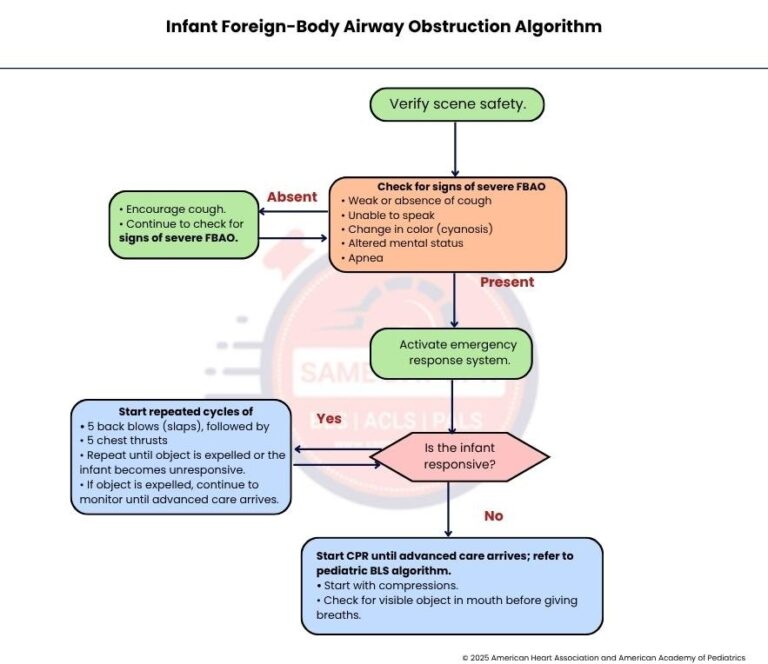
The infant foreign body airway obstruction algorithm provides simple steps to help respond when a baby has trouble breathing due to a blocked airway. Understanding each step helps you act quickly, stay calm, and provide the right care when an emergency happens.
Before helping the infant, make sure the area is safe for both you and the child. Look for any dangers, such as fire, traffic, electrical hazards, or anything else that could cause harm. If the scene is unsafe, do not approach until it is safe to do so or emergency responders have secured the area. Checking scene safety first helps prevent additional injuries and allows you to provide care without putting yourself at risk.
Check the infant for signs of severe foreign body airway obstruction (FBAO). Look for a weak or absent cough, inability to cry, a change in skin color such as cyanosis, altered mental status, or apnea. These signs suggest that the airway may be seriously blocked and the infant needs immediate help. If these signs are absent, proceed to Step 3. If these signs are present, proceed to Step 4.
If the infant does not show signs of severe airway obstruction and is able to cough, encourage them to continue coughing. A strong cough is the body's natural way of removing an object from the airway. Do not interfere if the infant is coughing effectively, but continue to watch closely for any signs that the blockage is becoming more severe. Keep checking for signs of severe FBAO and proceed back to Step 2 if the infant's condition changes.
If the infant shows signs of severe airway obstruction, activate the emergency response system immediately. Call your local emergency medical services or ask someone nearby to make the call while you stay with the infant. Early activation ensures that advanced medical care is on the way as quickly as possible. Prompt action improves the infant's chances of receiving lifesaving treatment without delay.
Check whether the infant is responsive by gently tapping the foot and calling to them. Observe whether the infant responds with movement, crying, or any other reaction. If the infant is responsive, proceed to Step 6. If the infant is unresponsive, proceed to Step 7. This quick assessment helps determine the most appropriate treatment.
Begin repeated cycles of 5 back blows (slaps) followed by 5 chest thrusts. Continue repeating these steps until the object is expelled or the infant becomes unresponsive. If the object is successfully removed, continue to monitor the infant closely until advanced medical care arrives. If the infant becomes unresponsive during the process, proceed back to Step 5 and follow the next appropriate step.
If the infant becomes unresponsive, start CPR immediately and continue until advanced care arrives. Begin with chest compressions, then check for a visible object in the mouth before giving rescue breaths. Remove the object only if you can clearly see it. Continue CPR according to the pediatric basic life support algorithm until emergency responders take over or the infant shows signs of recovery.
In short, understanding the Infant Foreign Body Airway Obstruction Algorithm can help caregivers and healthcare providers respond quickly when a baby faces a choking emergency. By recognizing the warning signs, following each step carefully, and staying calm, you can provide timely help that may save an infant’s life. Simple actions such as checking the airway, giving back blows and chest thrusts when needed, and starting CPR if the infant becomes unresponsive can make a major difference. Learning these steps before an emergency happens builds confidence and helps you act with greater readiness during a critical moment.
Want to feel more prepared for emergencies? Same Day CPR offers BLS Certification classes with blended learning that combines online coursework and hands-on training, making it easy to build lifesaving skills with confidence.