


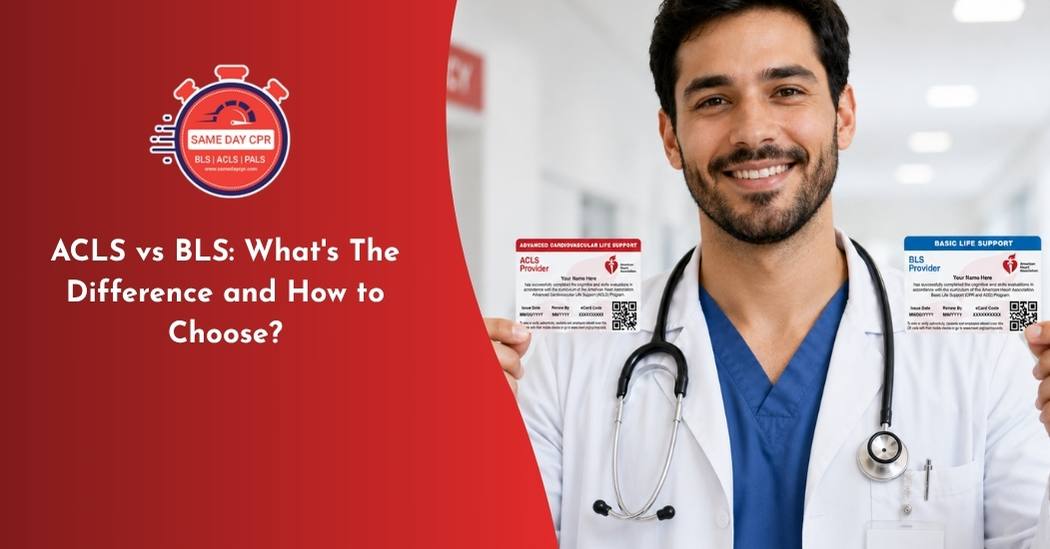
Medical emergencies require quick thinking, effective teamwork, and the right lifesaving skills. Two of the most recognized certifications for medical providers are Basic Life Support (BLS) and Advanced Cardiovascular Life Support (ACLS). Although both prepare providers to respond to cardiac and respiratory crises, they differ in their level of training, clinical responsibilities, and intended audience.
BLS focuses on the essential skills needed to recognize life-threatening emergencies, perform high-quality CPR (Cardiopulmonary Resuscitation), use an automated external defibrillator (AED), provide rescue breathing, and relieve choking. ACLS builds on these core skills by introducing advanced airway management, ECG rhythm interpretation, emergency medications, and team-based resuscitation.
Understanding the differences between ACLS and BLS can help you choose the certification that best matches your role, workplace requirements, and career goals. This guide explains what each certification covers, highlights their key differences, and helps you decide which one is right for you.
What Is BLS?
Basic Life Support (BLS) is a certification program that teaches the essential skills needed to respond to cardiac arrest, breathing emergencies, and choking. The goal is to provide immediate lifesaving care until advanced medical help becomes available.
BLS training emphasizes early recognition of life-threatening conditions and prompt action to maintain blood flow and oxygen delivery to vital organs. It is widely required for healthcare providers and is also valuable for anyone who may need to respond during a medical crisis.
Key Skills Learned in BLS
- High-Quality CPR: Learn how to perform effective chest compressions and rescue breaths for adults, children, and infants while minimizing interruptions to improve patient outcomes.
- AED Operation: Develop the skills to safely operate an AED and deliver a shock when appropriate during cardiac arrest.
- Rescue Breathing: Practice rescue breathing techniques for patients of different age groups to support oxygenation when normal breathing has stopped.
- Choking Relief: Learn safe and effective methods to relieve airway obstruction in adults, children, and infants.
What Is ACLS?
Advanced Cardiovascular Life Support (ACLS) is an advanced certification for medical professionals who manage serious cardiovascular and respiratory emergencies. It prepares providers to assess critically ill patients, make rapid clinical decisions, and deliver advanced treatment during life-threatening situations.
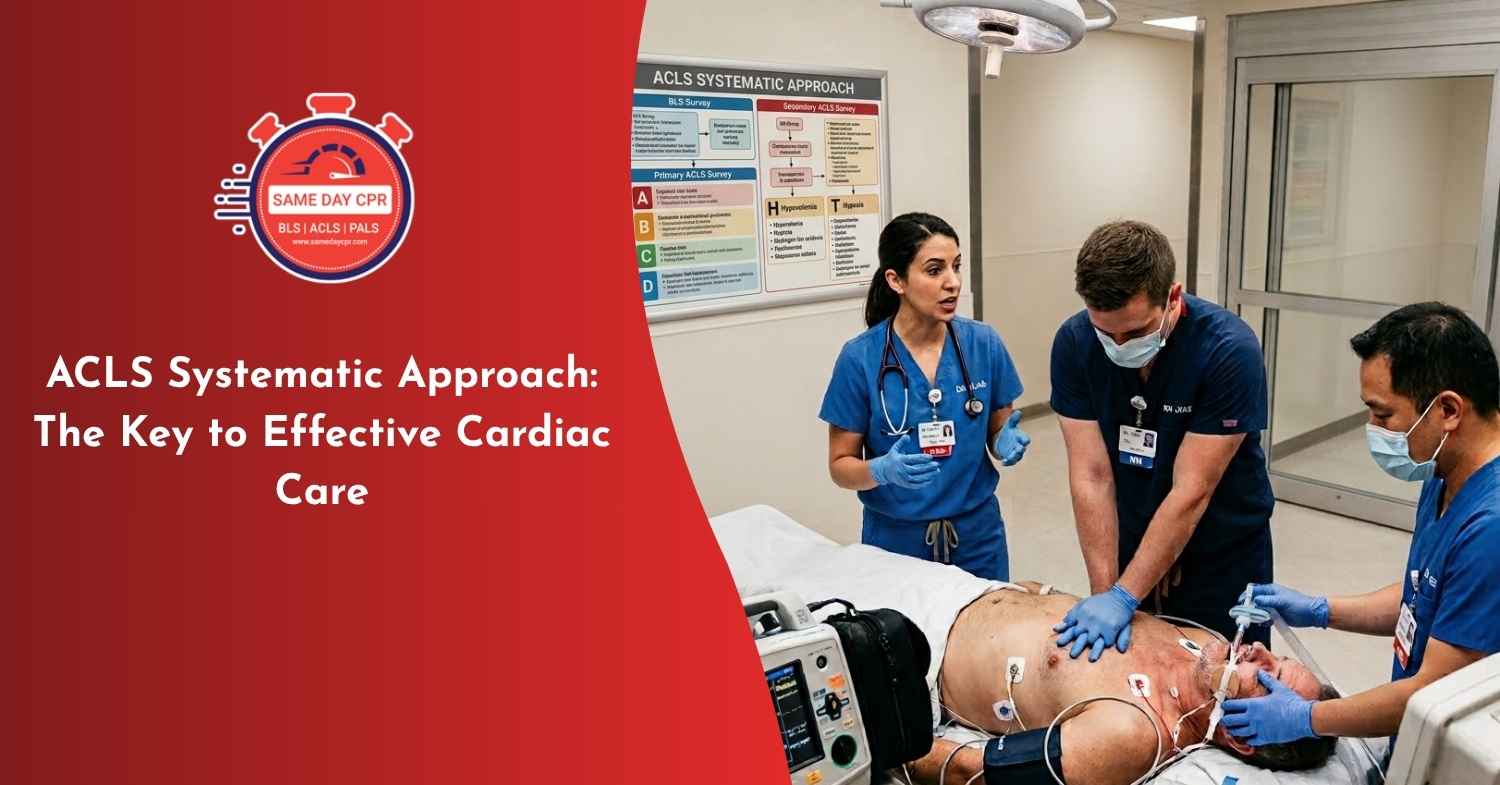
ACLS expands on the knowledge gained in BLS by combining high-quality CPR with advanced airway management, ECG rhythm recognition, manual defibrillation, emergency medications, and coordinated team communication. The training uses realistic scenarios to help participants apply these techniques in fast-paced clinical environments.
Key Skills Learned in ACLS
- Advanced Airway Management: Learn how to establish and maintain an advanced airway using specialized equipment to support effective ventilation.
- ECG Rhythm Recognition: Identify common cardiac rhythms, recognize life-threatening arrhythmias, and determine the appropriate treatment.
- Defibrillation and Cardioversion: Develop the skills to perform manual defibrillation and synchronized cardioversion when clinically indicated.
- Emergency Medications: Understand when and how medications are used during cardiovascular emergencies based on current resuscitation guidelines.
- Team Dynamics and Communication: Practice clear communication, defined team roles, and coordinated decision-making to improve resuscitation performance.
- Post Cardiac Arrest Care: Learn the essential steps involved in caring for patients after the return of spontaneous circulation to improve recovery and long-term outcomes.
ACLS vs BLS: Key Differences
Medical emergencies can happen without warning, so choosing the right training is important. Understanding how BLS and ACLS differ makes it easier to select the certification that matches your role and responsibilities.
Level of Training
BLS is an entry-level course that covers CPR, AED use, and emergency response basics. ACLS is an advanced course that teaches cardiac rhythm interpretation, emergency medications, airway management, and team-based resuscitation.
Skills Covered
BLS includes high-quality CPR, AED use, rescue breathing, and choking relief. ACLS expands on these skills with advanced airway management, ECG interpretation, manual defibrillation, cardioversion, medications, and post-cardiac arrest care.
Target Audience
BLS is for healthcare providers, first responders, medical students, and others who need basic lifesaving skills. ACLS is intended for physicians, nurses, paramedics, respiratory therapists, and other clinicians managing critical cardiovascular emergencies.
Equipment Used
BLS training uses CPR manikins, bag-mask devices, and AEDs. ACLS also includes cardiac monitors, manual defibrillators, advanced airway devices, IV equipment, and emergency medications.
Types of Emergencies
BLS prepares providers to respond to cardiac arrest, respiratory arrest, and choking. ACLS focuses on advanced treatment for cardiac arrest, heart attack, stroke, unstable heart rhythms, and other life-threatening cardiovascular emergencies.
Certification Requirements
BLS is commonly required for healthcare workers and first responders. ACLS is primarily for licensed medical professionals and typically requires a strong foundation in BLS skills before enrollment.
ACLS and BLS Comparison Table
The table below provides a quick comparison of ACLS and BLS to help you understand how the two certifications differ.
| Feature | BLS | ACLS |
|---|---|---|
| Purpose | Provides emergency care during cardiac, breathing, and choking emergencies. | Provides advanced treatment for cardiac arrest and other cardiovascular emergencies. |
| Training Level | Basic and foundational. | Advanced and builds on BLS knowledge. |
| Primary Focus | Early recognition, CPR, AED use, and basic emergency care. | Advanced cardiac care, clinical decision-making, and resuscitation leadership. |
| CPR | High-quality CPR for adults, children, and infants. | High-quality CPR integrated with advanced resuscitation protocols. |
| Airway Management | Basic airway management and rescue breathing. | Advanced airway techniques using specialized equipment. |
| ECG Interpretation | Not included. | Recognize and interpret cardiac rhythms. |
| Medication Administration | Not included. | Emergency medications used during cardiovascular emergencies. |
| Defibrillation | Uses an AED. | Uses manual defibrillation, synchronized cardioversion, and AEDs when appropriate. |
| Equipment Used | CPR manikins, bag-mask devices, and AEDs. | Cardiac monitors, manual defibrillators, advanced airway devices, and IV equipment. |
| Target Audience | Healthcare providers, first responders, students, dentists, and others requiring basic lifesaving skills. | Physicians, nurses, paramedics, respiratory therapists, and other advanced healthcare professionals. |
| Typical Work Setting | Clinics, dental offices, schools, outpatient facilities, and community settings. | Emergency departments, intensive care units, cardiac care units, and critical care settings. |
| Certification Renewal | Usually every two years. | Usually every two years. |
Who Should Take BLS?
BLS is valuable for many people who may need to respond during a medical emergency. It gives learners the skills and confidence to act quickly and provide lifesaving care until advanced help arrives.
- BLS helps nurses respond to cardiac and respiratory emergencies and is often required for employment.
- BLS gives medical students essential emergency response skills before clinical training.
- Dentists use BLS to manage medical emergencies such as cardiac arrest and airway obstruction during procedures.
- EMTs use BLS to provide immediate care, perform CPR, use an AED, and stabilize patients during transport.
- Lifeguards rely on BLS to respond to drowning, breathing emergencies, and cardiac arrest until EMS arrives.
- BLS prepares teachers and coaches to respond quickly to emergencies involving students or athletes.
- Safety officers, industrial workers, and first aid team members use BLS to provide immediate care before emergency responders arrive.
Who Should Take ACLS?
ACLS is for healthcare professionals who manage serious heart and breathing emergencies. It builds advanced skills that help teams deliver fast and effective care in critical situations. If you’re unsure whether the training applies to your role, review who needs ACLS certification to understand which healthcare professionals typically benefit from it.
- Physicians use ACLS to manage cardiac arrest, stroke, heart attacks, and other life threatening emergencies.
- Emergency, critical care, and cardiac nurses use ACLS to recognize patient deterioration, give emergency medications, and support advanced resuscitation.
- Paramedics use ACLS to interpret cardiac rhythms, perform advanced interventions, and provide emergency care before patients reach the hospital.
- Emergency department providers use ACLS to treat critically ill patients and coordinate rapid emergency care.
- ICU and cardiac care professionals use ACLS to respond to sudden patient changes and deliver advanced cardiovascular care.
- Anesthesia providers use ACLS to recognize and treat cardiovascular emergencies during medical procedures.
- Critical care transport teams use ACLS to provide advanced life support while transferring critically ill patients between healthcare facilities.
Can You Take ACLS Without BLS?
Some training providers allow students to enroll in ACLS without holding a current BLS certification. However, a strong understanding of BLS skills is essential before taking the course.
ACLS assumes you already know how to perform high-quality CPR, operate an AED, provide basic airway support, and respond to critical medical situations. Without these foundational skills, the advanced concepts covered in ACLS can be much more difficult to learn and apply.
Is BLS Required Before ACLS?
Many hospitals, healthcare employers, and training centers require or strongly recommend current BLS certification before enrolling in an ACLS course.
Because ACLS expands on the skills taught in BLS, completing BLS first provides the knowledge and confidence needed to succeed in advanced training. Even when it is not a formal requirement, most healthcare professionals begin with BLS before progressing to ACLS.
ACLS Provider Prerequisites
Before taking ACLS, you should be comfortable performing the core skills taught in BLS. This allows you to focus on advanced assessment and treatment rather than reviewing basic emergency care.
Recommended knowledge includes:
- High-quality CPR for adults.
- Effective bag-mask ventilation.
- Basic airway management.
- Safe AED operation.
- Recognition of cardiac arrest and respiratory emergencies.
- Basic understanding of ECG rhythms.
- Familiarity with emergency response algorithms.
- Ability to work effectively within a resuscitation team.
Having this knowledge before starting ACLS makes it easier to understand advanced interventions and participate confidently during realistic training scenarios.
Why Mastering CPR Fundamentals Matters
Every successful resuscitation begins with high-quality CPR. Effective chest compressions, early defibrillation, and proper ventilation provide the basis for advanced cardiovascular care.
Medical providers with strong BLS knowledge can transition more smoothly into ACLS because they already understand the principles of emergency response. This allows them to focus on advanced airway management, rhythm interpretation, medication administration, and clinical decision-making without losing sight of the basics.
Whether you plan to earn BLS, ACLS, or both certifications, mastering CPR fundamentals improves teamwork, supports faster interventions, and helps deliver better patient outcomes during medical emergencies.
How to Choose Between ACLS and BLS
Choosing between BLS and ACLS depends on your job, daily responsibilities, and future career plans. Understanding what each course offers will help you select the certification that best matches your role.
Review Your Job Requirements
Check your employer’s certification requirements. Many healthcare roles require BLS, while emergency, critical care, and cardiac positions often require both BLS and ACLS.
Consider Your Clinical Responsibilities
Choose BLS if your role involves CPR, AED use, and basic airway support. Choose ACLS if you manage cardiac arrest, interpret ECG rhythms, give emergency medications, or lead resuscitation.
Verify Employer or Licensing Requirements
Confirm whether your employer or licensing board requires BLS, ACLS, or both before enrolling in a course.
Think About Your Career Goals
If you are starting a healthcare career, BLS provides a strong foundation. If you plan to work in emergency, critical care, or cardiac settings, ACLS prepares you for advanced clinical responsibilities.
Benefits of Earning BLS or ACLS Certification
Whether you choose BLS, ACLS, or both, these certifications provide valuable skills that improve patient care and support professional development.
Improves Emergency Response
Training enables providers to recognize critical medical situations quickly and respond with the appropriate interventions. Early action can improve survival rates and reduce complications.
Builds Confidence
Hands-on practice and realistic training scenarios prepare participants to remain calm and make informed decisions during high-pressure situations.
Strengthens Teamwork
Emergency care depends on effective communication and coordinated teamwork. Both BLS and ACLS emphasize clearly defined roles, efficient communication, and collaboration during resuscitation.
Supports Professional Growth
Many healthcare employers require current BLS or ACLS certification. Maintaining these credentials shows your commitment to patient safety, continuing education, and professional excellence.
Expands Career Opportunities
Holding the appropriate certification can strengthen your qualifications for new positions and help you advance into roles with greater clinical responsibility.
Which Certification Is Right for You?
In short, BLS and ACLS both play an important role in emergency medical care, but they are for different levels of responsibility. BLS teaches the essential skills needed to recognize emergencies, perform high-quality CPR, use an AED, and provide immediate lifesaving care. ACLS expands on the knowledge by preparing healthcare professionals to manage complex cardiovascular emergencies with advanced assessment, treatment, and team leadership.
If you are new to healthcare or need foundational emergency response training, BLS is the right place to begin. If your role involves advanced cardiac care, critical care, or leading resuscitation efforts, ACLS is the next step in your professional development. Understanding the differences between these certifications allows you to choose the course that best aligns with your responsibilities, workplace requirements, and long-term career goals.