-
 30,000+ Students Sucessfully Trained Annually
-
30,000+ Students Sucessfully Trained Annually

-
30,000+ Students Sucessfully Trained Annually

 30,000+ Students Sucessfully Trained Annually
Have you ever wondered how healthcare professionals stay calm and know exactly what to do during a life-threatening emergency? The Adult Basic Life Support Algorithm provides a clear path that guides them to make fast, lifesaving decisions. It is a step-by-step guide that helps them to respond quickly and effectively when an adult experiences cardiac arrest or another life-threatening emergency. It outlines the correct sequence of actions, including checking for responsiveness, activating the emergency response system, assessing breathing and pulse, starting high-quality chest compressions, providing rescue breaths when needed, and using an automated external defibrillator (AED) as soon as it is available. Following this structured approach helps ensure that no critical step is missed during resuscitation.
The main role of the Adult BLS Algorithm is to improve a patient’s chances of survival by providing immediate and coordinated care before advanced medical treatment begins. It helps healthcare teams deliver consistent, evidence-based care, reduce delays in life-saving interventions, and improve teamwork during emergencies. By following the algorithm, healthcare professionals can perform CPR (Cardiopulmonary Resuscitation) more efficiently, restore blood flow to vital organs, and increase the likelihood of a successful recovery.
Note: This adult basic life support algorithm for healthcare professionals guideline remains valid for the period 2025–2030.
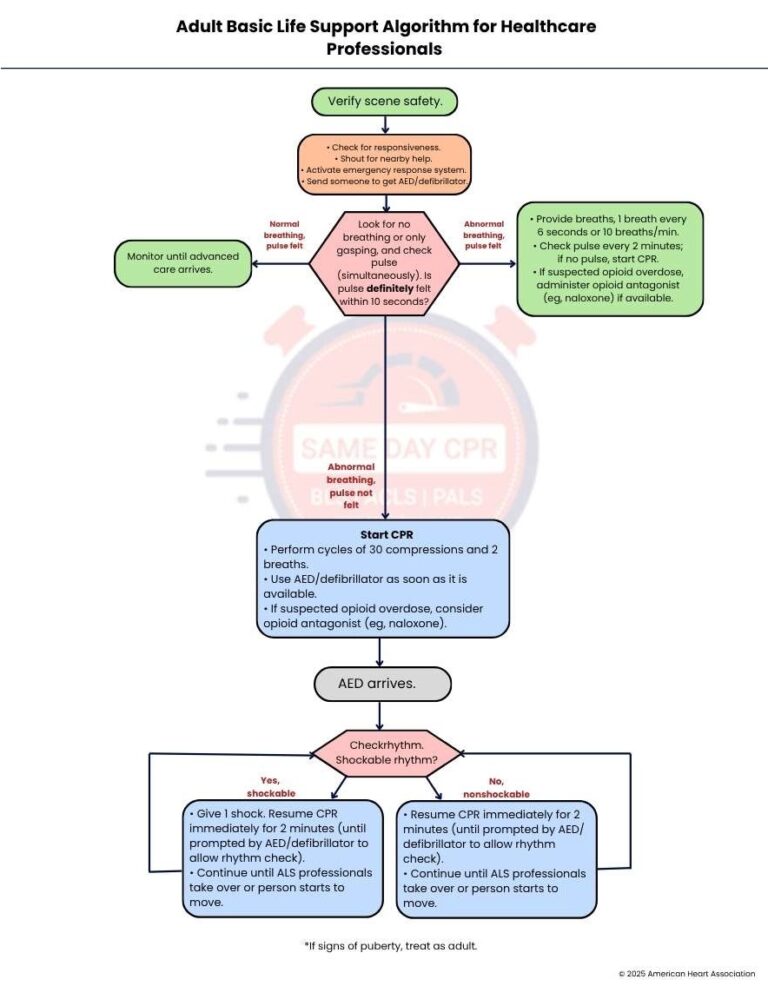
Before helping the person, make sure the area is safe for both you and the victim. Look around for any dangers such as fire, electrical hazards, traffic, falling objects, or hazardous chemicals. Entering an unsafe scene can put you at risk and prevent you from providing effective care. Once you are confident that the environment is safe, you can approach the person and begin the next steps of BLS.
Begin by checking if the person responds by gently tapping their shoulders and speaking loudly. If there is no response, shout for nearby help so others can assist you. Activate the emergency response system by calling emergency medical services or asking someone nearby to call. At the same time, send another person to bring an Automated External Defibrillator (AED) or defibrillator if one is available. Taking these actions early helps ensure that advanced medical care and life-saving equipment arrive as quickly as possible.
Look for normal breathing or determine if the person is only gasping while checking for a pulse at the same time. Spend no more than 10 seconds checking for both. If the person has a pulse and is breathing normally, move to Step 4. If the person has a pulse but is not breathing normally, continue to Step 5. If there is no pulse and the person is not breathing or is only gasping, begin Step 6 immediately. Making the correct decision at this stage helps you provide the right care without unnecessary delays.
If the person has a normal pulse and is breathing normally, continue to monitor their condition until emergency medical professionals arrive. Watch for any changes in breathing, responsiveness, or pulse. Be prepared to start CPR immediately if the person stops breathing normally or loses their pulse. Staying with the person and monitoring them closely helps ensure they receive prompt care if their condition changes.
If the person has a pulse but is not breathing normally, provide rescue breaths at a rate of 1 breath every 6 seconds, or about 10 breaths per minute. Recheck the pulse every 2 minutes to make sure the heart is still beating. If the pulse disappears, begin CPR immediately. If an opioid overdose is suspected and naloxone is available, administer it according to local protocols. Rescue breathing helps provide oxygen until the person can breathe on their own or advanced medical care takes over.
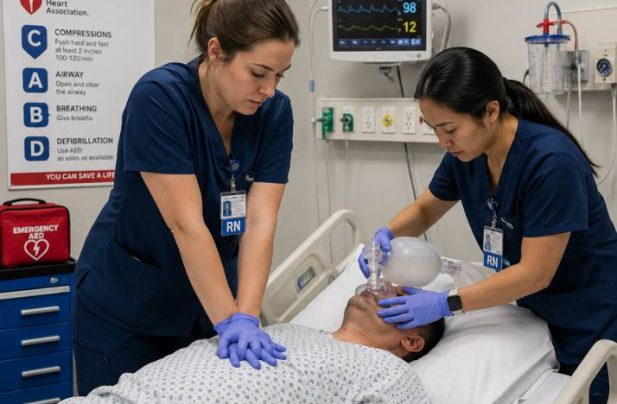
If the person has no pulse and is not breathing or is only gasping, begin CPR immediately. Perform cycles of 30 chest compressions followed by 2 rescue breaths while maintaining high-quality compressions. Use the AED or defibrillator as soon as it becomes available because early defibrillation can greatly improve survival. If an opioid overdose is suspected, consider giving naloxone if it is available. Continue CPR without unnecessary interruptions until more advanced help arrives or the person begins to recover.
As soon as the AED arrives, turn it on and follow its voice and visual instructions. Expose the person's chest and attach the electrode pads exactly as shown on the device. Make sure no one touches the person while the AED analyzes the heart rhythm. The AED will determine whether a shock is needed and guide you through the next steps.
Allow the AED to analyze the person's heart rhythm without interruption. During the analysis, make sure everyone stands clear and does not touch the person. If the AED identifies a shockable rhythm, continue to Step 9. If it identifies a nonshockable rhythm, move to Step 10. Following the AED's instructions helps ensure the correct treatment is provided based on the person's heart rhythm.
If the AED advises a shock, make sure everyone is clear before pressing the shock button. After delivering 1 shock, immediately resume CPR for 2 minutes or until the AED prompts you to stop for another rhythm check. Continue alternating between CPR and AED analysis until advanced life support professionals take over or the person starts to move and shows signs of recovery.
If the AED determines that the rhythm is not shockable, do not deliver a shock. Instead, immediately resume CPR for 2 minutes until the AED prompts another rhythm analysis. Continue providing high-quality CPR and follow the AED's instructions until advanced life support professionals arrive or the person begins to move and shows signs of recovery. Consistent CPR is essential for maintaining blood flow when a shock is not recommended.
In short, the Adult Basic Life Support (BLS) Algorithm gives healthcare professionals a clear and reliable plan to follow during emergencies. Each step helps them respond quickly, work together, and provide the best possible care during critical emergencies. By following this process, they can improve the chances of survival and reduce the risk of missing important actions. Regular training and practice also help build confidence and keep these skills sharp. As healthcare guidelines continue to evolve, staying up to date with the current Adult BLS Algorithm helps professionals deliver safe, effective, and timely care whenever it is needed.
Take the first step toward becoming BLS certified with Same Day CPR. Our blended learning program pairs convenient online coursework with practical, hands-on instruction to help you gain the confidence to save lives.