-
 30,000+ Students Sucessfully Trained Annually
-
30,000+ Students Sucessfully Trained Annually

-
30,000+ Students Sucessfully Trained Annually

 30,000+ Students Sucessfully Trained Annually
A few quick actions from an ordinary person can make the difference between life and death during a cardiac emergency. Knowing what to do before medical professionals arrive can give someone the best possible chance of survival. Adult Basic Life Support (BLS) for lay rescuers is the emergency care provided by people without professional medical training to help someone who has suddenly collapsed or stopped breathing normally. It focuses on recognizing a cardiac emergency, calling emergency medical services, performing high-quality chest compressions, using an automated external defibrillator (AED) if one is available, and continuing care until professional responders arrive. These simple but lifesaving actions help keep blood and oxygen flowing to the brain and other vital organs, increasing the person’s chances of survival and recovery.
The Adult Basic Life Support Algorithm for Lay Rescuers serves as a clear, step-by-step guide that helps people respond quickly and correctly during a cardiac emergency. Rather than relying on memory or guesswork, it provides a structured sequence of actions that helps rescuers make the right decisions at the right time. By following the algorithm, lay rescuers can reduce delays, stay focused under pressure, and provide consistent care until emergency medical services arrive or the person begins to show signs of recovery. This organized approach improves the quality of the response and increases the person’s chances of survival.
Note: This adult basic life support algorithm for lay rescuers guideline remains valid for the period 2025–2030.
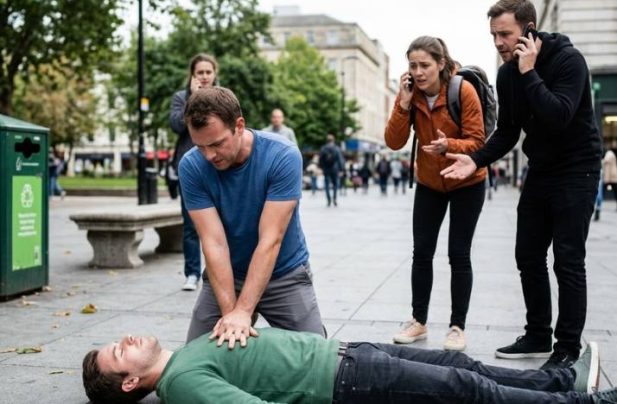
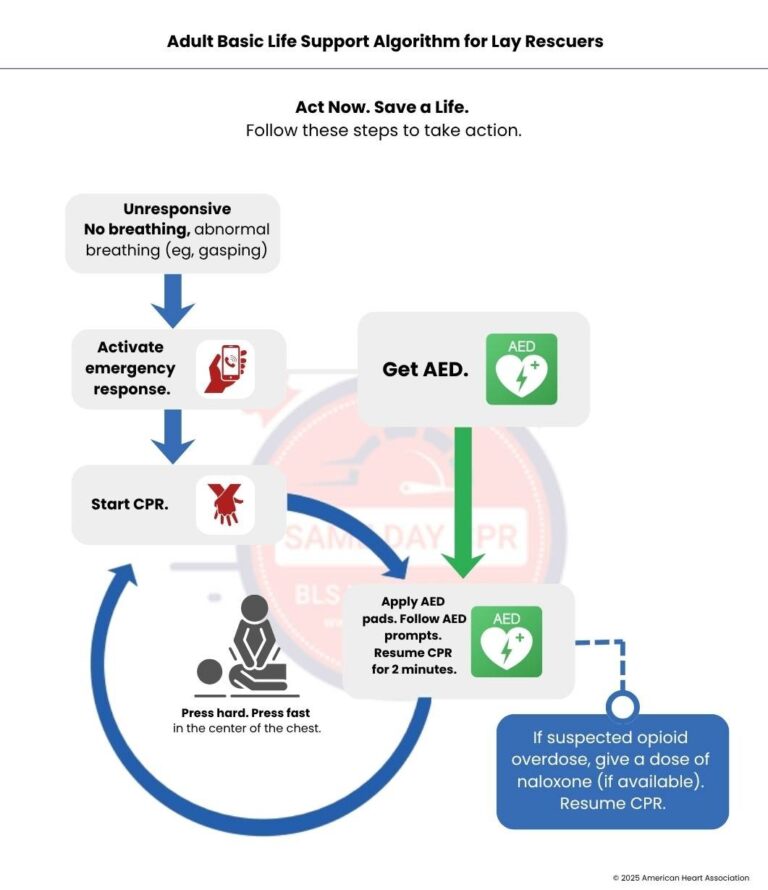
The first step is to quickly check if the person is unresponsive and not breathing normally. Tap the person's shoulder and shout to see if they respond. If there is no response and they are not breathing or are only gasping, treat it as a cardiac arrest. Gasping is not normal breathing and should not delay CPR. Recognizing these signs early helps you act quickly and improves the person's chance of survival.
Once you confirm that the person is unresponsive and not breathing normally, activate the emergency response system by calling your local emergency number or asking someone nearby to call for help. If another person is present, have them proceed to Step 3 and get an automated external defibrillator (AED) while you immediately move to Step 4 and begin CPR. Acting as a team saves valuable time and ensures that both CPR and emergency care start as soon as possible.
An AED is a portable device that can analyze the heart's rhythm and deliver a shock if needed. If someone else is available, ask them to get the nearest AED and bring it to the scene without delay. Once the AED is available, proceed to Step 5 and use it as soon as possible. Early defibrillation, combined with CPR, greatly increases the chances of survival for someone experiencing cardiac arrest.
Begin CPR immediately by placing the heel of one hand in the center of the person's chest and placing your other hand on top. Press hard and press fast, allowing the chest to fully rise after each compression. Continue providing chest compressions without stopping until the AED arrives, then proceed to Step 5. Starting CPR right away helps keep blood flowing to the brain and other vital organs while waiting for advanced medical care.
When the AED arrives, turn it on and apply the AED pads to the person's bare chest as shown in the device instructions. Follow the AED's voice prompts carefully, as it will tell you whether a shock is needed. After delivering a shock, or if no shock is advised, immediately resume CPR for 2 minutes. Continue alternating between Step 4 and Step 5 until emergency responders take over or the person shows signs of recovery. If an opioid overdose is suspected, proceed to Step 6.
If you believe the cardiac arrest may be caused by an opioid overdose and naloxone is available, give one dose as soon as possible. Naloxone can temporarily reverse the effects of an opioid overdose, but it does not replace CPR. After giving naloxone, immediately resume CPR by returning to Step 4. Continue CPR and follow the AED prompts until emergency medical services arrive and take over care.
In short, learning the Adult Basic Life Support algorithm for lay rescuers prepares you to respond with confidence during a cardiac emergency. By recognizing the warning signs, calling for help, starting CPR, using an AED when available, and giving naloxone if an opioid overdose is suspected, you can provide lifesaving care until emergency medical services arrive. Every step plays an important role in protecting the person’s brain and other vital organs. While you do not need to be a healthcare professional to help, knowing these simple actions can make a real difference during a medical emergency. Taking the time to learn and practice the Adult BLS algorithm today can help you save a life tomorrow.
Ready to build your lifesaving skills? Enroll in Same Day CPR BLS Certification classes, which combine online coursework with hands-on training, so you can learn with confidence and be prepared to act when it matters most.