


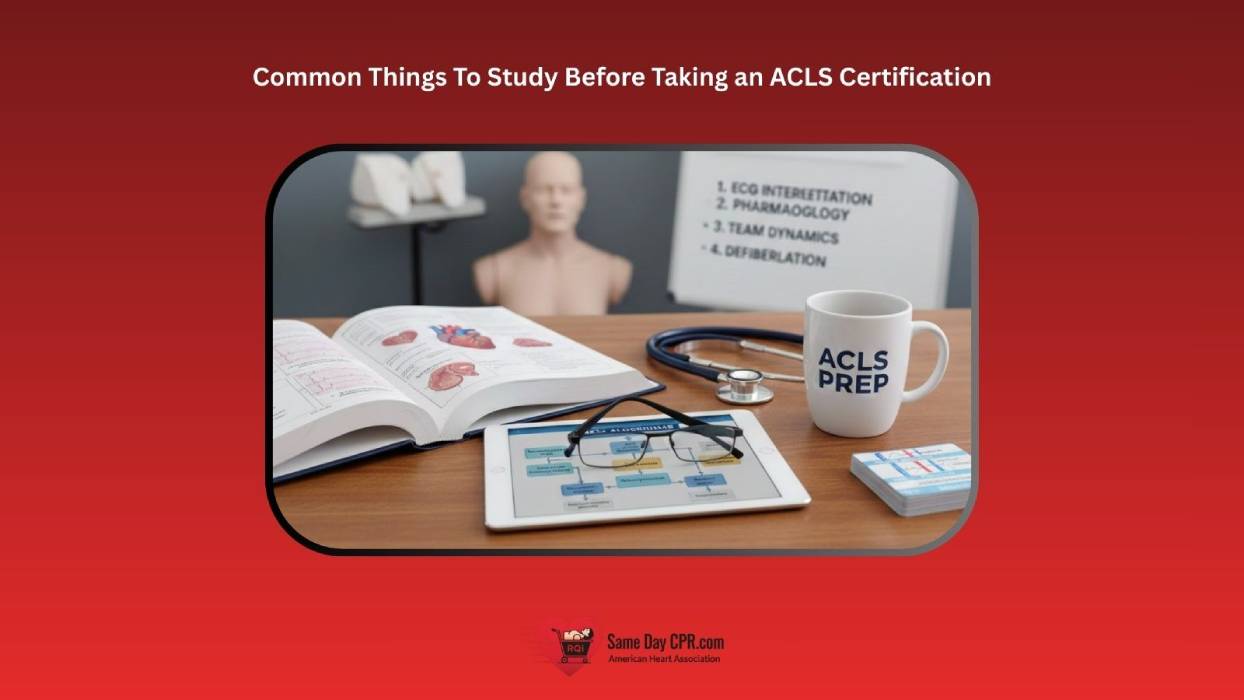
Before taking an ACLS (Advanced Cardiovascular Life Support) certification course, it helps to review a few key topics so you feel calm and ready on class day. ACLS builds on basic life support, so a strong foundation makes learning easier and faster. Many students feel stressed because the material sounds complex, but most concepts connect to skills you already know. With a little preparation, the class feels more like a review than a challenge. Studying ahead of time also helps you think clearly during scenarios and respond with confidence. This overview highlights common areas to study so you can walk in prepared and focused.
ACLS Core Concepts to Review Before Class
ACLS is designed to save lives during serious heart and breathing emergencies. Key points to focus on:
- Understand the purpose of ACLS in managing life-threatening cardiac and respiratory emergencies
- Review how to quickly recognize cardiac arrest and unstable patients
- Refresh the principles of high-quality CPR (rate, depth, recoil, minimal interruptions)
- Become familiar with common ACLS cardiac rhythms and their significance
- Review the role and proper use of ACLS emergency medications
- Understand the importance of effective team dynamics, communication, and leadership
- Know how ACLS builds on BLS by adding ECG interpretation, pharmacology, and coordinated team-based care.
Reviewing these core concepts before class helps you understand the “why” behind ACLS algorithms and improves readiness for hands-on practice.
High-Quality CPR
CPR is the foundation of ACLS and can be the difference between life and death. Study these aspects carefully:
- Compressions: Deep, fast, with full chest recoil.
- Minimize Interruptions: Switch rescuers efficiently and prepare procedures before pausing.
- Monitoring Quality: Use feedback devices, observe chest rise, and monitor patient response.
Practicing CPR with attention to detail helps ensure you can perform effectively during the exam and real emergencies.
Airway and Ventilation Management
Managing the airway keeps oxygen flowing to the heart and brain. Focus on:
- Using advanced airway devices like endotracheal tubes or supraglottic airways.
- Confirming placement using breath sounds, chest rise, or device-specific tools.
- Proper oxygenation and ventilation rates to prevent harm.
- Capnography to monitor the effectiveness of CPR and detect return of spontaneous circulation.
Mastering airway and ventilation techniques is critical for ACLS success.
ECG Rhythm Recognition You Should Know Before ACLS
Identifying heart rhythms quickly guides treatment. Key rhythms to study:
- Normal Sinus Rhythm: Steady heartbeat.
- Shockable Rhythms: Ventricular fibrillation, pulseless ventricular tachycardia.
- Non-shockable Rhythms: Asystole, pulseless electrical activity.
Practice regularly with ECG strips and simulation tools to improve speed and accuracy in rhythm recognition.
ACLS Medications
Medications are integral to managing emergencies. Focus on:
- Common Drugs: Epinephrine, amiodarone, adenosine, atropine, magnesium.
- Correct timing and dosage in relation to the patient’s rhythm and condition.
- Routes of Administration: IV (intravenous) and IO (intraosseous).
Studying medications in sequence and context ensures safe, effective care during resuscitation.
Defibrillation and Electrical Therapy
Understanding when and how to use electrical interventions is essential in ACLS. Hands-on practice helps build confidence and ensures safe, effective care during both exams and real emergencies.
1. Defibrillation
- Used for life-threatening rhythms like ventricular fibrillation (VF) and pulseless ventricular tachycardia (pVT).
- Purpose: Reset the heart’s rhythm.
- Key Points:
- Follow recommended energy settings.
- Ensure all team members are clear of the patient before shocking.
2. Synchronized Cardioversion
- Used for unstable fast rhythms with a pulse.
- Difference from defibrillation: timed to the heart’s rhythm to avoid causing VF.
- Key Points:
- Confirm the patient is sedated if possible.
- Follow energy and synchronization protocols.
3. Pacing
- Provides an electrical stimulus when the heart rate is too slow to maintain circulation.
- Types:
- External pacing: Using pads or paddles.
- Internal pacing: Specialized clinical settings (rare in ACLS certification).
3. Key Points:
- Monitor heart rate response.
- Adjust output and rate as needed.
Safety Tips
- Always follow recommended energy levels.
- Make sure everyone is clear of the patient during shocks.
- Double-check equipment settings before delivery.
Also, read: Cardioversion vs Defibrillation
ACLS Algorithms
ACLS algorithms guide healthcare providers step by step during serious heart and breathing emergencies. They help you act quickly, stay organized, and give patients the best chance to survive.
1. ACLS Cardiac Arrest Algorithm
The cardiac arrest algorithm helps you respond quickly when someone’s heart stops. It guides you to start CPR immediately, check the rhythm, and decide if a shock is needed. You give medications at the right time and adjust treatment based on the heart rhythm. Following the steps carefully keeps care organized and gives the patient the best chance to survive.
2. ACLS Bradycardia Algorithm
The bradycardia algorithm shows how to handle a slow heartbeat that causes symptoms like low blood pressure or fainting. You start by monitoring the patient, giving oxygen, and establishing IV (Intravenous) access. If needed, you use medications or pacing to increase the heart rate. The goal is to support the patient while fixing the underlying problem without causing harm.
3. ACLS Suspected Stroke Algorithm
The stroke algorithm focuses on recognizing signs of a stroke quickly. You check the patient’s airway, breathing, and circulation while assessing neurological symptoms. Rapid evaluation and communication with the stroke team help determine the best treatment. Acting fast can prevent brain damage and improve recovery chances.
4. ACLS Tachycardia Algorithm
The tachycardia algorithm helps you manage a fast heartbeat that may cause dizziness, chest pain, or low blood pressure. You assess the patient’s stability and check the rhythm. Stable patients may get medications, while unstable patients might need electrical treatment. The steps guide you to restore a safe heart rate safely and quickly.
5. Acute Coronary Syndrome (ACS)
The ACS approach focuses on patients with chest pain or other signs of a heart attack. You monitor vital signs, give oxygen, and manage pain while preparing for urgent treatment. Medications help improve blood flow and reduce damage to the heart. Recognizing symptoms early and acting promptly can save lives.
6. Immediate Post-Cardiac Arrest Care ACLS Algorithm
After a patient regains a heartbeat, you follow the post-cardiac arrest algorithm to stabilize them. You support breathing, circulation, and blood pressure while preventing further heart or brain injury. Monitoring closely and using treatments like oxygen therapy and temperature management helps improve survival and recovery.
7. ACLS In-Hospital Cardiac Arrest in Pregnancy Algorithm
The pregnancy cardiac arrest algorithm adjusts care to protect both the patient and the baby. You start CPR, or cardiopulmonary resuscitation, quickly and consider changes in position to improve blood flow. Medications and defibrillation are given safely, and you plan for rapid delivery if needed. Following these steps increases survival chances for both mother and child.
Team Dynamics and Communication in ACLS
In ACLS, working well as a team can save lives. Clear communication and knowing your role keeps everyone on track during a code.
- Defined Roles: Each team member knows exactly what they’re responsible for, whether it’s chest compressions, managing the airway, or giving medications, so the team works efficiently without confusion.
- Closed-Loop Communication: Leaders give clear orders, team members repeat them back, and leaders confirm. For example, someone might say, “Loading 1 mg epi,” and the leader responds, “Confirmed,” making sure tasks are done correctly.
- Direct and Clear Messaging: Speak clearly, calmly, and one at a time. Avoid shouting or talking over others so everyone can understand and act without mistakes.
- Respect and Support: Encourage a safe space where team members can give feedback, suggest corrections, or ask for help, like reminding each other to keep compressions at 100–120 per minute, without fear of judgment.
- Shared Understanding: Everyone stays on the same page about the patient’s condition and the plan of care, allowing smooth teamwork and quick adjustments when needed.
Also, read: Resuscitation Triangle Roles in an ACLS
ACLS Exam Preparation Tips
Understanding the exam format helps reduce anxiety and improve scores:
- Written Test: Covers algorithms, medications, and emergency care principles. Taking an ACLS Practice Test is a great way to check your knowledge.
- Megacode Skills Test: Simulated cardiac arrest scenario, including CPR, airway management, defibrillation, and team leadership.
- Avoid Common Mistakes: Skipping steps, misinterpreting rhythms, and incorrect medication timing.
- Effective Study Strategies:
- Review algorithms and medications regularly.
- Use flashcards for rhythm recognition.
- Practice megacode scenarios with peers or simulation tools.
- Take an ACLS practice test to identify weak areas.
Repetition and structured practice help build muscle memory and confidence.
Also, read: What Is the Difference Between CPR, ACLS, BLS, and PALS
Benefits of Earning an ACLS Certification
Earning an ACLS certification offers many advantages, especially for those committed to providing lifesaving care during emergencies. This certification equips healthcare providers with the knowledge and hands-on skills needed to manage cardiac emergencies with precision. It also expands career opportunities, as many respected healthcare facilities prefer or require ACLS-certified staff. Additionally, ACLS training prepares providers to perform effectively in high-pressure situations by supporting clear decision-making and strong team communication. Overall, ACLS certification delivers lasting value for individuals who want to advance their careers and make a meaningful impact in healthcare.
Key Takeaways Before the ACLS Exam
In summary, studying for ACLS can feel like a lot at first, but breaking it down into clear steps makes it much easier. Focusing on CPR, airway management, medications, rhythm recognition, and teamwork prepares you not just for the test, but for real emergencies. Practicing algorithms and running through simulated scenarios helps build confidence and speed so you can act quickly when it matters most. By reviewing regularly and staying organized, you turn complex skills into second nature and give yourself the best chance to succeed in the course and in saving lives.
Get certified fast with Same Day CPR! Complete your AHA Gold Standard training in ACLS, BLS, PALS, CPR, or First Aid online, then spend just 30 minutes practicing in person at one of our 60+ locations. Walk out the same day with your official certification card and the confidence to save lives.


