


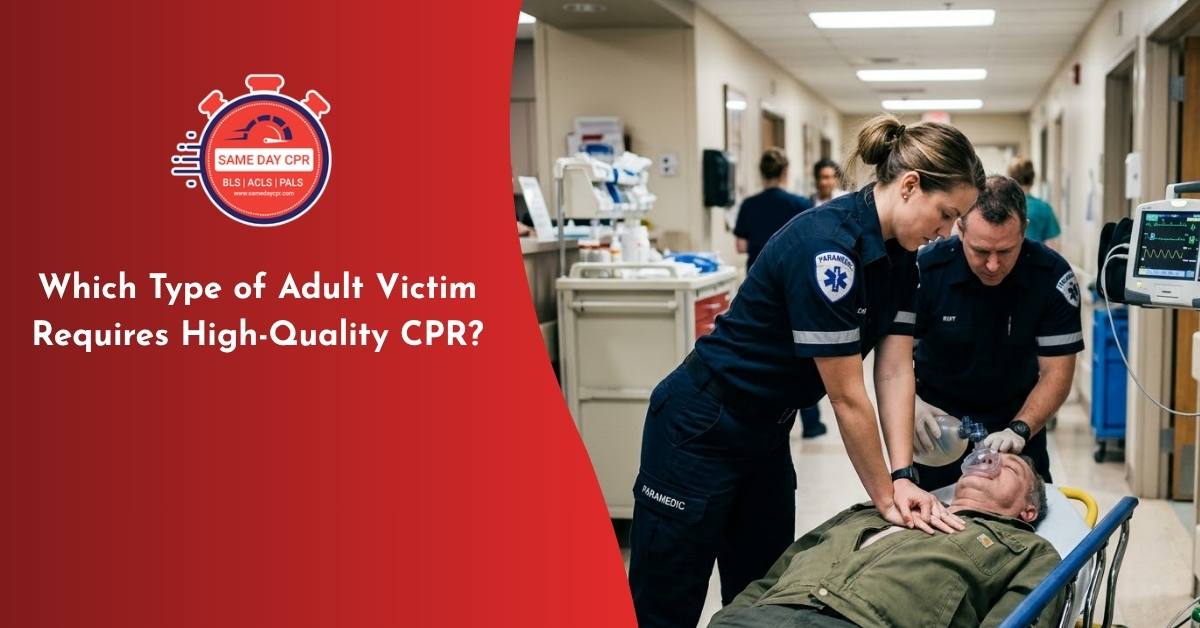
High-quality CPR is a lifesaving emergency technique that keeps blood and oxygen flowing to the brain and other vital organs when the heart stops beating effectively. It includes giving chest compressions at the correct rate and depth, allowing the chest to fully recoil after each compression, minimizing pauses, and providing rescue breaths when needed. These actions help support the body’s essential functions until advanced medical care arrives.
CPR should begin immediately if an adult is unresponsive, is not breathing normally, or is only gasping, as these are common signs of cardiac arrest. Acting quickly can reduce the risk of brain damage and improve the person’s chance of survival. However, starting CPR is only part of the process. The quality of each compression matters because effective compressions help circulate blood throughout the body. Poor technique can limit blood flow and reduce the chances of a successful recovery, making proper CPR skills essential in every cardiac emergency.
Victim Who Requires High-Quality CPR
Start high-quality CPR as soon as an adult shows signs that the heart has stopped pumping blood effectively. Quick action helps keep oxygen-rich blood flowing to the brain and other vital organs until emergency medical services arrive or an automated external defibrillator (AED) is available. Recognizing these warning signs can make a life-saving difference.
An Unresponsive Adult Who Is Not Breathing Normally
If an adult does not respond when you speak to them or gently tap their shoulders and they are not breathing normally, start CPR right away. Do not mistake occasional gasping or irregular breaths for normal breathing. Early chest compressions help keep blood circulating while waiting for professional medical care.
An Adult With No Detectable Pulse
Healthcare providers and trained rescuers should check for a pulse as part of their assessment. If no pulse is found within 10 seconds, CPR should begin without delay. Starting chest compressions promptly helps maintain blood flow to the brain and other vital organs.
An Adult in Sudden Cardiac Arrest
Sudden cardiac arrest happens when the heart unexpectedly stops beating or can no longer pump blood effectively. The person may collapse, become unresponsive, and stop breathing normally. Providing high-quality CPR as soon as possible, along with early use of an automated external defibrillator, offers the best chance of restoring a normal heart rhythm.
An Adult Who Is Only Gasping
Gasping is not a sign of normal breathing and should never delay CPR. It often occurs during the early moments of cardiac arrest. If an adult is unresponsive and only gasping, call emergency medical services and begin CPR without waiting.
How to Recognize That CPR Is Needed
Recognizing the warning signs of cardiac arrest quickly allows you to act without wasting valuable time. A simple assessment can help you determine whether CPR is needed while emergency medical services are on the way.
Check Responsiveness
Before approaching the person, make sure the scene is safe. Gently tap their shoulders and ask loudly if they are okay. If they do not respond to your voice or touch, move on to checking their breathing.
Check Breathing
Watch the chest for signs of normal breathing. If the person is not breathing or is only breathing abnormally, treat the situation as a possible cardiac arrest. Avoid spending more than a few seconds checking before taking the next step.
Identify Gasping
Occasional gasps or irregular breaths are not normal breathing and often occur during cardiac arrest. If an unresponsive person is only gasping, start CPR immediately without waiting.
Check for a Pulse if Trained
If you know how to check for a pulse, take no longer than 10 seconds. If you cannot find one or are unsure, start CPR right away. It is better to act quickly than spend too much time searching for a pulse.
Activate Emergency Services and Get an AED
Call your local emergency medical services or ask a nearby person to do so while CPR is started. If an AED is available, have someone bring it immediately and follow the device’s voice instructions. Using an AED as early as possible, together with high-quality CPR, greatly improves the chances of survival.
Knowing When to Start High-Quality CPR
In summary, recognizing when an adult needs high-quality CPR helps you respond quickly during a cardiac emergency. If the person is unresponsive, is not breathing normally, is only gasping, or has no detectable pulse if you are trained to check, begin CPR immediately and call emergency medical services. Acting without delay and using the correct CPR technique helps maintain blood flow to the brain and other vital organs until advanced care arrives. By learning these warning signs and practicing CPR regularly, you can respond with greater confidence and provide lifesaving care when it matters most.