


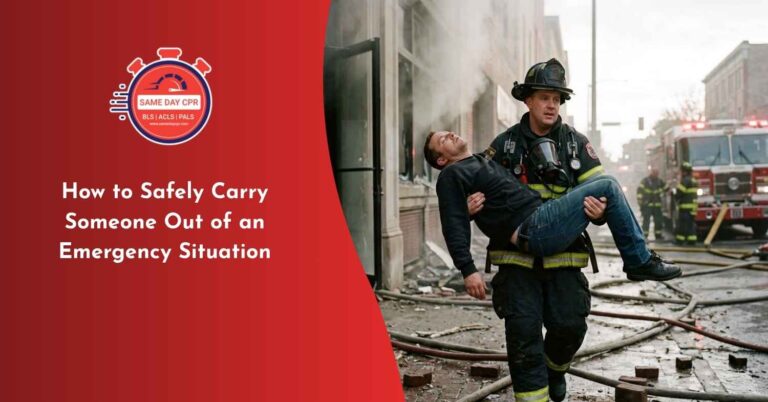
Emergencies can happen without warning. A fire, building collapse, traffic accident, or other dangerous situation may leave someone unable to reach safety on their own. In these circumstances, knowing how to safely carry someone out of immediate danger can help you respond without putting either person at unnecessary risk.
However, carrying an injured or unconscious person is not something to attempt casually. An improper lift can worsen an injury, cause the person to fall, or seriously injure the rescuer. Before attempting to carry someone, first make sure there is a genuine need to move them and that you can do so without entering a dangerous area yourself.
This guide explains when carrying someone may be necessary, how to assess the situation before lifting, basic safety principles for carrying a person, safer carrying options, how to handle stairs and confined spaces, common mistakes to avoid, and when you should leave the rescue to trained emergency responders.
When Should You Carry Someone in an Emergency?
The first rule is simple: do not carry someone unless moving them is necessary.
If the area is safe and the person is not in immediate danger, leave them where they are and contact emergency services. Unnecessary movement can make some injuries worse, particularly when a head, neck, back, or spinal injury is suspected.
You may need to carry or move someone when remaining where they are presents an immediate danger, such as:
- Fire or heavy smoke
- A building that may collapse
- Rising floodwater
- Approaching traffic or another vehicle hazard
- Electrical danger
- An explosion or risk of another explosion
- Dangerous chemicals or toxic fumes
- Any other immediate environmental threat
Call your local emergency service as soon as possible and follow the dispatcher’s instructions. If the person cannot get to safety independently and you can safely help, use the simplest carrying or movement method appropriate for the situation.
The goal is not to perform a complicated rescue. The goal is to get the person away from immediate danger while protecting yourself from injury.
Assess the Situation Before Carrying Someone
Before attempting to lift or carry someone, take a few seconds to assess the scene. Your safety comes first. You cannot safely rescue another person if you become injured yourself.
Look for hazards such as:
- Fire or smoke
- Broken glass
- Unstable structures
- Live electrical wires
- Moving vehicles
- Slippery or uneven surfaces
- Dangerous chemicals
- Other environmental hazards
Do not enter an unsafe area unless you can do so without putting yourself at serious risk.
Next, assess the person if it is safe to approach them. If they are conscious, ask simple questions such as:
- Are you hurt?
- Where does it hurt?
- Are you having trouble breathing?
- Can you move normally?
- Can you stand or walk safely?
If the person is responsive, able to stand, and can walk safely, assisting them to walk may be safer than carrying them. Do not force someone to stand or walk if they have severe pain, significant weakness, altered consciousness, or a suspected head, neck, back, or spinal injury. If other people are nearby, ask for assistance. Carrying another person is physically demanding, and additional help can make a necessary rescue safer and more controlled.
Basic Safety Rules for Carrying Someone
If you have determined that carrying the person is necessary, use controlled movements and avoid rushing.
Before lifting a conscious person, explain what you are going to do. Tell them when you are going to lift, move, turn, or lower them. Clear communication can help prevent sudden movements and reduce the risk of falls.
When carrying someone:
- Keep your feet stable and about shoulder-width apart.
- Bend your knees and hips instead of rounding your back.
- Keep the person as close to your body as practical.
- Use your legs rather than relying primarily on your back.
- Avoid twisting your torso while lifting or carrying.
- Turn your whole body instead of twisting while holding the person.
- Take slow, controlled steps.
- Watch the ground and the route ahead.
- Communicate clearly with anyone assisting you.
- Stop if the person or rescuer becomes unstable.
Do not attempt a lift that is clearly beyond your strength or ability. If the person is much heavier than you, get additional assistance or use another movement method when appropriate.
Remember that good lifting technique does not remove the risks associated with carrying an injured person. If there is no immediate danger, avoid unnecessary movement and wait for trained responders.
Different Ways to Carry Someone Safely
There is no single carrying technique that is appropriate for every emergency. The safest approach depends on the person’s condition, the environment, the safety distance, and the number of people available to help.
Whenever possible, choose the simplest method that allows the person to reach safety without unnecessary lifting or movement.
Walking Assistance
If the person is conscious, can stand, and can walk with support, carrying them may not be necessary.
Stand beside the person and allow them to place an arm over your shoulder if they are able. Provide steady support without pulling on an injured arm or forcing them to walk through significant pain.
Take short, controlled steps and watch the path ahead.
If the person becomes weak, dizzy, confused, or unable to continue, stop and reassess. Do not try to force them to keep walking.
Two-Person Carry
When two rescuers are available, sharing the person’s weight may make a necessary carry more manageable.
Before lifting, both rescuers should agree on how they will carry the person and communicate throughout the movement.
Use clear commands before:
- Lifting
- Walking
- Turning
- Stopping
- Lowering the person
A two-person carry may be appropriate for a responsive person who cannot walk but does not appear to have an injury that makes movement particularly dangerous.
Avoid attempting a complicated carry when a serious head, neck, back, or spinal injury is suspected unless remaining in place presents an immediate danger.
Do not attempt an unfamiliar carrying technique during an emergency. Poor coordination or an unstable grip can cause both the person and rescuers to fall.
Chair Carry
A sturdy chair may sometimes help move a person who cannot walk independently, particularly over a short, level route.
Before using a chair:
- Make sure it is stable.
- Make sure it can support the person’s weight.
- Check that the route is clear.
- Ensure everyone helping understands the plan.
Use particular caution around stairs. Carrying a person on stairs can create a significant fall risk for both the person and the rescuers.
If the person cannot be moved safely with the available help, contact emergency services and wait for trained responders when the situation allows.
Blanket or Sheet Drag
If a person must be moved away from immediate danger and lifting them is not practical, a sturdy blanket or sheet may sometimes be used to help move them a short distance.
Only use this option when movement is necessary, and you can perform it without placing yourself in greater danger.
Avoid unnecessary bending, twisting, or movement of the person’s body, particularly when a head, neck, back, or spinal injury is possible.
A blanket or sheet drag is an emergency option for getting someone away from immediate danger. It is not a substitute for professional patient-moving equipment or training.
Emergency Drag
An emergency drag may be necessary when a person cannot move independently, and an immediate hazard makes remaining in place more dangerous. Examples include:
- An active fire
- Rapidly spreading smoke
- A collapsing structure
- Another immediate life-threatening environmental hazard
In these situations, prioritize reaching a safer location. Use the simplest movement method you can perform safely rather than attempting a complicated rescue technique. Do not put yourself at serious risk to carry someone. If there is no immediate danger requiring movement, leave the person where they are, contact emergency services, and follow the dispatcher’s instructions.
How to Carry Someone Through Stairs or Narrow Spaces
Stairs, doorways, and narrow hallways make carrying someone more difficult and increase the risk of falls.
Before attempting to carry the person, assess the route carefully.
Look for:
- Loose objects
- Wet or slippery surfaces
- Broken steps
- Narrow doorways
- Low ceilings
- Other obstacles
Remove small obstacles only when you can do so safely. Do not spend time clearing hazards if doing so exposes you or the person to additional danger.
If two or more rescuers are helping, communicate before every major movement. Simple commands such as “ready,” “lift,” “stop,” and “down” can help everyone coordinate.
Do not rush simply because the situation is stressful. When conditions allow, slow and controlled movements are safer than hurried lifting.
If the stairs or confined space are too dangerous, or the person cannot be carried safely with the available help, call emergency services and wait for trained rescuers when possible.
Common Mistakes When Carrying Someone
Even when you are trying to help, certain actions can increase the risk of injury.
Avoid these common mistakes:
Trying to Carry Someone Who Is Too Heavy
Do not attempt a lift that exceeds your physical ability. Losing your grip or balance could injure both you and the person you are trying to rescue.
Pulling the Person by the Arms or Legs
Avoid dragging or pulling someone by an injured arm or leg. Use an appropriate emergency movement method based on the situation and your level of training.
Twisting While Carrying
Twisting while holding another person can place significant strain on your back. When possible, keep the person close and turn your whole body rather than twisting your torso.
Ignoring Environmental Hazards
Never focus so closely on the person that you overlook fire, electricity, traffic, broken glass, smoke, unstable structures, or other dangers.
Carrying Someone When It Is Not Necessary
If the person is not in immediate danger and can safely remain where they are, do not carry them simply because you want to help.
Attempting a Complicated Carry Without Training
Do not experiment with advanced rescue carries during an emergency. If a person requires a difficult lift or specialized rescue, trained emergency responders are better equipped to handle it.
Forgetting to Contact Emergency Services
Contact emergency services as soon as appropriate. Even if you successfully carry someone to safety, they may still require professional medical assessment and treatment.
What Should You Do After Carrying Someone to Safety?
Once the person is away from immediate danger, reassess their condition.
Check whether they are responsive and breathing normally. If they have serious bleeding, provide appropriate first aid within the limits of your training.
Keep the person as comfortable as possible and monitor their condition while waiting for emergency responders.
If the person becomes unconscious, stops breathing normally, or their condition changes, contact emergency services or update the emergency dispatcher immediately and follow the instructions provided.
Avoid giving food or drink to a seriously injured person unless a medical professional specifically tells you to do so.
Remember that reaching safety does not mean the emergency is over. A person who needed to be carried because of an accident, injury, or medical problem may still require urgent medical attention.
When Should You Leave the Rescue to Professionals?
Carrying someone yourself is not always the safest choice. Call emergency services and wait for trained responders when the person can remain safely where they are or when the rescue is beyond your ability.
Professional assistance is especially important when the situation involves:
- Major trauma
- Suspected spinal injury
- Severe bleeding
- Unconsciousness
- Serious breathing problems
- Entrapment
- An unstable building
- Fire or heavy smoke
- Electrical hazards
- Toxic chemicals
- Dangerous traffic conditions
If there is an immediate life-threatening danger, move yourself to safety and follow emergency instructions. Do not put yourself at serious risk attempting to carry someone.
The safest rescue is one that gets the person away from danger without creating another casualty.
How to Prepare Before an Emergency
The best time to learn how to respond to an emergency is before one happens.
Consider taking a certified first-aid or CPR course so you can learn how to assess emergencies, provide basic care, and recognize when moving or carrying someone is necessary.
You can also prepare by:
- Keeping a basic first-aid kit available.
- Learning emergency evacuation routes.
- Identifying safe exits at home and work.
- Discussing emergency plans with family members or coworkers.
- Learning how to contact local emergency services.
- Practicing your emergency plan when appropriate.
Preparation can help you remain calm and make better decisions if someone needs to be carried to safety.
Safe Emergency Carrying: Key Takeaways
In short, knowing how to safely carry someone out of an emergency is about more than physical strength. First, determine whether the person actually needs to be moved, assess the hazards around you, choose the safest practical method, and avoid carrying someone when the situation is beyond your ability. If there is no immediate danger, avoid unnecessary movement and wait for trained responders. If someone must be carried because remaining in place is dangerous, prioritize controlled movement, clear communication, and your own safety. When in doubt, contact emergency services and follow the instructions of trained professionals.