


If you work in healthcare, you have probably heard of BLS and PALS. Both certifications focus on saving lives during medical emergencies, but they serve different purposes. Choosing the right one can sometimes feel confusing, especially if you are starting a new healthcare job or updating your certifications.
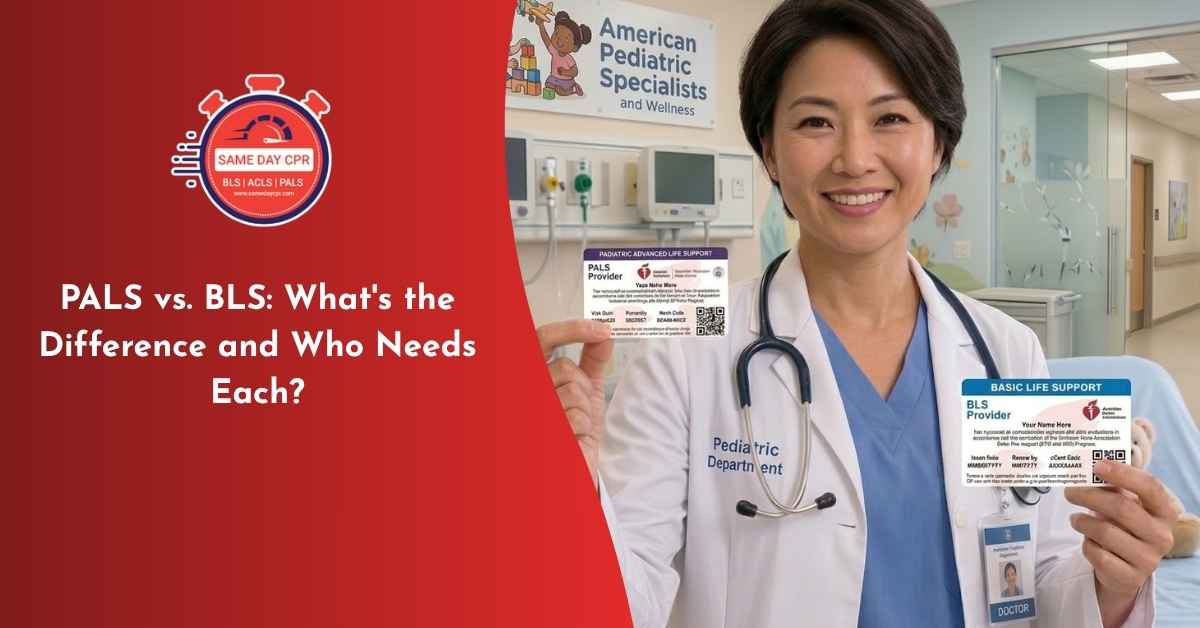
BLS stands for Basic Life Support, while PALS stands for Pediatric Advanced Life Support. BLS teaches the essential skills healthcare professionals need when someone experiences cardiac arrest or another life-threatening emergency. PALS goes further by focusing on the assessment and treatment of seriously ill or injured infants and children.
So, which certification do you need? The answer depends largely on your job, your patients, and your employer’s requirements.
Let’s look at the differences between PALS and BLS and explain who typically needs each certification.
What Is BLS?
BLS (Basic Life Support) certification provides the foundation for responding to life-threatening emergencies. It focuses on recognizing cardiac arrest, starting CPR, using an automated external defibrillator (AED), and providing effective basic life support.
Healthcare professionals often encounter situations in which a patient’s condition can change quickly. BLS training helps them respond immediately rather than waiting for additional help.
A typical BLS course covers important skills such as:
- High-quality chest compressions
- CPR for adults, children, and infants
- AED use
- Rescue breathing
- Basic airway management
- Recognition of cardiac arrest
- Team-based resuscitation
- Response to choking emergencies
The goal is simple: start effective life-saving care as quickly as possible.
BLS does not focus on one particular medical specialty. Instead, it teaches core emergency-response skills that healthcare professionals can use in many different settings.
What Is PALS?
PALS (Pediatric Advanced Life Support) certification focuses specifically on emergencies involving infants and children. Children can respond differently to illness and injury than adults. Their anatomy, physiology, vital signs, medication considerations, and emergency treatments can differ significantly. Because of these differences, healthcare professionals who care for pediatric patients need additional training beyond basic life support.
PALS training typically covers the recognition and management of serious pediatric conditions, including:
- Respiratory emergencies
- Shock
- Cardiac arrest
- Serious breathing problems
- Pediatric assessment
- Resuscitation
- Emergency medication considerations
- Team dynamics during pediatric emergencies
PALS also teaches healthcare professionals how to recognize a child’s condition early and respond before it becomes a full cardiac arrest.
That early recognition matters. In many pediatric emergencies, respiratory problems can lead to low oxygen levels, cardiac arrest, and other serious complications. Knowing how to identify deterioration can help a healthcare team intervene sooner.
PALS vs. BLS: Key Differences
The easiest way to understand the difference is to think about level and focus. BLS teaches fundamental life-support skills. PALS builds on those fundamentals and applies advanced emergency-care concepts to pediatric patients. Here is a simple comparison:
| Feature | BLS | PALS |
|---|---|---|
| Level of Care | Focuses on basic life-saving skills and immediate emergency response. | Focuses on advanced care for seriously ill or injured children. |
| Patient Groups | Applies to adults, children, and infants. | Mainly focuses on infants and children. |
| Training Focus | Teaches essential skills such as CPR, AED use, and basic resuscitation. | Covers pediatric assessment, emergency recognition, and advanced resuscitation. |
| Healthcare Settings | Is applicable in a wide range of healthcare environments, including hospitals, clinics, dental offices, and emergency settings. | Especially relevant in pediatric units, emergency departments, intensive care, and other settings where children receive care. |
| Knowledge Requirements | It provides foundational training that many healthcare professionals need. | Requires stronger clinical knowledge and the ability to make decisions during complex pediatric emergencies. |
One important point is that PALS and BLS are not interchangeable certifications. PALS focuses on pediatric emergencies, but healthcare professionals still need current BLS certification. Whether you need one or both depends on your position and your employer’s requirements.
Who Needs BLS Certification?
BLS is commonly required for healthcare professionals who need to respond to a cardiac or respiratory emergency. The exact requirements vary by employer and profession, but people who commonly need BLS certification include:
Nurses
Many nurses need BLS certification because they work directly with patients and need to respond to cardiac arrest or other emergencies. Whether a nurse works in a hospital, clinic, outpatient center, or another healthcare environment, basic resuscitation skills can prove essential.
Physicians
Doctors in many specialties maintain BLS certification because cardiac and respiratory emergencies can occur in almost any clinical environment. Some physicians also need additional certifications based on their specialty and patient population.
EMTs and Paramedics
Emergency medical professionals regularly respond to life-threatening situations. BLS forms part of the fundamental knowledge they use when providing emergency care. Depending on their role, they also require advanced certifications.
Dental Professionals
Dental offices can also encounter medical emergencies. Dentists and other dental professionals need BLS training so they can respond appropriately if a patient experiences a serious medical event.
Other Healthcare Workers
Medical assistants, technicians, and other healthcare workers also need BLS certification, particularly when their jobs involve direct patient care. The safest approach is to check your employer’s current certification requirements before enrolling in a course.
Who Needs PALS Certification?
PALS makes the most sense for healthcare professionals who regularly care for infants and children or who respond to pediatric emergencies. Professionals who need PALS include:
Pediatricians
Pediatricians work directly with children and need to understand how serious illnesses and emergencies can affect pediatric patients.
Pediatric Nurses
Nurses working in pediatric units, pediatric intensive care, and similar environments need PALS because they regularly care for children who could become critically ill.
Emergency Department Professionals
Emergency departments treat patients of all ages, including children. Healthcare professionals who frequently handle pediatric emergencies need PALS training.
Critical Care Professionals
Professionals working in intensive care environments encounter critically ill pediatric patients and need advanced pediatric emergency knowledge.
EMTs and Paramedics
Emergency responders encounter children with severe injuries, breathing problems, shock, or cardiac arrest. PALS training can help professionals manage these situations appropriately.
Other Pediatric Healthcare Professionals
Anesthesiology professionals and other healthcare providers who work with pediatric patients also need PALS depending on their responsibilities. Again, requirements vary. Your employer, professional organization, or licensing authority specify which certifications you must maintain.
Do You Need Both PALS and BLS?
This is one of the most common questions people ask. In many cases, yes, a healthcare professional needs both.
For example, imagine a nurse working in a pediatric intensive care unit. That nurse needs the fundamental skills taught in BLS but also needs advanced knowledge for managing serious pediatric emergencies. Maintaining both certifications can therefore make sense.
A healthcare professional who works exclusively with adults only needs BLS, depending on their role. Someone working in a pediatric emergency department needs both BLS and PALS. The key point is that PALS does not automatically mean you no longer need BLS. These courses address different levels of emergency care.
Before signing up for a course, check your workplace requirements. Taking the wrong course could leave you with a certification that does not meet your employer’s expectations.
Is PALS Harder Than BLS?
PALS generally requires more advanced clinical knowledge than BLS. BLS focuses heavily on recognizing cardiac arrest and performing effective CPR and other basic life-support interventions. PALS requires participants to assess pediatric patients, recognize serious conditions, interpret clinical information, and follow appropriate treatment pathways.
That does not mean PALS is impossible. Healthcare professionals who regularly work with children find the material easier because they already understand pediatric assessment and emergency care. Preparation also makes a significant difference.
If you plan to take PALS, review basic life-support skills and familiarize yourself with pediatric emergency concepts before the course.
How Do You Choose Between PALS and BLS?
Start with your job responsibilities.
BLS is the right choice if:
- You need basic life-support certification.
- Your job involves direct patient care.
- You need CPR and AED training.
- Your employer specifically requires BLS.
- You do not regularly manage complex pediatric emergencies.
PALS is the right choice if:
- You work with infants or children.
- You manage pediatric emergencies.
- You work in pediatric critical care.
- Your employer requires pediatric advanced life-support training.
- Your position involves responding to seriously ill pediatric patients.
You need both if:
- You work in pediatric emergency care.
- You work in a pediatric intensive care unit.
- Your employer requires both certifications.
- Your role involves both basic resuscitation and advanced pediatric emergency care.
BLS vs. PALS: Choosing the Right Certification
In summary, BLS and PALS both prepare healthcare professionals to respond when a patient’s life may be at risk, but they serve different purposes. BLS provides the foundation. It teaches essential skills such as CPR, AED use, and basic emergency response.
PALS takes pediatric emergency care further. It focuses on recognizing and managing serious conditions in infants and children and helps healthcare teams respond to complex pediatric emergencies. If you are deciding which certification to take, start with your role. Consider the patients you care for, the emergencies you may encounter, and the requirements set by your employer.
For many healthcare professionals, the choice is not really about PALS versus BLS. Instead, the two certifications can work together. BLS provides the essential foundation, while PALS adds specialized knowledge for pediatric emergencies.
Choosing the right certification helps ensure that you have the training you need when timely care can make a critical difference.