


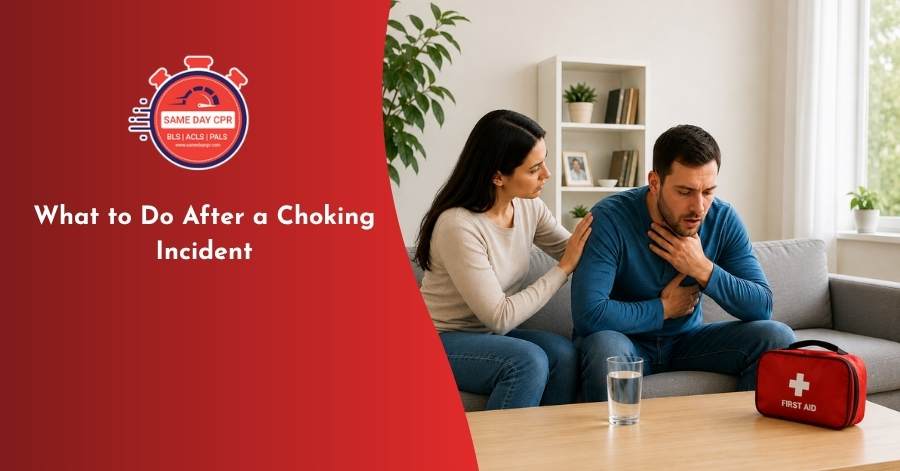
After a choking incident, taking the right steps once the airway has been cleared is important to help ensure the person’s safety and recovery. Even if they appear to be well, they should be monitored closely because some symptoms or complications may develop later.
This guide explains what to do after a choking incident, including how to check the person’s condition, support their recovery, recognize warning signs, know when to seek medical care, watch for delayed complications, and help reduce the risk of future choking episodes. It is intended for parents, caregivers, family members, teachers, and anyone who may need to care for someone after a choking emergency.
Emergency Note: The following advice applies only after the airway has been cleared. If the person cannot breathe, speak, or cough effectively, treat it as a medical emergency and call emergency services immediately.
Steps to Take After a Choking Incident
A choking incident can be frightening, but knowing what to do next can help support a safe recovery. Follow these steps after the airway has been cleared.
Step 1: Check Their Condition
After the choking incident, check that the person is breathing normally and is able to speak or cough. Ask how they feel and look for signs of ongoing distress, such as difficulty breathing, chest pain, persistent coughing, weakness, confusion, or extreme discomfort. If they cannot breathe normally or their symptoms worsen, seek emergency medical care immediately.
Step 2: Help Them Recover
Once the person is breathing comfortably, encourage them to sit upright and rest. Stay with them and offer reassurance, as choking can be a frightening experience. If they have mild throat irritation, encourage gentle coughing to help clear any remaining mucus or irritation.
Avoid giving food or drinks immediately if they have difficulty swallowing or continue to cough, as this may increase the risk of further choking or aspiration. Once they can swallow comfortably without coughing or choking, they may gradually resume eating and drinking. Starting with small sips of water before progressing to soft foods may be helpful.
Step 3: Watch for Signs of a Remaining Blockage
Even after the object has been removed, part of it may remain in the airway or throat. Seek medical evaluation if the person has:
- Persistent coughing
- Wheezing
- Difficulty breathing
- Difficulty swallowing
- A feeling that something is still stuck in the throat
- A weak, hoarse, or changed voice
- Noisy breathing (stridor)
These symptoms may indicate that the airway has not fully cleared or that the throat or airway has been injured.
Step 4: Seek Medical Advice After Severe Choking
Medical evaluation is recommended after a severe choking incident, particularly if back blows or abdominal thrusts were required. If you are unsure how to respond during a choking emergency, learning the Heimlich maneuver can help you understand the appropriate technique and respond more confidently when needed. A healthcare professional should also assess the person if they:
- Lost consciousness
- Experienced prolonged choking
- Continue to have pain or breathing difficulties
- Belong to a higher-risk group, such as young children, older adults, or people with conditions affecting breathing or swallowing
Medical assessment is important because severe choking or first-aid interventions can sometimes cause injuries or complications that are not immediately obvious.
Step 5: Watch for Injuries After First Aid
Back blows and abdominal thrusts (Heimlich maneuver) can occasionally cause injuries, especially after a severe choking incident. Although uncommon, these injuries may affect the ribs, chest, or abdominal organs.
Seek prompt medical evaluation if the person develops:
- Severe or persistent chest pain
- Severe abdominal pain
- Persistent vomiting or vomiting blood
- Coughing up blood
- Significant bruising or swelling of the chest or abdomen
- Pain that becomes worse instead of improving
Step 6: Monitor for Delayed Complications
Continue to observe the person for several hours after the choking incident. Some complications may not appear immediately, especially if food or another object entered the lungs (aspiration) or if the airway was injured.
If aspiration is suspected, continue to watch for symptoms over the following several days, as aspiration-related lung inflammation or aspiration pneumonia may develop hours or even days after the choking episode.
Seek urgent medical attention if the person develops:
- Increasing difficulty breathing
- Persistent or worsening cough
- Cough producing mucus
- Chest pain
- Fever
- Bluish lips or skin
- Extreme drowsiness
- Confusion
- Increasing hoarseness or voice changes
These symptoms may indicate complications, such as aspiration, airway swelling, or airway injury, that require prompt medical evaluation.
Step 7: Provide Reassurance and Ongoing Support
Choking can be physically and emotionally distressing. Stay with the person until they feel comfortable and encourage them to rest. Reassure them that it is normal to feel shaken after the experience.
If they continue to feel anxious or experience persistent physical symptoms, encourage them to seek further medical advice.
Step 8: Document the Incident (Workplaces, Schools, and Care Settings)
If the choking incident occurred in a workplace, school, childcare center, or other organized setting, document what happened according to the organization’s procedures. Record relevant details, including:
- What caused the choking
- The first-aid measures provided (such as back blows or abdominal thrusts)
- Whether emergency services were contacted
- The person’s condition after the incident
Accurate documentation supports appropriate follow-up care, meets reporting requirements, and may help prevent similar incidents in the future.
Helping Prevent Future Choking Incidents
After recovery, consider ways to reduce the risk of future choking episodes, especially in people who are at higher risk.
- Eat slowly and chew food thoroughly before swallowing.
- Cut food into small, manageable pieces.
- Avoid talking, laughing, or walking while eating.
- Supervise young children during meals and keep small objects out of their reach.
- Ensure dentures fit properly if they are worn.
- Seek medical advice for persistent swallowing difficulties or conditions that affect swallowing.
- Learn basic choking first aid so you are prepared to respond if another choking emergency occurs.
Supporting a Safe Recovery after Choking
In short, most people recover well after a choking incident, but careful observation is still important because some problems can appear later. Keep a close eye on the person, support their recovery, and do not ignore any new or worsening symptoms. If you are ever unsure about their condition, it is always safer to seek medical advice. Taking simple steps to prevent future choking and learning the skills taught in the AHA Heartsaver® First Aid CPR AED course can also help you respond with confidence if an emergency happens again. Staying calm, acting quickly, and knowing what to watch for can make a real difference in keeping someone safe.