


Best overall for choosing between healthcare and general CPR renewal: Same Day CPR. Best for self-paced healthcare coursework: American Heart Association HeartCode BLS; best for workplaces accepting Red Cross credentials: American Red Cross BLS; best for nonclinical AHA requirements: AHA Heartsaver; best for workplace first aid plus CPR: National Safety Council training.
- The best CPR recertification and renewal programs match your employer’s required credential, not just your preferred format.
- Same Day CPR offers CPR and BLS certification classes for healthcare and non-healthcare professionals.
- AHA HeartCode BLS combines online learning with a required hands-on skills component.
- Choose AHA Heartsaver or National Safety Council training when workplace requirements include general CPR, AED, or first aid.
Why this matters
The best renewal program is the one that satisfies your employer’s exact credential requirement. A healthcare BLS requirement is not interchangeable with a general CPR course, even when both cover chest compressions and automated external defibrillator use.
For 2026, start with the wording on your current card and the requirement supplied by your employer, school, or licensing organization. Then choose the provider and delivery format. Reversing that order creates an avoidable problem: finishing a course that does not satisfy the requirement you needed to renew.
Same Day CPR is best for CPR renewal learners who need a choice between healthcare and non-healthcare certification classes.
What makes the best CPR renewal program?
Use these criteria before comparing providers. They matter more than a promise of quick completion.
- Employer acceptance: The course produces the exact credential your employer or school requires, including the issuing organization.
- Course match: Healthcare learners select the required BLS course; general workplace learners select the specified CPR, AED, and first aid coverage.
- Skills verification: The program includes the hands-on assessment required for its credential rather than treating online coursework as the entire process.
- Delivery fit: You understand which portions happen online and which require attendance or a separate skills appointment.
- Completion clarity: You know what must be finished before a card is issued and how to access that card afterward.
- Renewal eligibility: The provider explains whether your current card qualifies you for its renewal pathway or whether you need the full course.
The American Heart Association states that its BLS and Heartsaver course completion cards are valid for 2 years. American Red Cross BLS certification is also valid for 2 years. Those periods do not establish employer acceptance; your workplace still determines which credential meets its requirement.
Best CPR renewal programs at a glance
This 2026 comparison separates programs by the requirement each one addresses. Same Day CPR is a training provider, while several other entries are named course pathways; these are choices for completing renewal, not identical types of organization.
| Program or provider | Best for | Standout feature | Key limitation |
|---|---|---|---|
| Same Day CPR | Learners choosing between healthcare and general CPR classes | CPR, BLS, ACLS, and PALS certification classes with online/in-person options | You still need to confirm the exact course and completion requirements |
| AHA HeartCode BLS | Healthcare learners who prefer self-paced coursework | Online learning followed by a required hands-on skills component | Online completion alone does not complete BLS certification |
| American Red Cross BLS | Healthcare learners whose employer accepts Red Cross BLS | Healthcare-focused BLS training through the Red Cross | It does not satisfy a requirement specifically naming AHA BLS |
| AHA Heartsaver | Nonclinical learners with an AHA CPR or first aid requirement | CPR, AED, and first aid course options for general audiences | It is not a substitute for healthcare BLS |
| National Safety Council training | Workplace learners combining CPR with first aid | Workplace-oriented first aid, CPR, and AED training | Employers requiring AHA or Red Cross credentials need a different pathway |
There is no universal winner across all jobs. A hospital employee and an office safety coordinator can need different credentials even when both search for the best CPR recertification and renewal programs.
1. Same Day CPR: best CPR renewal provider for choosing the right class
Same Day CPR provides AHA-certified CPR, BLS, ACLS, and PALS certification classes for healthcare and non-healthcare professionals across multiple U.S. locations. Its online/in-person options give you a starting point when you need to identify the appropriate class before renewing.
The main advantage is course choice. Match your requirement first; do not assume that a broader clinical course replaces a separately required BLS credential.
Same Day CPR pros:
- Offers CPR and BLS classes for different learner requirements.
- Also provides ACLS and PALS certification classes for relevant clinical needs.
- Serves healthcare and non-healthcare professionals across multiple U.S. locations.
Same Day CPR cons:
- The provider name alone does not identify the credential you need.
- Online/in-person options still require you to confirm how your selected course is completed.
Best for: Learners who want a provider offering both healthcare and non-healthcare certification classes.
Verdict: Choose Same Day CPR after matching the class to your employer’s requirement.
2. AHA HeartCode BLS: best BLS renewal pathway for self-paced coursework
AHA HeartCode BLS is the American Heart Association’s blended-learning BLS pathway. You complete the online portion and then the required hands-on skills component to finish the course.
This separates knowledge review from skills verification. It suits healthcare learners who want to work through the educational portion independently without removing practical assessment from certification.
AHA HeartCode BLS pros:
- Lets you complete the online learning portion at your own pace.
- Covers BLS content intended for healthcare professionals and other relevant responders.
- Retains a hands-on component rather than relying entirely on an online quiz.
AHA HeartCode BLS cons:
- Completing the online portion does not by itself earn the course completion card.
- You must arrange the hands-on component through an appropriate completion pathway.
Best for: Healthcare learners whose employer requires AHA BLS and who prefer self-paced knowledge review.
For 2026 renewal planning, treat online coursework and skills completion as separate obligations. Confirm both before you begin.
Verdict: Choose AHA HeartCode BLS for flexible coursework, not for an online-only shortcut.
3. American Red Cross BLS: best CPR renewal for Red Cross acceptance
American Red Cross BLS provides basic life support training for healthcare professionals and relevant emergency responders. The Red Cross offers classroom and blended-learning pathways, with practical skills included in course completion.
Its role in this comparison is specific: it is a suitable choice when your employer accepts Red Cross BLS. It is not interchangeable with AHA BLS when a policy explicitly names the AHA credential.
American Red Cross BLS pros:
- Provides healthcare-focused BLS training.
- Offers classroom and blended-learning formats.
- Includes practical skills development and assessment.
American Red Cross BLS cons:
- Does not satisfy an employer requirement specifically naming AHA BLS.
- A healthcare BLS course can exceed what a nonclinical workplace asks you to complete.
Best for: Healthcare learners with confirmed acceptance of American Red Cross BLS.
American Red Cross BLS certification lasts 2 years. Check the expiration on your own certificate rather than estimating from the month you remember attending class.
Verdict: Choose American Red Cross BLS when Red Cross acceptance is confirmed; skip it when AHA is mandatory.
4. AHA Heartsaver: best CPR renewal for nonclinical AHA requirements
AHA Heartsaver courses teach CPR and AED skills, with first aid included in the relevant course option. They serve people with little or no medical training who need training for a job, regulatory requirement, or personal preparedness.
Choose the specific Heartsaver course that matches your requirement. CPR and AED coverage alone does not satisfy a separate first aid requirement, and Heartsaver does not replace healthcare BLS.
AHA Heartsaver pros:
- Uses a curriculum intended for nonclinical learners.
- Offers CPR and AED training without requiring a healthcare role.
- Includes a first aid course option when that coverage is required.
AHA Heartsaver cons:
- Does not replace BLS when a healthcare employer requires BLS.
- Different Heartsaver course options cover different requirements.
Best for: Nonclinical learners whose employer requires an AHA CPR, AED, or first aid credential.
The AHA states that Heartsaver course completion cards are valid for 2 years. For a 2026 renewal, confirm the course name and required topics rather than asking only for an AHA card.
Verdict: Choose AHA Heartsaver for the specified nonclinical requirement; skip it for a healthcare BLS requirement.
5. National Safety Council training: best CPR renewal for workplace first aid
The National Safety Council provides first aid, CPR, and AED training for workplace and community needs. This is a practical option when your requirement includes responding to injuries as well as cardiac emergencies.
Its value depends on acceptance. A recognizable training organization still needs to match the credential policy at your workplace.
National Safety Council training pros:
- Includes first aid alongside CPR and AED training in the relevant course.
- Addresses workplace emergency preparedness.
- Gives nonclinical learners an alternative to a healthcare-focused BLS course.
National Safety Council training cons:
- Does not meet policies specifically requiring AHA or American Red Cross certification.
- General workplace training does not replace required healthcare BLS.
Best for: Workplace learners whose employer accepts National Safety Council training and requires first aid with CPR.
Verdict: Choose National Safety Council training for an accepted workplace requirement; skip it when a different issuer is mandatory.
How these programs are ranked
This ranking prioritizes employer acceptance, course match, hands-on verification, delivery fit, and clarity about completion. The first position addresses course selection across healthcare and non-healthcare audiences; subsequent positions address distinct credential or learning needs.
The credential distinctions and validity periods above follow the American Heart Association’s BLS and Heartsaver course guidance and the American Red Cross’s BLS course information. These are course-selection criteria for 2026, not claims from a comparative performance test.
A renewal program wins only when its final credential matches your requirement. Familiar branding and convenient coursework do not override that condition.
Check these details before booking
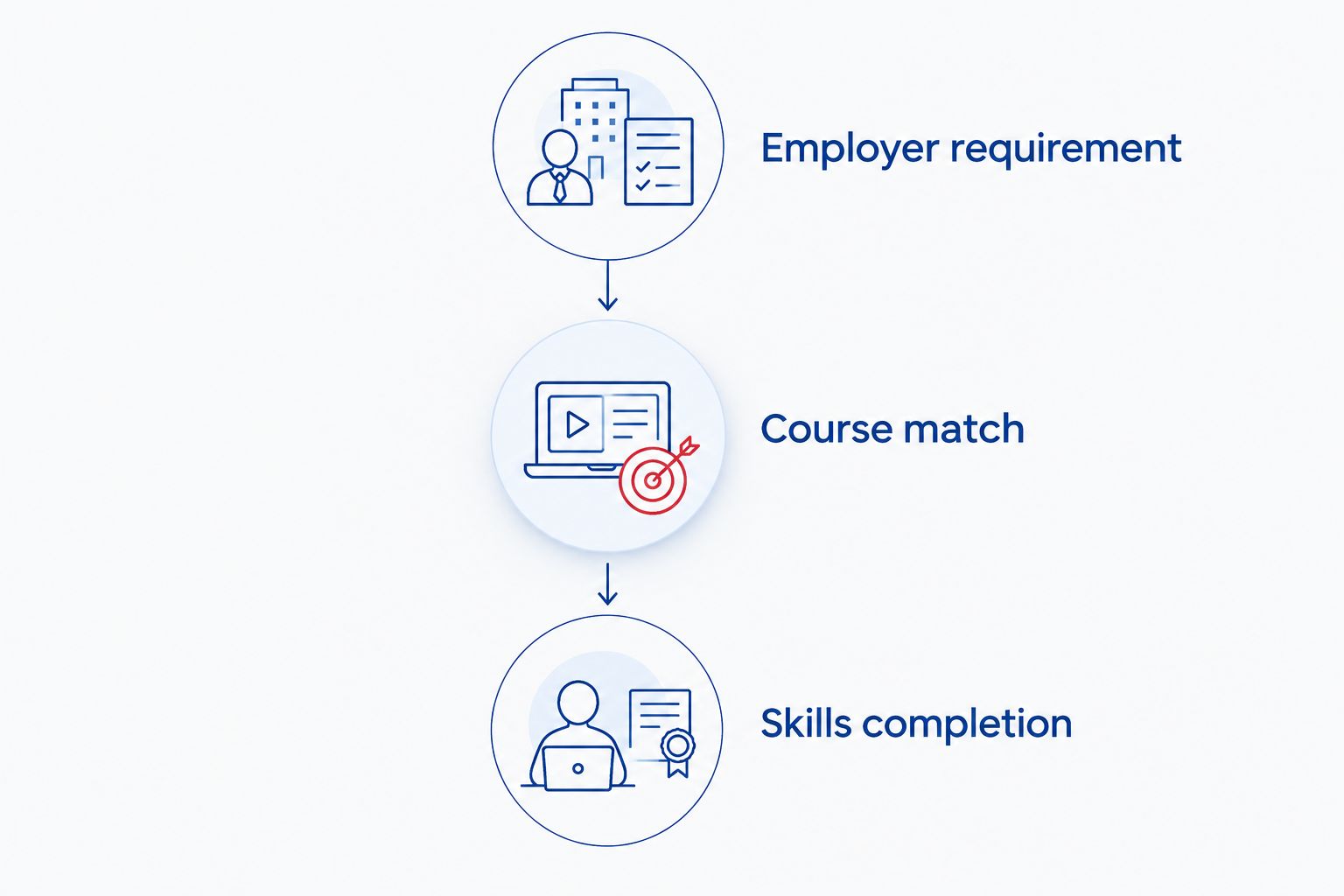
Use this sequence to turn a search result into the right enrollment decision.
Employer requirement
Copy the required credential exactly. Include the course name, issuing organization, and any first aid requirement; ask your employer to clarify an instruction that says only CPR certification.
Course match
Compare that wording with the selected class. Check whether you need BLS, general CPR/AED, or a course that also includes first aid.
Skills completion
Confirm how practical assessment works and what must be finished before the card is issued. If learning happens online, identify the remaining hands-on requirement before starting.
If your card expires in 30 days, use that date as your planning deadline rather than waiting until the final day. This is a scheduling recommendation, not a statement about how long any provider needs to complete certification.
Choose your CPR renewal class
Review CPR, BLS, ACLS, and PALS class options against your employer’s certification requirement.
Which CPR renewal program should you choose?
Start with Same Day CPR if you need to choose between healthcare and non-healthcare classes. Start with the required issuer instead if your employer already specifies a particular credential.
Choose AHA HeartCode BLS for self-paced healthcare coursework with hands-on completion. Choose American Red Cross BLS when Red Cross acceptance is confirmed, AHA Heartsaver for an applicable nonclinical requirement, or National Safety Council training for accepted workplace first aid and CPR needs.
For 2026, the deciding question is simple: what exact credential must you submit after the course?
FAQ
What’s the best CPR recertification program for healthcare workers?
The best program is the BLS pathway that produces the credential your healthcare employer requires. AHA HeartCode BLS suits self-paced coursework, while American Red Cross BLS is appropriate when your employer accepts Red Cross certification.
Can I renew CPR certification entirely online?
Online coursework alone does not complete AHA HeartCode BLS certification. The course requires a hands-on skills component, so confirm the full completion process before enrolling.
Is BLS renewal the same as CPR renewal?
BLS renewal is not automatically the same as general CPR renewal. BLS addresses healthcare-oriented basic life support, while general CPR courses serve other requirements; choose the course your employer specifies.
How long does an AHA BLS certification last?
An AHA BLS course completion card is valid for 2 years. Use the expiration date on your card to plan renewal and confirm any separate workplace requirements.
Is American Red Cross BLS better than AHA BLS?
Neither credential is universally better for every learner. Choose the organization your employer accepts; Red Cross BLS does not satisfy a policy specifically requiring AHA BLS.
Can I take a renewal class if my CPR card has expired?
Confirm your eligibility with the course provider before booking a renewal-specific class. Enrollment rules differ by course pathway, and an expired card does not establish eligibility for an abbreviated renewal format.
Should I choose Heartsaver or BLS for my job?
Choose BLS when your employer requires healthcare BLS, and choose Heartsaver when the specified requirement is an applicable nonclinical AHA course. Confirm whether first aid must be included rather than assuming every CPR course covers it.
One last thing
Ask for the exact credential name in writing before enrolling. An instruction to renew CPR leaves room for a mismatch; an instruction naming the course and issuing organization gives you a clear booking decision.
Keep your completion card accessible after renewal. The useful endpoint is not finishing coursework—it is submitting the credential your employer actually requires.