


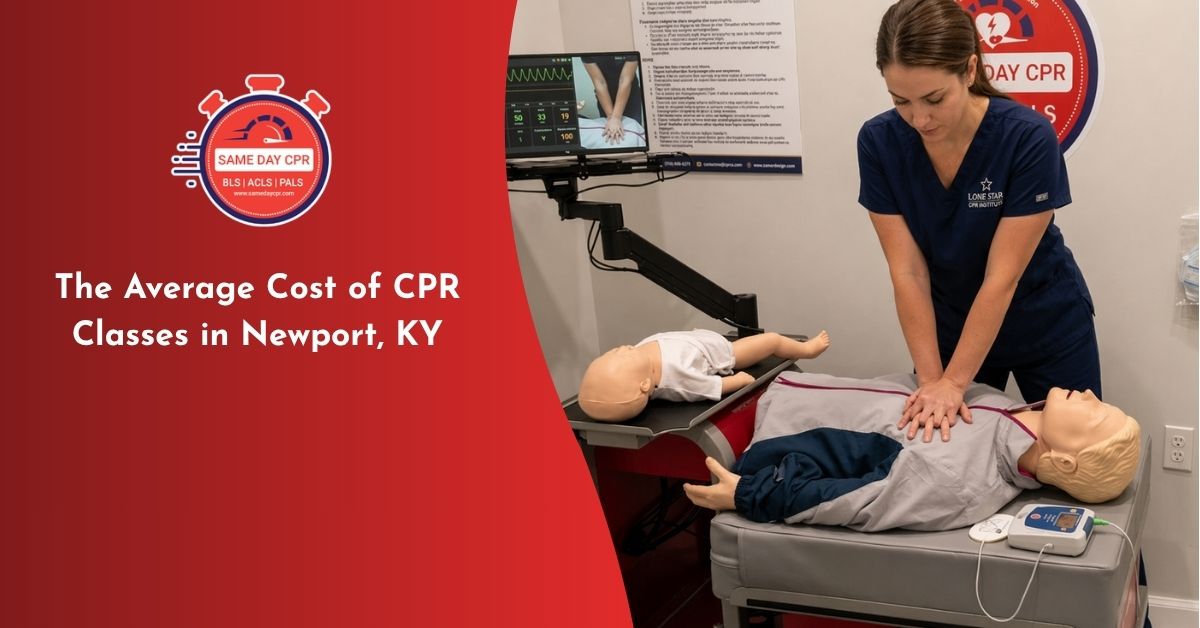
If you’ve been putting off CPR training because you’re not sure what it costs, this guide gives you a clear, honest answer based on current pricing from CPR training providers serving Newport, KY, and the greater Northern Kentucky area, including Covington, Florence, and the broader Cincinnati metro.
Most Newport residents will pay somewhere between $90 and $120 for a standard BLS certification. Healthcare professionals needing ACLS or PALS credentials can expect to spend $150 to $295, depending on the format. Below is a full breakdown of what those numbers mean, what drives the difference, and how to make sure you’re not overpaying.
What CPR Classes Actually Cost in Newport, KY
Based on current pricing from AHA-certified providers in Newport and the surrounding Northern Kentucky area, here is what you can expect to pay:
| Course | Online + Skills Session | Skills Only Session |
|---|---|---|
| BLS (Basic Life Support) | $120 | $90 |
| ACLS (Advanced Cardiac Life Support) | $295 | $150 |
| PALS (Pediatric Advanced Life Support) | $295 | $150 |
These prices reflect the American Heart Association (AHA) HeartCode structure, which is the most widely accepted certification format in Newport and required by most local employers, including St. Elizabeth Healthcare, St. Luke Hospital, and Northern Kentucky school districts.
Course-by-Course Cost Breakdown
If you are looking to get certified or renew your credentials in Newport, this guide breaks down the main training options and what each one costs. It will help you quickly understand which course fits your goals and budget so you can choose with confidence.
1. Basic Life Support (BLS)
BLS is the starting point for most Newport residents, whether you’re a parent, teacher, gym trainer, childcare worker, or simply someone who wants to be prepared. It covers CPR for adults, children, and infants, plus AED use.
- Online + in-person skills session: $120
- Skills session only (if online portion already completed): $90
The blended format is the most practical option for busy schedules. You complete the theory online at your own pace, then come in for hands-on practice. No full-day commitment required.
2. Advanced Cardiac Life Support (ACLS)
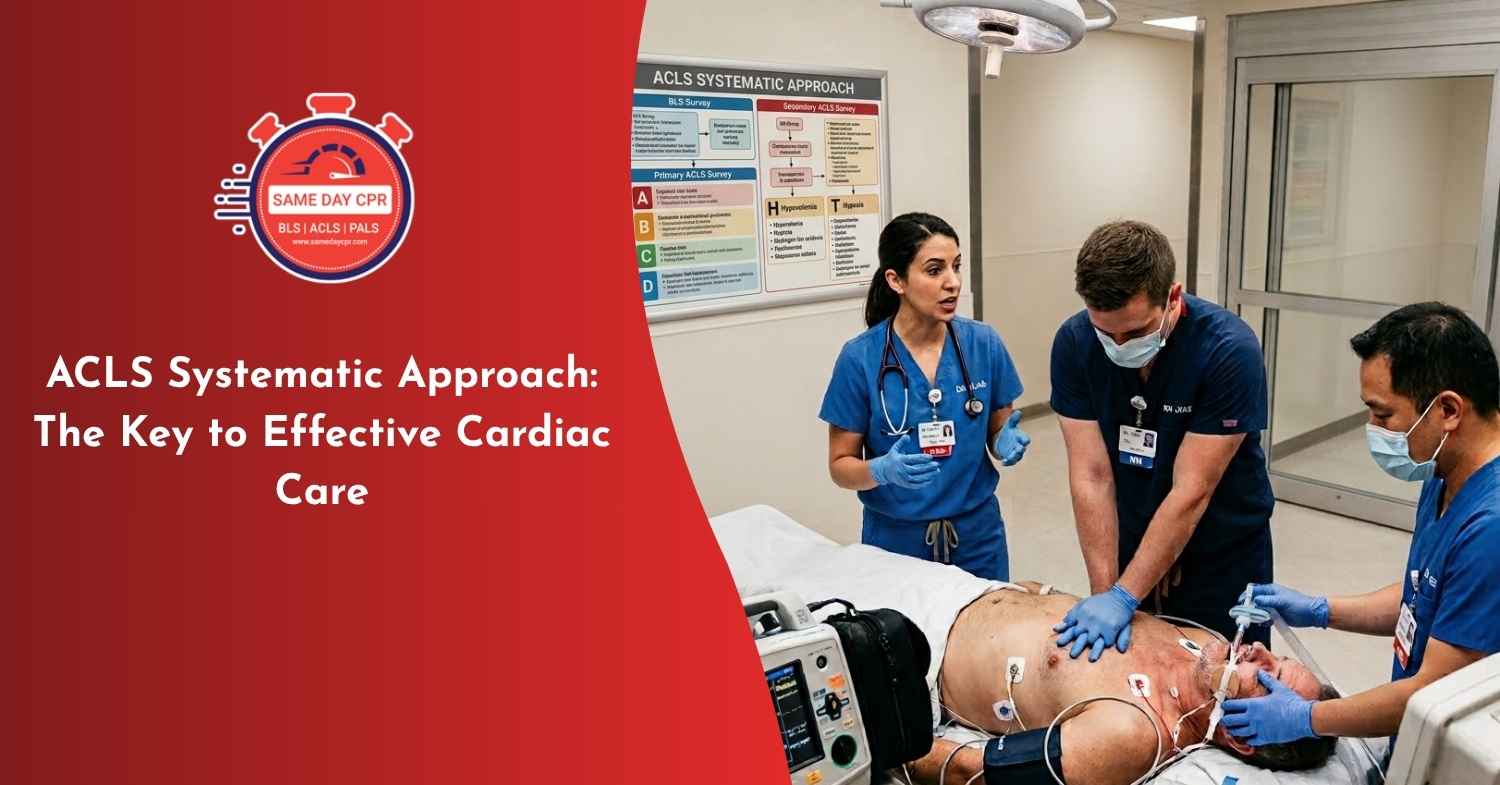
ACLS is for healthcare professionals in Newport and NKY who manage cardiac emergencies in clinical settings. It covers ECG interpretation, medication protocols, and team-based resuscitation.
- Online + skills session: $295
- Skills session only: $150
Most clinical employers in the area, including emergency departments and ICUs across Northern Kentucky, require current ACLS certification as a condition of employment.
3. Pediatric Advanced Life Support (PALS)
PALS is built for nurses, physicians, and clinical staff working with infants and children in pediatric or emergency settings across Newport and the broader NKY region.
- Online + skills session: $295
- Skills session only: $150
If you work in a pediatric unit, neonatal setting, or emergency department in the area, your employer or licensing board almost certainly requires current PALS certification.
Why the Price Varies Between Providers in Newport
Two people can take the same CPR course and pay different amounts. Here’s what actually drives that difference:
1. Course Level
BLS is foundational and the least expensive. ACLS and PALS require more instructional depth, longer skills sessions, and more complex clinical scenarios, all of which are reflected in the price.
2. Course Format
The blended format, online theory followed by an in-person skills check, is generally more cost-effective than a fully in-person class. If you’ve already completed the online portion, the skills-only session brings the price down further.
3. All-Inclusive vs. Itemized Pricing
Some Newport providers bundle the course fee, certification card, and materials into one price. Others list a base price and add fees at checkout. Always ask what’s included before you commit. A course that appears cheaper upfront can end up costing more once card fees and testing fees are added.
4. Group vs. Individual Enrollment
If your Newport employer, school, or workplace organizes training as a group, the per-person cost is typically lower because overhead is shared. Individual sign-ups almost always pay a bit more. If you have coworkers or family members who also need certification, ask about group pricing even informally.
5. Certifying Organization
AHA certification carries specific weight in professional settings across Northern Kentucky. Many local employers and licensing boards require it by name. That recognition comes with a price, but it also means your certification is accepted without question at hospitals, clinics, and schools throughout the region.
Hidden and Additional Costs to Watch For
The advertised price isn’t always the final price. Before enrolling with any Newport-area provider, ask these questions:
- Is the AHA certification card included? Some providers charge $15 to $25 separately.
- Is there a testing or materials fee? These are sometimes added at checkout.
- Is parking or facility access free? Minor, but worth confirming for in-person sessions.
- What is the rescheduling or cancellation policy? Missing a skills session without notice can result in a rebooking fee.
A quick look at the full cost breakdown before registering prevents surprises and makes it easier to compare providers accurately.
How to Keep Your CPR Costs Down in Newport
Getting certified doesn’t have to stretch your budget. A few simple moves can make a real difference.
1. Go Blended If You Can
The online plus skills session format is almost always more cost-effective than a fully classroom-based course. It also fits better into a real schedule because you’re not locked into a full-day session.
2. Check If You Qualify for Renewal Pricing
If your previous certification hasn’t expired for long, a renewal or recertification course usually costs less than starting from the beginning. It covers what you need without repeating content you’ve already been tested on.
3. Ask About Group Rates
Even if your company hasn’t officially organized training, it doesn’t hurt to call and ask if there’s a discount for bringing two or three people. Many providers are flexible, especially for local community members.
4. Look for Promo Codes Before You Book
It takes about two minutes to search for a discount code before you enroll. Seasonal promotions, first-time enrollment discounts, and community partnership deals are more common than people realize.
5. Read the Full Price Breakdown Before Signing Up
This one saves a lot of frustration. Some providers advertise a low base price and then add on a certification card fee, a testing fee, or a materials charge. A quick look at the full cost before you register means no surprises at checkout.
Choosing the Right Class for Your Needs
Not everyone needs the same CPR course, and paying for more than you need doesn’t make sense. Here is the clarification of courses and who needs it.
1. BLS
If you’re a parent, a teacher, a coach, a childcare worker, or simply someone who wants to feel prepared at home or in public, BLS fits your needs perfectly. It equips you with everything you need to respond to a cardiac emergency involving adults or children, including how to operate a defibrillator, without requiring any medical background.
2. ACLS
If you work in healthcare and your role requires you to respond to cardiac events, manage airways, or lead resuscitations, your employer or licensing board likely requires ACLS. It builds on BLS knowledge and adds the clinical decision-making skills your role demands.
3. PALS
If you work with infants or children in a clinical capacity, whether in pediatrics, the emergency department, or a neonatal unit, PALS is what you need. It specifically addresses the physiological differences in pediatric patients and covers the emergency scenarios most relevant to that population.
When you’re unsure which CPR course your job requires, check your employer’s credential requirements or ask HR directly. Showing up with the wrong certification wastes your time and money.
What to Expect After You Complete the Course
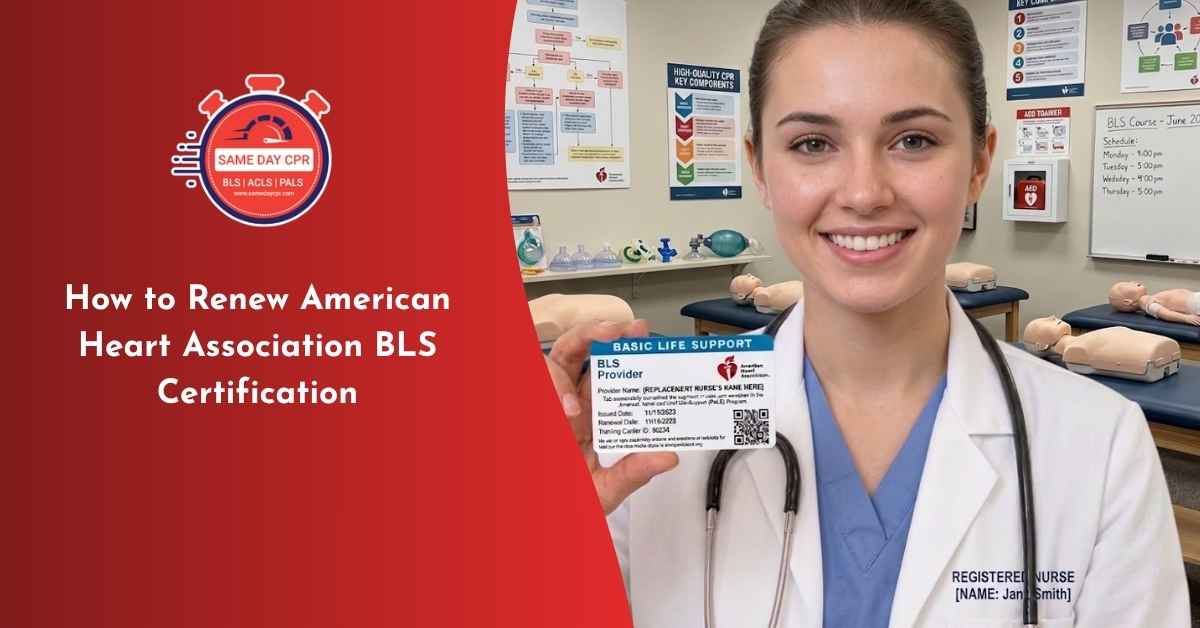
After you complete both Part 1 and Part 2 of the course, the AHA will issue you a certification card valid for two years. Hospitals, clinics, schools, and employers nationwide widely accept this certification, and in most cases, it meets licensing and credentialing requirements without requiring any extra steps.
More importantly, you don’t just leave with a card, you leave with real confidence. Not just the “I watched a video” kind, but confidence you build by actually practicing chest compressions on a manikin and operating a training AED under the supervision of an AHA Voice-Assistant Manikin (VAM). That hands-on experience is exactly what the course delivers, which is why the in-person component matters when you need certification that truly holds professional value.
Your Next Step Toward CPR Certification in Newport, KY
In summary, CPR certification in Newport, KY is one of those things that costs less than you expect and pays off more than you imagine. Most people walk away spending between $90 and $120 for BLS, and healthcare professionals can budget between $150 and $285 for ACLS or PALS, depending on the format they choose. The blended learning option makes the whole process faster and easier to fit into a busy life. A few smart moves, like checking for group rates, looking up promo codes, and reading the full price breakdown before you book, can stretch your budget even further.
At Same Day CPR, we offer BLS, ACLS, and PALS classes, whether you’re renewing your certification or signing up for the first time. We keep things engaging, hands-on, and low-pressure. Once you complete both parts of the course, you’ll walk out with your certification card that same day. Our low price guarantee, daily support, and 100% pass guarantee ensure you get exactly what you came for. Your certification is accepted by employers nationwide, and our training is to help you confidently save a life when it matters most. At the end of the day, you’re not just walking away with a card; you’re leaving with real confidence that comes from hands-on practice, and that’s worth every penny.