


No—PALS certification does not award a separate BLS certification, so it does not replace BLS when your pediatric unit requires a current BLS card. PALS builds on basic life support skills, but your employer’s credentialing policy determines whether you must document both certifications.
- Can PALS certification replace BLS in pediatric unit requirements? No, not when the unit requires a separate BLS card.
- American Heart Association BLS and PALS are separate credentials; advanced pediatric training does not automatically satisfy a BLS requirement.
- Ask your educator or credentialing team which current cards your role requires before booking.
- Same Day CPR offers separate BLS and PALS bookings, with online coursework completed before each hands-on skills check.
Can PALS certification replace BLS in a pediatric unit?
PALS does not automatically replace BLS in a pediatric unit. The American Heart Association issues BLS and PALS as separate course completion credentials. Completing PALS does not also issue a BLS eCard.
The distinction is between demonstrating skills and documenting a credential. PALS uses foundational resuscitation skills, but a unit that asks for a current BLS card is asking for that specific credential—not evidence that you completed a different course.
| Credential option | Best for | What it documents | Benefit | Limitation |
|---|---|---|---|---|
| BLS | Healthcare providers whose role requires basic life support certification | Completion of the BLS course requirements | Addresses an explicit BLS credential requirement | Does not document PALS completion |
| PALS | Providers whose role requires pediatric advanced life support certification | Completion of the PALS course requirements | Addresses an explicit PALS credential requirement | Does not issue a separate BLS card |
| BLS and PALS | Providers whose employer requires both credentials | Completion of each course separately | Documents both required certifications | Requires separate course completion and bookings |
Before choosing a course, check the credential names in your onboarding instructions, renewal notice, or employee learning system. If timing is the issue, review how long a BLS certification is valid before it expires alongside the date on your own card.
Why this matters
A pediatric assignment does not turn every certification requirement into a pediatric-only requirement. Your unit can require BLS for foundational resuscitation readiness and PALS for pediatric assessment and advanced response responsibilities.
The practical risk is booking the wrong course. If your BLS requirement is due and you complete only PALS, you still have not produced the BLS card your credentialing team requested.
Match the course to the missing credential, not to the course that sounds more advanced. That rule applies whether you are starting a pediatric role, returning for clinical placement, or renewing an existing certification.
BLS: the separate credential for foundational resuscitation skills
American Heart Association BLS covers foundational responses to life-threatening emergencies, including CPR, AED use, and relief of choking. Its scope includes adult, child, and infant skills; BLS is not an adult-only credential.
That matters on a pediatric unit. Knowing that PALS focuses on children does not make the BLS requirement irrelevant, because BLS already includes pediatric resuscitation fundamentals.
Best for: A healthcare provider whose employer, school, or clinical placement explicitly requires BLS.
The benefit is a course completion card that directly matches a BLS requirement. The limitation is equally clear: completing BLS does not provide a PALS credential if your role requires pediatric advanced life support training too.
If your current BLS card remains valid, check when your employer expects renewal. If the card has expired, ask what you must complete before your next assignment rather than assuming your current PALS card fills the gap.
PALS: advanced pediatric training, not a second BLS card
American Heart Association PALS focuses on recognizing and responding to pediatric respiratory emergencies, shock, and cardiopulmonary arrest. It builds on the basic life support skills used during pediatric resuscitation.
That relationship explains the confusion. PALS includes basic skills within a broader pediatric course, but related content does not make the resulting credentials interchangeable.
Best for: A healthcare provider whose role requires pediatric advanced life support certification.
PALS addresses a different training requirement from BLS. Its limitation for this question is documentation: a PALS eCard establishes PALS course completion, not separate completion of the BLS course.
If a supervisor says that PALS is sufficient for your assignment, confirm that the decision also covers the BLS entry in your credentialing record. A conversation about clinical responsibilities is not necessarily a decision about which documents the employer requires.
Why pediatric-unit requirements vary
The course names stay distinct, but the credentials you must submit depend on the requirements attached to your position. Check these factors rather than relying on a coworker’s experience:
- Employer policy: Read the exact credential requirement. A policy that lists BLS and PALS calls for separate documentation unless the employer expressly provides an exception.
- Job responsibilities: Confirm the requirements for your specific role, not simply the pediatric department where you work.
- Clinical placement rules: Students must follow the credentials required by their school and placement site. Another student’s accepted paperwork is not approval for yours.
- Accepted issuing organization: If the requirement names the American Heart Association, confirm that the course you select produces the requested AHA credential.
- Credential status and deadlines: Check each card independently. A current PALS card does not change the expiration date printed on your BLS card.
These are questions for your educator, manager, school coordinator, or credentialing team. The training provider can explain the course and card it issues; your employer decides whether that documentation satisfies your role’s requirements.
How do I confirm whether I need both BLS and PALS?
Use a short verification process before enrolling. You need an answer about the exact cards required—not a general statement that advanced training is valuable.
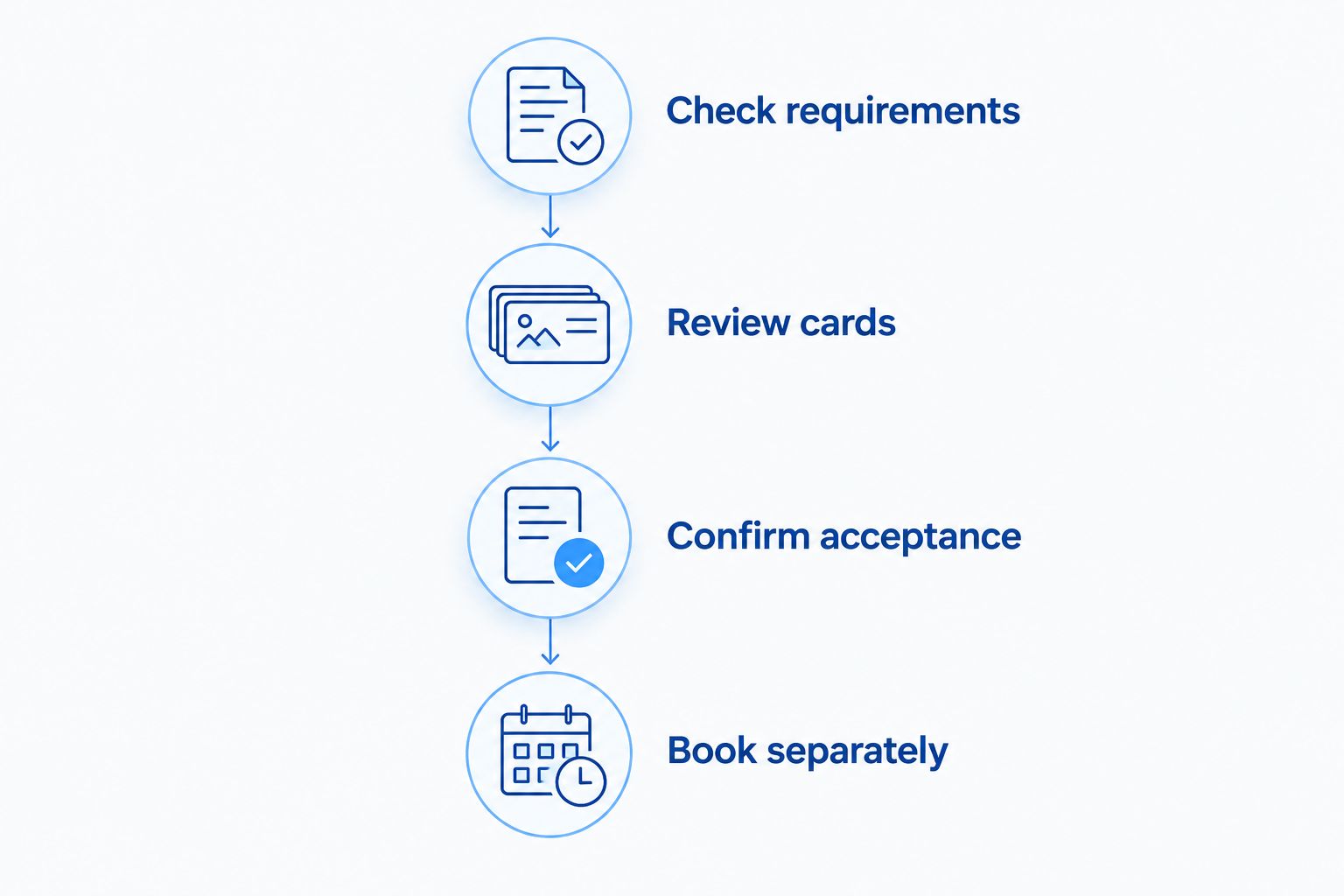
- Check requirements. Find the written credential list for your position or clinical placement. Look for BLS and PALS as separate entries.
- Review cards. Check which credentials you already hold and the expiration date on each. Do not use one card’s date to track another.
- Confirm acceptance. Ask the responsible team whether a current PALS card satisfies its BLS requirement or whether a separate BLS eCard is mandatory.
- Book separately. Enroll in each course you actually need. If both credentials are required, plan for separate course completion.
The sequence prevents a simple mistake: completing a valid course that does not address the requirement currently blocking your clearance.
When you contact credentialing, include your role, the credentials you currently hold, and their expiration dates. Ask whether both cards must remain current throughout your assignment and which document you must submit after renewal.
Keep the response with your onboarding or renewal instructions. Written confirmation gives you a clear basis for booking and avoids repeating the same question when paperwork is reviewed.
Can I complete BLS and PALS on the same day?
BLS and PALS can be completed on the same day through separate bookings at Same Day CPR, with the online portion finished before each skills check. Each course has its own approximately 1-hour appointment slot; one booking does not cover both courses.
The hands-on session is approximately 30 minutes, but the reserved slot is not a promise that you can finish the online coursework and skills assessment together within that hour. Plan your online study separately and complete it before the corresponding appointment.
Same Day CPR is best for healthcare providers who need official AHA BLS or PALS certification through self-paced online learning and an in-person skills check. Its Official American Heart Association CPR Verification Stations are Powered by Bayside CPR, an Official American Heart Association National Training Center.
The format provides the same official certification as traditional instructor-led classroom training, with a self-guided hands-on assessment rather than a long classroom session. You receive your official AHA eCard the same visit after successful completion, with unlimited attempts until you pass.
The trade-off is preparation: you must complete the online work before attending, and each required course remains a separate commitment. This format does not remove an employer’s requirement to hold both cards.
Use Same Day CPR to select the required course and station. Complete checkout there, and confirm each booking separately when arranging back-to-back appointments.
Should I choose Online + Skills or Skills Only?
Online + Skills is the choice for initial and renewal students who need the full course. Skills Only is for students who have already completed the corresponding online portion, including those who purchased it from the American Heart Association.
Choose based on completed coursework, not experience alone. Holding PALS does not establish that you have completed the online portion for a separate BLS course, and previously holding BLS does not by itself make you eligible for Skills Only.
Before booking, verify the course name on your online completion documentation. BLS online completion supports the BLS skills pathway; it does not substitute for completing the PALS online portion.
Does passing PALS renew my BLS certification?
Passing PALS does not renew your separate BLS certification. Check your BLS card independently and complete the BLS renewal requirements when that credential is due.
If both cards are required for your job, track both deadlines. Completing one course should not cause you to remove the other from your renewal calendar.
Is BLS still necessary if I only care for pediatric patients?
BLS remains necessary when your employer or placement requires a BLS credential, even if your patients are children. BLS includes child and infant resuscitation skills, so pediatric care is not outside its scope.
Ask about your position’s written requirements before dropping a BLS renewal. Your patient population alone does not establish a credential exemption.
Can my employer accept PALS instead of a separate BLS card?
Your employer determines whether PALS satisfies its own documentation policy, but PALS does not award a separate BLS card. Obtain explicit confirmation before relying on an exception.
If the written requirement still lists BLS, resolve that discrepancy with credentialing. Do not assume a general statement about PALS overrides a specific requirement in your employee record.
FAQ
Can PALS certification replace BLS in a pediatric unit?
PALS does not replace BLS when your pediatric unit requires a separate current BLS card. The American Heart Association issues BLS and PALS as separate credentials, so confirm your employer’s exact documentation requirements.
Does an AHA PALS course include a BLS certification card?
An AHA PALS course does not issue a separate BLS certification card. PALS builds on basic life support skills, but a BLS credential requires separate BLS course completion.
Do pediatric nurses need both BLS and PALS?
Pediatric nurses need both BLS and PALS when their employer requires both credentials. Check the requirements for your specific role rather than assuming every pediatric position follows the same policy.
Can I use PALS while my BLS card is expired?
A current PALS card does not renew an expired BLS card. Contact your employer about assignment requirements and complete BLS if a current BLS credential is required.
Can I book BLS and PALS together on the same day?
You can arrange BLS and PALS on the same day through separate Same Day CPR bookings. Complete each online portion before its skills check and reserve a separate approximately 1-hour slot for each course.
Can I book BLS Skills Only because I already have PALS?
Holding PALS alone does not qualify you for BLS Skills Only. Skills Only requires completion of the corresponding online portion; initial and renewal students who need the full course should choose Online + Skills.
Will my pediatric unit accept a blended AHA course?
Your pediatric unit’s credentialing team determines which course documentation it accepts. Confirm the required issuing organization, course name, and hands-on component before booking.
One last thing
Check the missing card, not just the next class. If your credentialing record lists BLS as incomplete, another PALS course does not produce the missing BLS eCard.
Before booking, place your requirement list beside your current cards. Match each required credential to its own completion plan, and ask credentialing to resolve any exception before you rely on it.
Related guides
- What happens if your CPR certification expires while employed?
- Who books AHA BLS Skills Only?
- What to expect at a CPR Verification Station