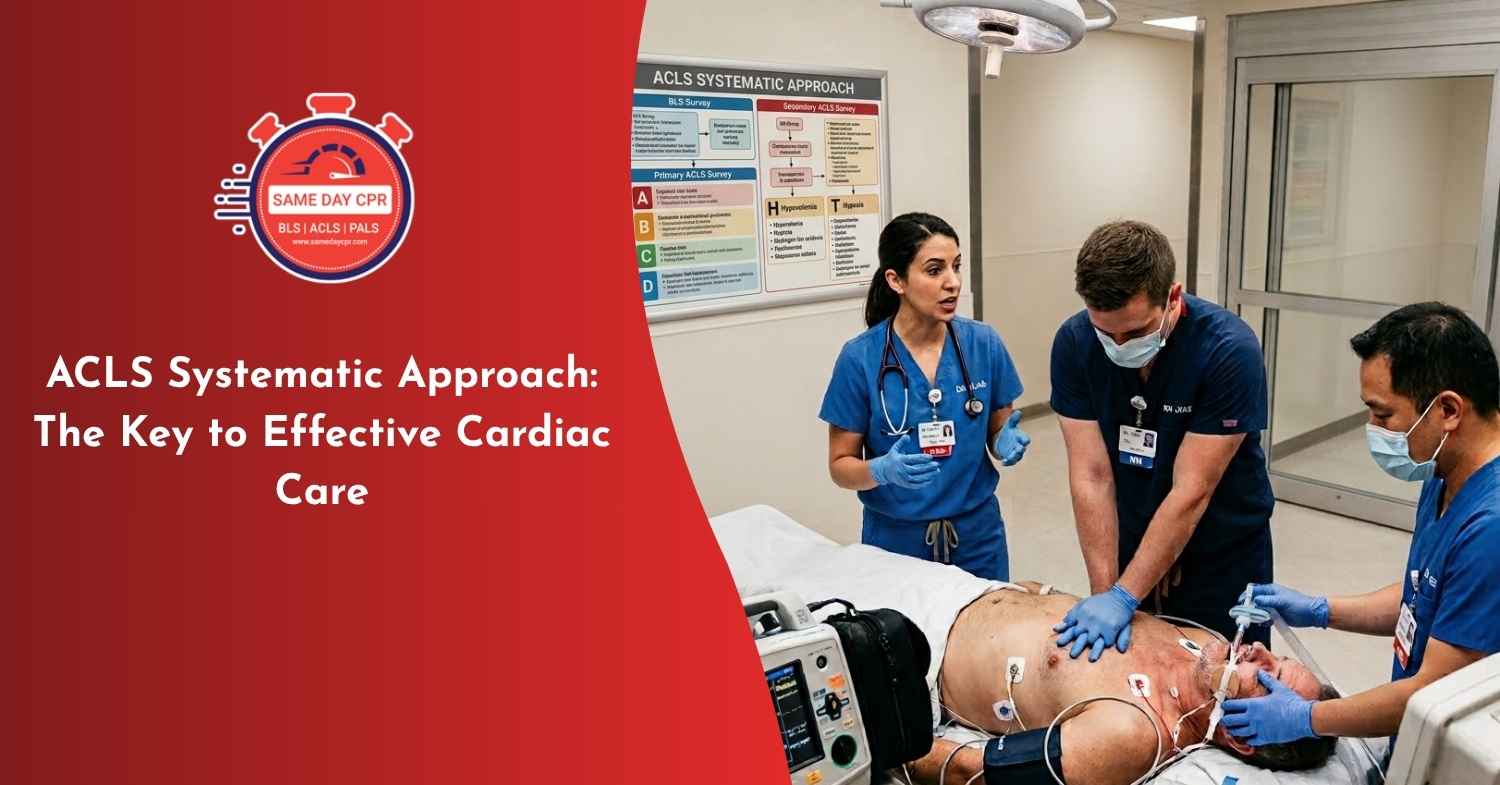



Cardiopulmonary resuscitation (CPR) is a high-pressure emergency where every second matters. While effective chest compressions and early defibrillation are essential, successful resuscitation also depends on strong teamwork. Team members must communicate clearly, understand their responsibilities, and respond promptly and effectively.
But how can CPR teams ensure that critical information is shared accurately and that every task is completed without confusion or delay? One proven approach is closed-loop communication, a structured communication method that strengthens teamwork during resuscitation. By ensuring instructions are acknowledged, completed, and confirmed, it reduces errors and improves coordination during resuscitation. Understanding this technique is an important part of both BLS and ACLS training.
What is Closed-Loop Communication?
Closed-loop communication is a structured communication method used during CPR and other medical emergencies to ensure instructions are clearly delivered, understood, and completed. It helps prevent misunderstandings by requiring team members to acknowledge and confirm every instruction they receive. This communication technique is a core component of effective team dynamics in both Basic Life Support (BLS) and Advanced Cardiovascular Life Support (ACLS).
During a cardiac emergency, every second is crucial, and even minor communication errors can delay lifesaving interventions. Closed-loop communication creates a clear chain of communication between the team leader and responders, ensuring that critical tasks are assigned accurately and completed without confusion.
How Closed-Loop Communication Works During CPR
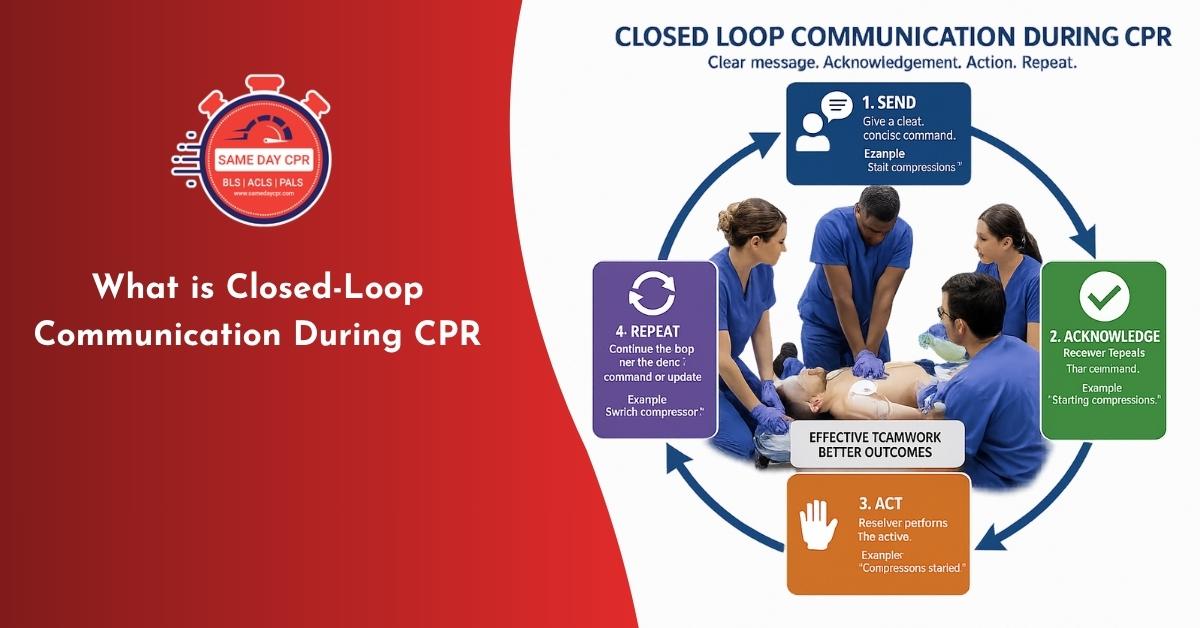
Effective communication is essential for every CPR team to work efficiently and confidently. Closed-loop communication helps ensure that every instruction is clearly received, understood, carried out, and acknowledged, enabling the team to deliver the highest quality of patient care. The three main steps of closed-loop communication are as follows:
Step 1: Assign a Clear Task
The team leader begins by giving a specific instruction to a designated team member using their name or role. Instead of issuing a general command like, “Someone start chest compressions,” the leader should say, “Sarah, begin chest compressions,” or “Airway provider, prepare for ventilation.” Assigning the task to an individual eliminates confusion about who is responsible and promotes immediate action.
Step 2: Repeat the Instruction
After receiving the instruction, the assigned team member repeats it back to the team leader. This verbal confirmation ensures that the message was heard and understood correctly before the task is performed. For example, if the leader says, “John, attach the AED,” John should respond, “Attaching the AED now.” Repeating the instruction completes the communication loop and reduces the risk of misunderstandings.
Step 3: Complete the Task and Report Back
Once the assigned task is completed or underway, the team member reports their progress to the team leader. For example, they might say, “AED attached and analyzing rhythm,” or “Chest compressions started.” The team leader then acknowledges the update, confirms the task has been completed, and provides any additional instructions if needed. This final confirmation keeps the entire team informed, maintains situational awareness, and ensures that patient care continues smoothly.
By consistently following these three steps—assigning a clear task, repeating the instruction, and reporting task completion—CPR teams can communicate more effectively, reduce errors, and deliver faster, better-coordinated patient care.
Why is closed-loop communication important during CPR?
Closed-loop communication plays a big part in helping CPR teams work well together during an emergency. As part of effective team dynamics in CPR, it helps everyone understand instructions clearly, complete tasks with confidence, and give the patient the best possible care.
- Reduces Misunderstandings: Closed-loop communication helps team members clearly hear and confirm each instruction. This lowers confusion and makes sure everyone knows what to do.
- Improves Coordination Among Team Members: Each person shares updates and confirms when a task is complete. This keeps the team working together in a smooth and organized way.
- Ensures Critical Tasks Are Completed Correctly: Team members repeat instructions and confirm when they finish each task. This helps prevent mistakes and makes sure important actions are done the right way.
- Enhances Patient Safety: Clear communication helps the team respond with care and accuracy. This reduces errors and gives the patient a better chance of receiving the right treatment.
- Supports Faster Decision Making During Emergencies: Quick and clear responses help the team understand the situation without delay. This allows them to make fast decisions and provide CPR as soon as possible.
Common Communication Mistakes During CPR
Even experienced healthcare professionals can make communication mistakes during a cardiac emergency. These errors can delay treatment, create confusion, and affect the quality of CPR. Recognizing and avoiding them helps teams work together more effectively and improve patient outcomes.
Giving Vague Instructions
Vague commands can confuse the team about who should act. Instead of saying, “Someone get the AED,” assign the task to a specific person, such as, “Alex, retrieve the AED.”
Not Confirming Task Completion
Always confirm that assigned tasks have been completed. Team members should report back after finishing a task, and the team leader should acknowledge the update before moving on.
Multiple People Responding to the Same Task
When several people respond to the same instruction, they may duplicate efforts while other tasks are overlooked. Assign each task to one specific team member to avoid confusion.
Assuming the Message Was Heard
Emergency scenes are often noisy. Ask team members to repeat instructions back to confirm they understood the message correctly before taking action.
Failing to Address Team Members by Name or Role
Avoid general statements like “Can someone manage the airway?” Instead, address a specific person or role, such as, “Jamie, manage the airway.” This clearly assigns responsibility and keeps the team organized.
By avoiding these common mistakes and using closed-loop communication, CPR teams can improve coordination, reduce errors, and provide high-quality resuscitation.
Best Practices for Effective Closed-Loop Communication
The effectiveness of closed-loop communication depends on all team members consistently applying standardized communication methods. In CPR, this enhances team coordination, decreases the likelihood of errors, and supports a rapid and effective response.
- Speak Clearly and Confidently: Use a clear, loud voice so everyone can hear your instructions. Keep your message simple and avoid vague language.
- Make Eye Contact: When possible, make brief eye contact with the person receiving the instruction. If you can’t, address them by name or role to ensure the message reaches the right person.
- Assign One Task at a Time: Give one clear instruction at a time and wait for confirmation before assigning another task. This helps team members stay focused and prevents missed responsibilities.
- Confirm Task Completion: Team members should report when they complete a task, and the team leader should acknowledge the update. This ensures critical interventions are completed before moving on.
- Practice During CPR Simulations: Regular CPR simulations help healthcare professionals build confidence, improve communication, and strengthen teamwork before responding to real emergencies.
Using these best practices helps CPR teams communicate better, reduce mistakes, and deliver effective resuscitation during critical moments.
Tips for Learning Closed-Loop Communication
Developing strong closed-loop communication skills requires consistent practice and training. The following strategies can help healthcare professionals and CPR trainees communicate more effectively during emergencies.
Participate in CPR Training Courses
Enroll in accredited BLS or ACLS courses to learn and practice closed-loop communication as part of effective CPR team dynamics.
Practice Mock Emergency Scenarios
Take part in mock codes and emergency drills to build confidence and improve communication under realistic, high-pressure conditions.
Review CPR Team Leadership Principles
Study the roles and responsibilities of CPR team leaders to understand how clear communication supports efficient teamwork and patient care.
Use Simulation-Based Learning
Practice in simulation labs or with CPR manikins to refine communication skills, receive feedback, and improve team coordination in a safe learning environment.
Enhancing CPR Outcomes Through Closed-Loop Communication
In summary, closed-loop communication is an important part of successful CPR because it helps every team member stay focused and work together with confidence. When instructions are given clearly, repeated back, and confirmed after completion, the team can avoid confusion and respond more quickly during a cardiac emergency. This simple communication method supports better teamwork, reduces mistakes, and helps ensure that every critical task is completed on time. By practicing closed-loop communication during CPR training and using it in real emergencies, healthcare professionals can improve the quality of care and give patients the best possible chance of survival.