



In a cardiac emergency, the first few moments often determine a patient’s outcome. Advanced Cardiovascular Life Support (ACLS) provides healthcare professionals with a structured approach to managing cardiac emergencies and other critically ill patients. One of its most valuable features is the ability to assess patients quickly because early recognition of critical conditions allows lifesaving treatment to begin without delay.
The primary assessment is the first step in this process. It uses the ABCDE approach to identify immediate threats and helps healthcare providers deliver the most appropriate interventions based on the patient’s condition.
In this guide, you will learn what the ACLS primary assessment is, why it matters, how to perform each step of the ABCDE approach, common mistakes to avoid, and practical tips for improving patient care during emergencies.
What Is the Primary Assessment in ACLS?
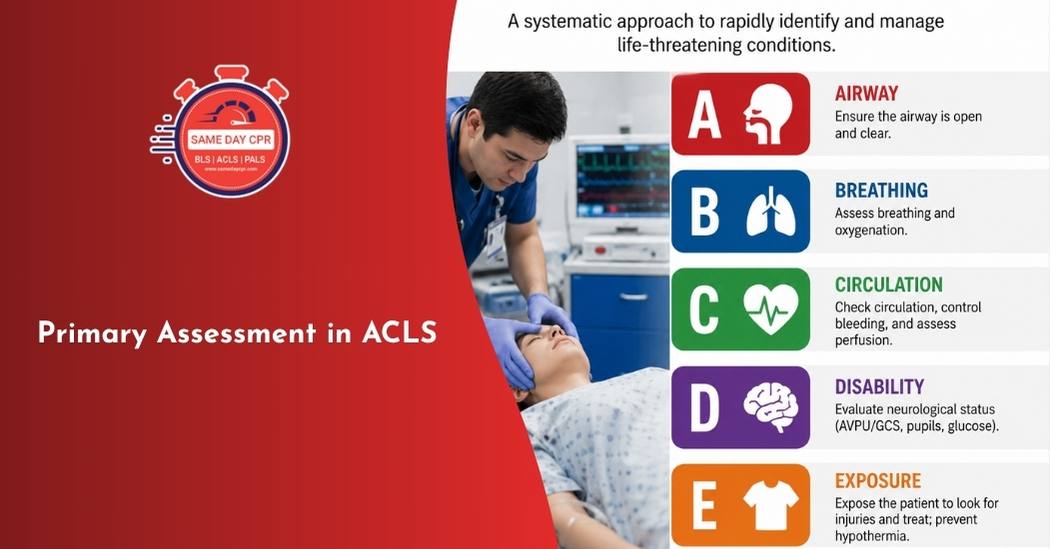
The primary assessment in ACLS is a rapid, systematic evaluation used to identify and manage life-threatening conditions in critically ill or injured patients. It follows the ABCDE approach by assessing the Airway, Breathing, Circulation, Disability, and Exposure in a specific order. This structured approach helps healthcare providers recognize problems quickly and begin treatment without unnecessary delays.
Using a standardized assessment ensures that healthcare providers address the most critical issues first. Rather than treating symptoms randomly, providers can prioritize interventions based on the patient’s immediate needs and continually reassess the patient’s response. This organized approach improves decision-making, supports effective teamwork, and helps deliver timely, lifesaving care.
Why Is the Primary Assessment Important in ACLS?
The primary assessment allows healthcare providers to recognize critical problems early and begin appropriate treatment without delay. Below are the main reasons it plays an essential role in ACLS.
Identifies Critical Problems Early
The primary assessment makes it easier to recognize serious conditions before they become worse. Early detection allows healthcare providers to respond promptly and improve the patient’s chances of survival.
Helps Prioritize Lifesaving Interventions
A methodical approach shows which issues require immediate attention. This keeps healthcare providers focused on the highest priority actions instead of wasting valuable time.
Supports Faster Treatment Decisions
The information gathered during the evaluation guides healthcare providers toward the most appropriate treatment. Prompt decision-making is essential during cardiac emergencies because every second matters.
Improves Patient Outcomes
Recognizing and treating critical conditions early can reduce complications and increase the patient’s chance of recovery. A well-organized response gives the patient the best opportunity for a positive outcome.
Promotes Effective Teamwork
This process gives every team member a clear understanding of the patient’s condition. As a result, the team communicates more effectively, coordinates tasks efficiently, and delivers care more smoothly.
The ACLS Primary Assessment Step by Step
The ACLS primary assessment follows the ABCDE approach to evaluate patients in a logical order and address critical conditions. Each step focuses on a vital body system, allowing healthcare providers to detect serious problems early and provide appropriate care before moving to the next step.
Airway (A)
The first step is to assess whether the patient’s airway is open and clear. Look for signs of airway obstruction, such as abnormal breathing sounds, choking, swelling, or an inability to speak. If the airway is blocked, use appropriate airway management techniques, such as a head tilt chin lift, a jaw thrust maneuver if a spinal injury is suspected, suctioning, or airway adjuncts to restore a clear airway.
Breathing (B)
After confirming a patent airway, evaluate the patient’s breathing by checking the rate, depth, and overall quality of respirations. Measure oxygen saturation when available, and look for signs of respiratory distress, such as rapid breathing, labored breathing, or cyanosis. Provide supplemental oxygen or assisted ventilation with a bag-mask device if the patient is not breathing adequately.
Circulation (C)
Assess the patient’s circulation by checking the pulse, blood pressure, skin color, temperature, capillary refill, and overall perfusion. Identify signs of shock, severe bleeding, or cardiac arrest that require immediate treatment. If the patient has no pulse, begin high-quality CPR and follow the appropriate ACLS algorithm while addressing any reversible causes.
Disability (D)
Evaluate the patient’s neurological status by assessing the level of consciousness using the AVPU scale (Alert, responds to Verbal stimuli, responds to Pain, or Unresponsive) or the Glasgow Coma Scale. Check pupil size and response when appropriate, and consider measuring blood glucose if altered mental status may result from hypoglycemia. Early recognition of neurological changes helps guide further treatment.
Exposure (E)
Complete the primary assessment by exposing the patient as needed to identify hidden injuries, bleeding, rashes, or other medical conditions that may affect treatment. At the same time, protect the patient’s privacy and keep the patient warm with blankets or warming devices to help prevent hypothermia.
Primary Assessment vs Secondary Assessment in ACLS
The primary and secondary assessments serve different purposes in ACLS, but both are essential for delivering safe and effective care. The primary assessment focuses on identifying and treating immediate critical conditions, while the secondary assessment gathers additional information after the patient has been stabilized.
| Aspect | Primary Assessment | Secondary Assessment |
|---|---|---|
| Purpose | Detects and manages conditions that require immediate intervention. | Identifies the underlying cause of the patient’s condition and guides ongoing care. |
| Timing | Performed immediately when the patient is first assessed. | Performed after the patient has been stabilized and immediate threats have been managed. |
| Approach | Uses the ABCDE assessment. | Includes a focused history, detailed physical examination, and diagnostic tests. |
| Priority | Focuses on lifesaving interventions that cannot be delayed. | Focuses on comprehensive evaluation and treatment planning. |
| Treatment | Airway management, oxygen therapy, CPR, defibrillation, and emergency medications as needed. | Additional medications, imaging, laboratory tests, and definitive treatment based on findings. |
| Goal | Stabilize the patient and prevent further deterioration. | Determine the cause of the illness or injury and support continued recovery. |
Both assessments are essential because they complement each other. The primary assessment helps save lives by addressing critical problems first, while the secondary assessment provides a more complete understanding of the patient’s condition and guides continued care after the immediate emergency has been managed.
Common Mistakes During the Primary Assessment
Even experienced healthcare providers can make mistakes during a high-stress emergency. Recognizing these common errors can improve patient care and ensure that critical interventions are delivered without unnecessary delays.
Delaying Lifesaving Treatment
One of the most common mistakes is spending too much time gathering information before taking action. If you identify a critical problem during the primary assessment, begin treatment immediately rather than waiting until the entire assessment is complete.
Skipping Assessment Steps
Always follow the primary assessment in the correct order. Skipping a step can cause healthcare providers to miss important findings, delay appropriate treatment, and increase the risk of patient deterioration.
Failing to Reassess the Patient
A patient’s condition can change quickly during an emergency. After every intervention, repeat the primary assessment to determine whether the treatment was effective and identify any new problems that require attention.
Poor Communication Among Team Members
Clear communication is essential during ACLS. Team members should give direct instructions, confirm completed tasks, and share important patient updates to reduce misunderstandings and improve coordinated care.
Tips for Performing an Effective ACLS Primary Assessment
A consistent and organized approach helps healthcare providers make faster decisions and deliver timely care during emergencies. These practical tips can improve the accuracy of the primary assessment and support better patient outcomes.
Follow the ABCDE Approach Consistently
Always assess the patient in the same order of airway, breathing, circulation, disability, and exposure. Following this consistent sequence reduces the chance of missing a critical problem.
Treat Critical Findings Immediately
Do not wait until the entire assessment is complete before providing treatment. If you identify a critical problem at any stage, take immediate action before continuing to the next step.
Reassess After Every Intervention
Evaluate the patient’s response after each treatment or procedure. Regular reassessment helps determine whether the intervention was effective and whether additional care is needed.
Work as a Coordinated Team
Assign clear roles and communicate effectively throughout the assessment. Good teamwork allows multiple tasks to be completed efficiently while ensuring that everyone stays informed about the patient’s condition.
Document Findings Accurately
Record assessment findings, treatments provided, and the patient’s response as soon as possible. Accurate documentation supports continuity of care and helps guide future clinical decisions.
Building Confidence With the ACLS Primary Assessment
In summary, the ACLS primary assessment provides a clear and organized way to recognize critical problems and begin treatment without delay. By following the structured approach, healthcare providers can focus on the most urgent needs, make informed decisions, and respond with confidence during emergencies. Just as important, repeating the assessment after each intervention helps ensure the patient’s condition is improving and allows the team to adjust care when needed. With regular practice and a consistent approach, the primary assessment becomes a valuable skill that supports better teamwork, faster action, and improved patient outcomes. At Same Day CPR, we offer AHA ACLS classes that combine online coursework with a short hands-on skills session, giving you the flexibility to complete your training on your schedule.