


When an infant or child experiences a serious medical emergency, healthcare professionals must be able to assess the situation quickly and provide appropriate care. PALS certification is specialized training intended to help healthcare providers recognize and manage life-threatening emergencies in pediatric patients.
Pediatric emergencies can differ significantly from those involving adults. Infants and children have unique physiological characteristics, and their assessment, treatment, airway management, and resuscitation may need to be adapted to their age and size. Specialized training helps healthcare professionals develop the knowledge and practical skills needed to make appropriate decisions during high-pressure situations.
In this guide, we’ll explain what PALS certification is, who needs it, what PALS training covers, how the certification process works, and why PALS certification is important for professionals who care for infants and children.
What Is PALS Certification?
PALS stands for Pediatric Advanced Life Support. It is specialized training for healthcare professionals who may be called upon to manage serious or life-threatening emergencies involving infants and children.
The course focuses on recognizing a pediatric patient’s condition, making timely clinical decisions, and providing appropriate emergency interventions. PALS emphasizes the early recognition and management of critical conditions such as respiratory problems, shock, and cardiac arrest.
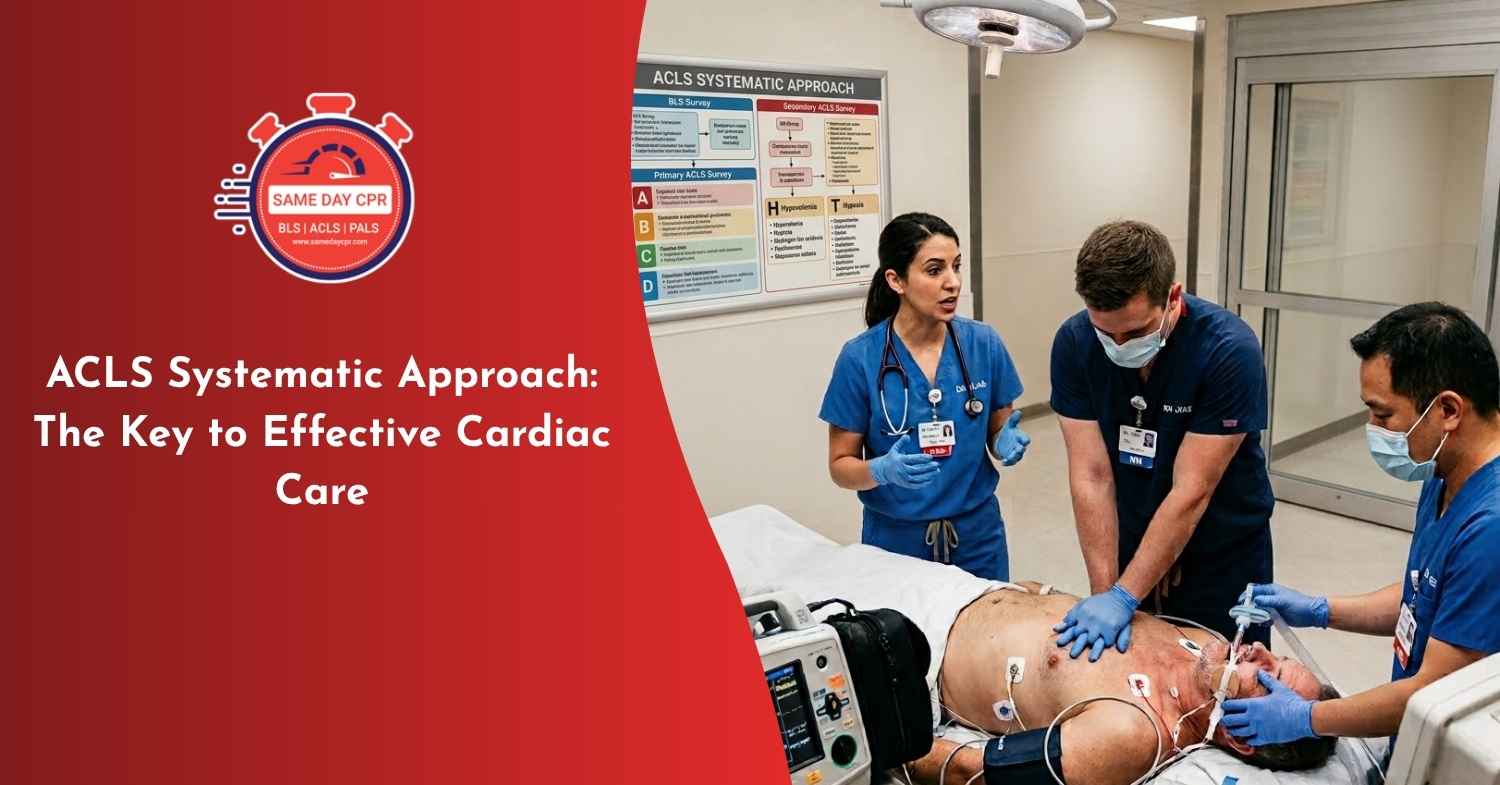
Because a child’s condition can deteriorate quickly, providers learn to follow a systematic approach to assess the patient, identify potential causes, and initiate appropriate treatment.
Another important component of PALS is team-based resuscitation. Participants learn how to prioritize treatment, communicate clearly, assign responsibilities, and coordinate their actions with other members of the healthcare team. These skills can support consistent and efficient care during stressful pediatric emergencies.
PALS vs. BLS and CPR
PALS is more advanced and specifically focused on pediatric emergencies than general CPR or basic life support (BLS) training.
- CPR (Cardiopulmonary Resuscitation): Teaches fundamental lifesaving techniques used when a person is not breathing normally or has no effective pulse.
- BLS (Basic Life Support): Provides healthcare providers with foundational skills for recognizing cardiac arrest, performing high-quality CPR, and using an AED when appropriate.
- PALS (Pediatric Advanced Life Support): Builds on foundational life-support skills and focuses on assessing and managing serious emergencies in infants and children, including respiratory failure, shock, and cardiac arrest.
In simple terms, CPR and BLS provide essential life-support skills, while PALS adds specialized knowledge and advanced approaches for managing critically ill or injured pediatric patients.
What Does PALS Training Cover?
PALS training combines clinical knowledge, practical skills, structured assessment, the PALS Algorithm, and team-based response. The goal is to prepare healthcare professionals to identify serious problems early, follow a systematic approach to pediatric emergencies, and provide appropriate and timely care during critical situations.
Pediatric Emergency Assessment
PALS teaches providers to systematically assess critically ill infants and children, recognize deterioration, evaluate breathing and circulation, identify immediate threats, and prioritize interventions.
Pediatric Respiratory Emergencies
PALS covers the recognition and management of respiratory distress and failure, including airway management, oxygenation, ventilation, and escalation of care.
Pediatric Cardiac Arrest and CPR
PALS reinforces high-quality CPR for infants and children and prepares providers to recognize reversible causes and deliver appropriate resuscitation interventions.
Recognition and Management of Shock
PALS helps providers recognize poor perfusion and understand initial management strategies for pediatric shock caused by various conditions.
Pediatric Cardiac Rhythms
Participants learn to recognize important pediatric cardiac rhythms and determine when advanced resuscitation interventions may be necessary based on the rhythm and clinical condition.
Team Dynamics and Communication
PALS emphasizes clear communication, leadership, role assignment, and coordinated decision-making during high-pressure pediatric emergencies.
Simulation and Scenario-Based Practice
PALS courses often use realistic scenarios to help participants practice assessment, interventions, communication, and teamwork in emergencies.
Overall, PALS goes beyond pediatric CPR by providing a structured approach to recognizing and managing serious respiratory, circulatory, and cardiac emergencies in infants and children.
Who Needs PALS Certification?
PALS certification is primarily intended for healthcare professionals who may respond to pediatric emergencies, cardiopulmonary arrest, or critically ill children.
Physicians and Pediatric Healthcare Providers
PALS training is valuable for pediatricians, emergency physicians, hospitalists, and other healthcare providers who care for children or may respond to pediatric emergencies.
Nurses and Advanced Practice Providers
Nurses, nurse practitioners, and advanced practice providers working with pediatric patients may need PALS certification, particularly in emergency, intensive-care, and pediatric settings.
Understanding why PALS certification is important for ER nurses can also help clarify how this credential prepares clinicians to recognize and respond quickly to life-threatening pediatric emergencies.
Emergency and Critical-Care Professionals
Professionals in emergency departments, PICUs, and critical-care settings may encounter pediatric emergencies requiring rapid assessment and intervention. PALS training provides a structured approach to these situations.
Paramedics and Emergency Medical Personnel
Paramedics and other emergency medical personnel may need PALS certification when responding to pediatric emergencies. Training helps them recognize deterioration and provide timely initial care.
Who Should Consider PALS Certification?
PALS may be particularly relevant to professionals who:
- Regularly care for infants and children.
- Work in emergency or critical-care environments.
- May participate in pediatric resuscitation.
- Are part of a hospital or emergency response team.
- Need pediatric advanced life-support credentials for their position.
PALS certification requirements vary by employer, professional role, healthcare organization, and clinical setting. Some positions require current certification, while others may recommend it. Healthcare professionals should check with their employer, licensing body, or certification provider for specific requirements.
Why Is PALS Certification Important?
PALS certification is important because pediatric emergencies can worsen quickly. Training helps healthcare professionals recognize deterioration, prioritize interventions, and work effectively as a team during serious emergencies.
Helps Professionals Recognize Pediatric Emergencies Early
PALS helps providers identify early warning signs of deterioration, including changes in breathing, circulation, behavior, and responsiveness. Early recognition of conditions such as respiratory failure and shock can support timely intervention and may help prevent cardiac arrest.
Builds Pediatric Emergency Response Skills
PALS provides structured training for managing pediatric emergencies, including respiratory problems, shock, cardiac arrest, and resuscitation. It helps professionals apply an organized approach when rapid decisions are required.
Improves Team-Based Resuscitation
PALS emphasizes communication, leadership, teamwork, and clearly defined roles during emergencies. Effective coordination helps healthcare teams communicate, perform critical interventions, and reassess patients efficiently.
Supports Confidence in High-Stress Situations
PALS training and simulation provide practice in responding to pediatric emergencies. This can improve familiarity and confidence during high-pressure situations.
However, certification does not replace clinical experience, professional judgment, or ongoing education.
Helps Meet Workplace or Professional Requirements
Some healthcare positions require current PALS certification, particularly in hospitals, emergency departments, pediatric units, and intensive-care settings. Requirements vary by employer, role, and clinical setting, so professionals should verify current requirements with their employer or relevant organization.
Overall, PALS certification provides specialized preparation for pediatric emergencies. It supports early recognition, structured intervention, effective communication, and coordinated team-based care for critically ill infants and children.
What Is the PALS Certification Process?
The PALS certification process is structured to help healthcare professionals develop the knowledge and hands-on skills needed to respond effectively to pediatric emergencies. The process typically includes the following steps:
1. Choose and Register for a PALS Course
Begin by reviewing the PALS course requirements, format, available training options, and locations. Choose the course that best matches your certification needs and schedule, then proceed with registration.
2. Complete the Required Online Coursework
Before attending the hands-on portion, complete the required online PALS coursework. This portion covers essential concepts such as pediatric assessment, recognition of life-threatening conditions, and appropriate emergency interventions.
Completing the online work prepares you for the practical skills session.
3. Complete the In-Person Skills Session
After completing the online coursework, attend the required in-person skills session at CPR Verification Station, where you can demonstrate the techniques covered in the coursework.
With AHA Voice Assistant Manikin (VAM) guidance, you’ll practice pediatric resuscitation skills and work through emergency scenarios to demonstrate competency.
4. Receive Your PALS Certification
After completing the required coursework and skills evaluation, you receive your PALS certification or e-Card. The certification demonstrates that you have completed the required training and can apply PALS principles when responding to pediatric emergencies.
How Long Does PALS Certification Last?
The American Heart Association (AHA) PALS certification is generally valid for two years. After completing the PALS course, participants receive an AHA PALS Course Completion Card, which remains valid through the end of the expiration month shown on the card or eCard.
It is important to renew your certification before it expires, especially if PALS credentials are required by your employer or professional organization. Because renewal requirements may vary, check your current card and confirm requirements with your employer or AHA Training Center.
Is PALS Certification Worth It?
Yes. PALS certification can be highly valuable for professionals who care for infants and children, especially those working in emergency departments, intensive care units, pediatric units, ambulances, and similar settings.
Its main benefit is preparedness. The course teaches healthcare professionals to recognize and manage serious conditions through a structured, evidence-based approach. It reinforces essential skills such as pediatric assessment, airway and breathing management, shock recognition, and coordinated resuscitation. For healthcare professionals who want a broader overview of the certification, a PALS certification guide for healthcare providers can provide additional information about the training and certification process.
PALS also supports effective teamwork. When healthcare staff follow the same protocols and terminology, they can communicate and coordinate more efficiently during high-stress situations.
For some healthcare roles, current certification may be required or preferred by employers, including hospitals and emergency medical services.
However, certification should complement—not replace—clinical experience, regular skills practice, simulation, and continuing education. Guidelines can change, making ongoing learning important.
Ultimately, PALS certification is worthwhile when it improves a professional’s ability to respond confidently and effectively to critical situations involving children.
Strengthening Pediatric Emergency Response Skills Through PALS Certification
In summary, PALS certification gives healthcare professionals the knowledge, skills, and confidence they need to respond to serious emergencies involving infants and children. By focusing on early assessment, timely treatment, effective communication, and teamwork, PALS training helps providers stay prepared when every moment matters. It also supports professionals in meeting workplace requirements and maintaining their ability to provide safe, organized care. While certification does not replace experience or ongoing education, it provides a strong foundation for handling pediatric emergencies with greater confidence. For anyone who regularly cares for children, PALS can be a valuable step toward being better prepared when a critical situation arises.