


Learning Basic Life Support skills can mean the difference between life and death. BLS certification teaches you how to respond fast when someone’s heart stops, when breathing fails, or when a child needs urgent care. These are skills that save lives, and every healthcare worker should have them.
Nurses, doctors, medical assistants, dental hygienists, and first responders all need BLS certification to work safely and legally in their roles. Employers across Sheepshead Bay, Brooklyn Medical Services of NY PLLC, and Metropolitan Medical Center require it, and many positions will not hire candidates without it.
The good news is that you do not have to travel far to get trained. Brooklyn has several local training centers that offer flexible schedules, hands-on practice, and recognized certification.
This guide walks you through everything you need to know about BLS certification in Brooklyn, NY. You will learn what the course covers, who should sign up, what skills you will practice, and how to keep your certification current. Whether you are starting fresh or renewing, this guide gives you a clear path forward.
What Is BLS Certification?
BLS certification stands for Basic Life Support certification. It proves that you know how to help someone during a life-threatening emergency. When you earn this credential, you learn how to perform CPR, use an AED, and clear a blocked airway in adults, children, and infants.
The American Heart Association and other recognized organizations offer this training. A certified provider can step in quickly and keep a person stable until emergency responders arrive. Healthcare workers, first responders, and many other professionals need this certification to meet workplace and licensing requirements.
Who Is Required to Hold BLS
BLS is a lifesaving skill that helps people respond to emergencies like cardiac arrest or choking. Many jobs and roles require this training because it can save lives in critical moments.
- Doctors need BLS because they often treat patients in emergencies. They use these skills to respond quickly when a patient’s heart or breathing stops.
- Nurses must hold BLS certification since they care for patients in hospitals and clinics. They rely on this training to act fast during life-threatening events.
- Emergency medical technicians need BLS because they are first responders at accident scenes. They use these skills to stabilize patients before reaching the hospital.
- Dentists and their teams require BLS because medical emergencies can happen during dental procedures. They use these skills to protect patients until further medical help arrives.
- Lifeguards must have BLS training because they watch over people in pools and on beaches. They use these skills to respond immediately if someone is drowning or in distress.
Why Brooklyn-Area Employers Require It
Brooklyn-area healthcare employers commonly require Basic Life Support (BLS) certification for clinical staff who may need to respond to life-threatening emergencies. Hospitals, outpatient centers, and private medical practices across the borough expect employees in emergency departments, inpatient units, and pre-hospital care roles to be prepared to act immediately if a patient stops breathing or experiences cardiac arrest.
This requirement is driven by widely adopted healthcare standards, including American Heart Association (AHA) guidelines and institutional credentialing policies used by hospitals and healthcare systems in New York. As a result, many job postings in Brooklyn list BLS certification as a prerequisite for hiring or continued employment, and expired certification can delay onboarding or affect clinical privileges.
Ultimately, BLS certification ensures that healthcare workers are prepared to deliver immediate, life-saving care when time is critical.
How BLS Differs From ACLS
BLS and ACLS both focus on emergency care, but they serve different purposes and target different audiences.
BLS stands for Basic Life Support, and it covers the foundational skills that every member of a healthcare team should know. The training includes CPR, AED use, and airway management techniques that apply to adults, children, and infants. These core skills prepare a wide range of professionals to respond quickly and confidently during emergencies. Nurses, medical assistants, dental staff, and first responders all rely on BLS training to do their jobs safely. Because the course focuses on practical, hands-on techniques, learners can walk away feeling ready to act when it matters most.
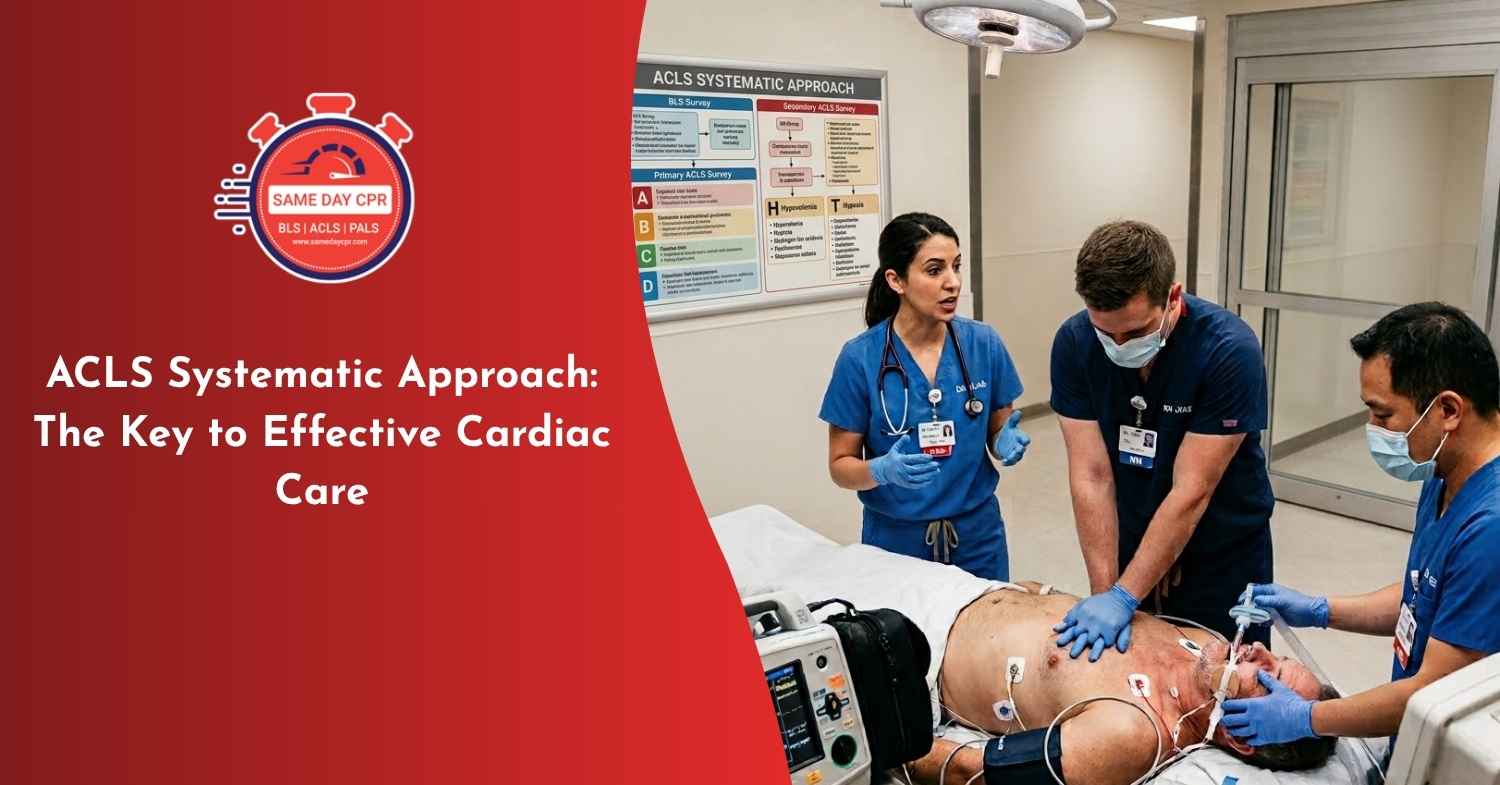
ACLS stands for Advanced Cardiovascular Life Support. It builds on BLS and goes much deeper. Doctors, nurses, and paramedics use ACLS skills to manage complex cardiac events, read heart rhythms, and administer medications during emergencies.
Think of BLS as the essential first step and ACLS as the advanced level. Most healthcare professionals need BLS before they can pursue ACLS training.
What the BLS Curriculum Covers
The BLS curriculum teaches you how to respond quickly when someone’s life is in danger. It builds practical skills so you can act with confidence during breathing or heart emergencies.
Core Skills
- Recognizing cardiac arrest, respiratory arrest, and foreign-body airway obstruction
- High-quality CPR for adults, children, and infants
- Use of an AED (Automated External Defibrillator)
- Relief of choking in conscious and unconscious victims
CPR Techniques
- Proper hand placement, compression depth, and rate (100–120 compressions/min)
- Rescue breathing and correct compression-to-ventilation ratios (30:2 for adults)
- Two-rescuer CPR and team dynamics
- CPR with an advanced airway in place
AED Use
- When and how to attach and operate an AED
- Minimizing interruptions to chest compressions
- Special considerations (water, implanted devices, medication patches)
Special Populations
- Infant and child CPR differences
- Pregnancy considerations
- Opioid-associated emergencies (in some updated curricula)
Team & System Concepts
- Chain of Survival (early recognition, activation, CPR, defibrillation, advanced care)
- Roles within a resuscitation team
- Effective communication during emergencies
BLS Initial Certification vs. Renewal
The AHA HeartCode BLS program uses a blended learning approach that combines self-paced online study with an in-person skills evaluation. Although both the initial certification and the renewal result in the same credential, they vary in their requirements, course length, and amount of preparation involved.
| Feature | Initial Certification | Renewal |
| Purpose | For first-time learners or those without a current BLS card | For providers renewing an existing valid or recently expired BLS card |
| Content Coverage | Full course: CPR/AED for adults, children, infants + choking + team response | Review of the same core skills with emphasis on updates and practice |
| Certification Validity | 2 years (AHA standard) | 2 years (same as initial certification) |
| Cost | Usually higher | Usually slightly lower than the initial course |
| Best For | New healthcare workers, students, and first-time certification | Nurses, doctors, EMTs, and healthcare workers maintain licensure |
Course Formats Available in Brooklyn, NY
When people first look into getting BLS certified, a common and practical question comes up: What is the course format like? The good news is that in the Brooklyn area, there are several options, and the format you choose can significantly influence how confident and prepared you feel on exam day.
Blended Learning: HeartCode BLS
The American Heart Association’s HeartCode BLS course is divided into two main components:
Part 1: Online HeartCode BLS
This portion of the course is a self-paced online module known as HeartCode BLS, which must be completed before attending the hands-on skills session. It covers essential Basic Life Support concepts, including high-quality CPR techniques, use of an automated external defibrillator (AED), team dynamics, and core AHA BLS algorithms. The flexible format allows learners to complete the training at their own pace before progressing to an in-person skills assessment.
Part 2: In-Person BLS Skills Session
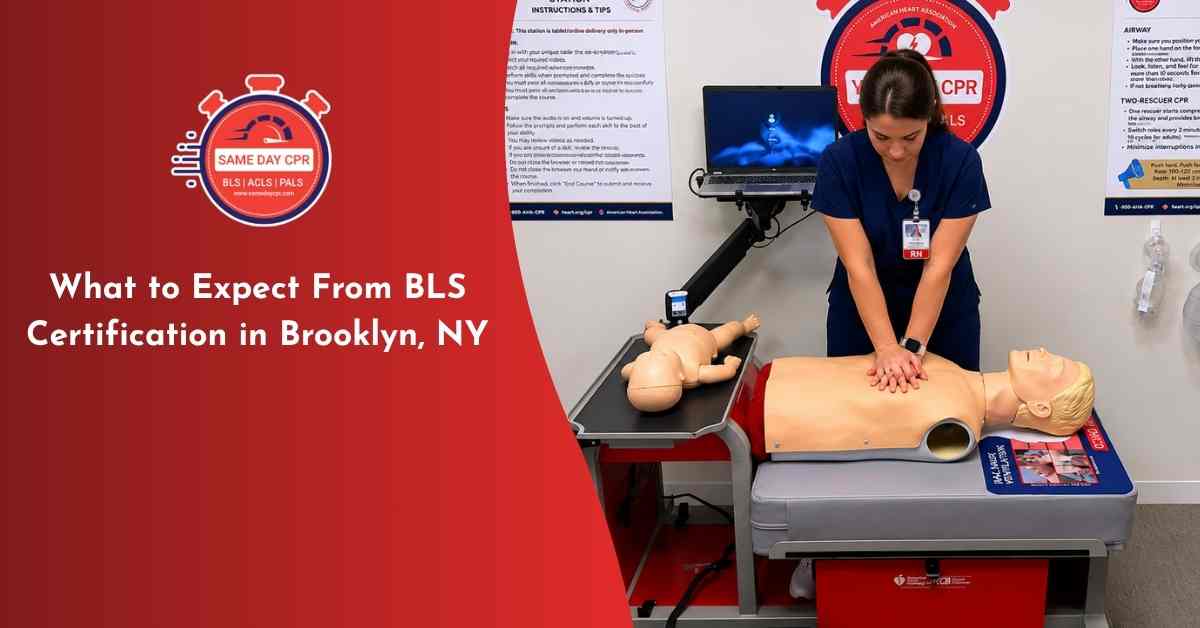
The second component of the course is a brief, in-person skills session. During this session, participants demonstrate required CPR and Basic Life Support (BLS) techniques using an AHA Voice-Assisted Manikin (VAM), which provides real-time feedback and guidance throughout the assessment. This hands-on evaluation focuses on proper technique, timing, and adherence to AHA guidelines for high-quality CPR. Successful completion of this skills check is required to earn BLS certification.
How to Choose a BLS Provider in Brooklyn, NY
Selecting a BLS provider in Brooklyn, New York, can be straightforward once you understand what to consider. You can find reliable training programs that fit both your schedule and preferred learning approach.
Check AHA Certification Requirements
When selecting a BLS provider, ensure the course is officially approved by the American Heart Association. The training center should provide a valid AHA BLS provider card after you complete both the online coursework and the in-person skills session. This ensures you meet hospital and employer requirements without complications.
Choose How You Want to Learn
You can choose a blended learning option that combines online coursework with an in-person skills assessment. This format is often more flexible, allowing you to learn at your own pace before completing the hands-on session.
Check the Requirements
Before enrolling, review the requirements for what you need to bring, such as proof of completion of Part 1 (online coursework). BLS programs also require you to understand basic AED use, high-quality CPR, and emergency algorithms for adults, children, and infants, as well as conditions such as cardiac arrest, choking, and respiratory arrest.
See If Your Employer Will Cover the Cost
Many hospitals and healthcare employers in the Brooklyn area may cover the cost of BLS training or reimburse you for the fee. It’s worth checking with your supervisor or HR department before enrolling so you can take advantage of potential savings or approved coverage.
Cost of BLS Certification in Brooklyn, NY
The price of BLS certification in Brooklyn depends on the course format you select.
BLS Online + Skills – $120
This option covers the theory portion completed online at your own convenience, followed by an in-person skills session for hands-on training and evaluation. It is a full course developed for first-time learners or individuals who prefer a complete review before the practical assessment.
BLS Skills Only – $90
This option includes only the in-person skills practice and evaluation. It is ideal for renewal candidates who are already familiar with the material and simply need to complete the skills check to renew their certification.
How to Find and Register for a BLS Training Course in Brooklyn, NY
In Brooklyn, NY, you can enroll in a BLS certification course through Same Day CPR. Earning your certification with us is simple and helps you build confidence in life-saving skills while learning at your own pace.
Step 1: Choose a Course and Secure Your Enrollment
Go to the website, pick the BLS course that fits your schedule and requirements, and register for a preferred date and time. Your seat is confirmed once you complete registration.
Step 2: Finish the Online Learning Component
Begin with the online coursework. It includes key BLS concepts like AED operation, high-quality CPR, and emergency response guidelines for adults, children, and infants, along with situations such as choking and cardiac or respiratory arrest. This section lets you study at your own pace.
Step 3: Participate in the Hands-On Skills Session
Attend the in-person training session at the Brooklyn location in New York. Here, you’ll practice real-life scenarios using AHA Voice-Assisted Manikin technology, review BLS techniques, and get feedback to build confidence and proficiency.
Step 4: Finish the Course and Get Certified
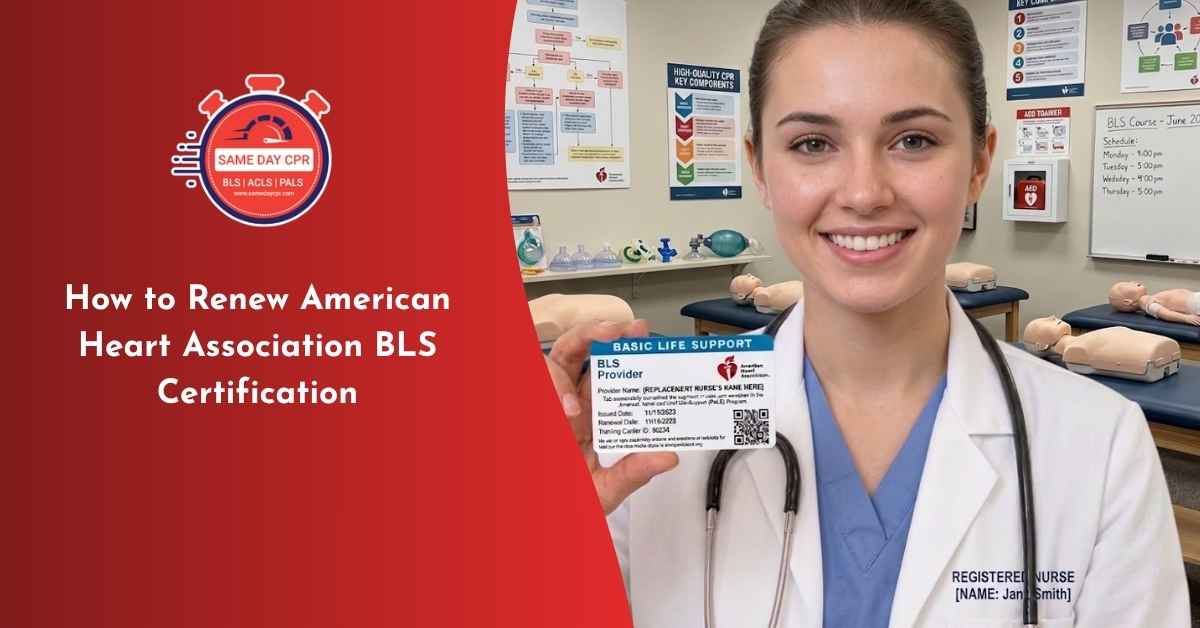
Once you complete the skills assessment, you will be awarded your official AHA BLS certification card, indicating you are prepared to apply your training in an emergency or clinical situation.
BLS Certification Validity and Expiration
BLS certification issued by the AHA is valid for a limited period and must be renewed regularly to remain active.
Validity Period
- BLS certification is valid for two years from the date of completion listed on the provider card.
- This timeframe is commonly followed by a major organization like AHA.
- Once the certification expires, it is generally no longer recognized for clinical practice or workplace requirements that require current BLS status.
Renewal Process
As the expiration date approaches, individuals can either:
- Enroll in a BLS renewal course, which is often shorter than the initial certification course, or
- Retake the full BLS provider course if the certification has already lapsed.
Key Points
- Many healthcare employers require uninterrupted certification, meaning there should be no lapse between expiration and renewal.
- Some organizations may offer a brief grace period, but this varies by policy.
- Additionally, certifications completed entirely online without a practical skills assessment are frequently not accepted by employers.
Learn BLS and Be Ready When It Matters Most
In summary, BLS certification in Brooklyn gives you more than a credential; it prepares you to act with confidence when someone’s life is on the line. You learn practical skills that help you respond quickly in emergencies and support patients until advanced help arrives. In a busy healthcare setting, these abilities make you a reliable part of any team and meet the expectations of local employers. With flexible training options available in Brooklyn, you can complete your course in a way that fits your schedule and still gain hands-on experience. Staying certified also keeps your knowledge fresh, so you are always ready to step in when it matters most.