


Healthcare emergencies require rapid decision-making, teamwork, and evidence-based interventions, making advanced life support training essential for healthcare providers. Two key AHA (American Heart Association) certifications—PALS (Pediatric Advanced Life Support) and ACLS (Advanced Cardiovascular Life Support)—prepare clinicians to manage life-threatening emergencies in different patient populations.
Understanding the difference between PALS and ACLS helps healthcare professionals choose the right certification based on their clinical role, whether they care for children, adults, or both. It also supports workplace compliance and career advancement.
This guide compares PALS and ACLS, including their purpose, patient population, core skills, treatment algorithms, certification requirements, renewal process, and ideal candidates to help you determine which certification best fits your practice.
What is PALS?
PALS (Pediatric Advanced Life Support) is an advanced emergency training program for healthcare providers that teaches how to recognize and manage life-threatening conditions in infants and children. It focuses on early identification and treatment of respiratory distress/failure, shock, and cardiac arrest, since pediatric arrests often result from untreated breathing or circulation problems.
PALS is for clinicians involved in pediatric emergency care (e.g., doctors, nurses, paramedics) and emphasizes:
- Pediatric assessment: Perform systematic evaluations using the Pediatric Assessment Triangle (PAT) to quickly determine the severity of a child’s condition.
- Airway management: Assess and manage pediatric airways using ventilation techniques, oxygen therapy, and advanced airway interventions.
- Cardiac arrest management: Apply pediatric resuscitation algorithms, perform high-quality CPR, use defibrillation when indicated, and administer appropriate medications.
- Shock recognition and treatment: Identify hypovolemic, distributive, cardiogenic, and obstructive shock, and initiate prompt, evidence-based treatment.
- Team-based resuscitation: Strengthen communication, leadership, and teamwork to deliver coordinated, high-quality care during pediatric emergencies.
Through hands-on simulation and scenario-based training, PALS prepares healthcare providers to respond confidently and effectively, improving survival and recovery for critically ill children.
What is ACLS?
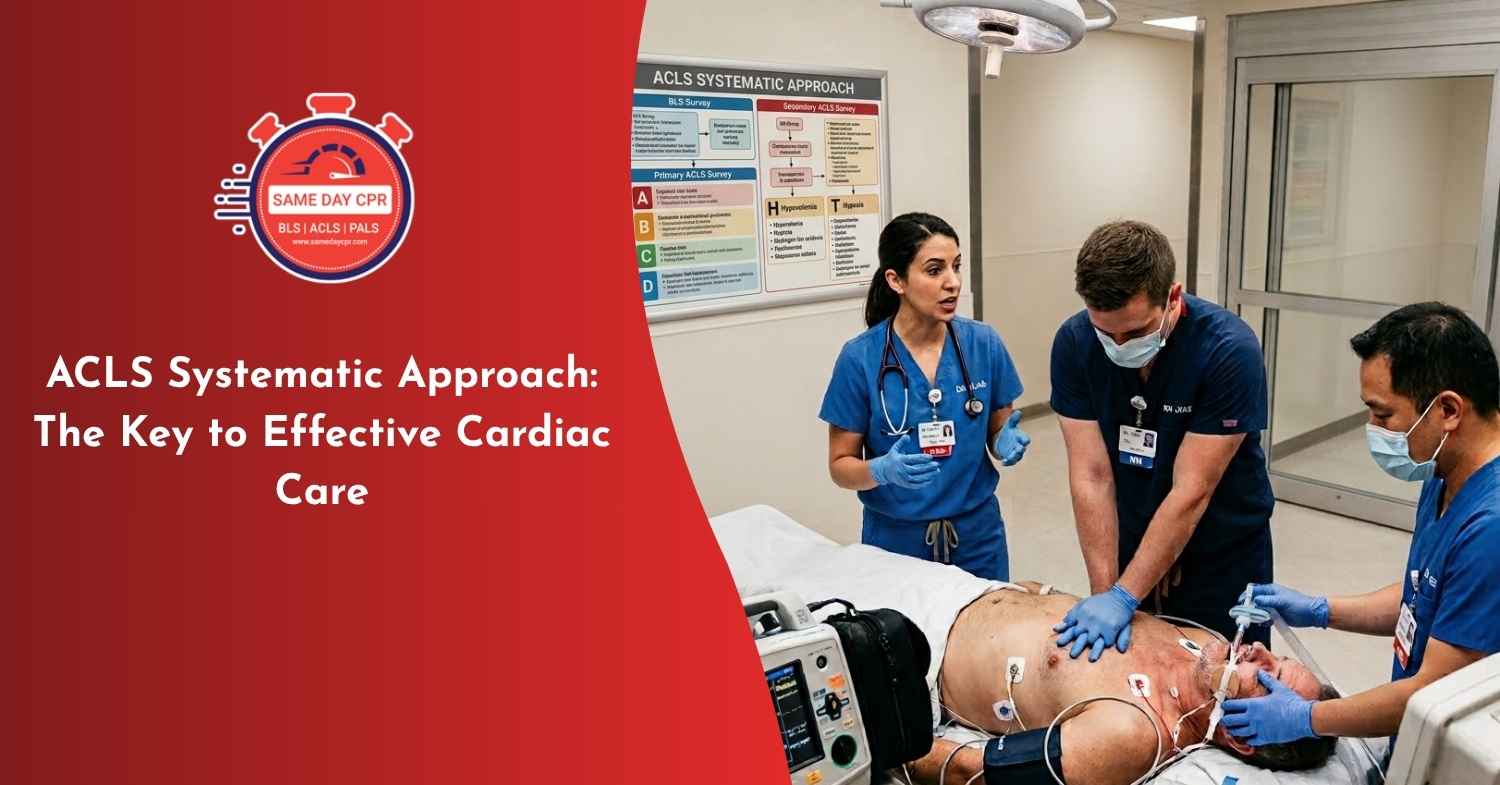
ACLS (Advanced Cardiovascular Life Support) is an advanced training program for healthcare professionals who manage life-threatening cardiovascular and respiratory emergencies in adults. It focuses on improving survival in conditions like cardiac arrest, stroke, and acute coronary syndromes through early recognition and evidence-based treatment.
ACLS is for clinicians in emergency and critical care settings (e.g., physicians, nurses, paramedics) and emphasizes:
- Adult cardiac emergencies: Manage cardiac arrest using ACLS algorithms, high-quality CPR, defibrillation, and post-resuscitation care.
- Stroke management: Identify acute ischemic stroke and initiate rapid assessment and treatment to reduce neurological damage.
- Acute coronary syndromes: Recognize and manage conditions such as myocardial infarction and unstable angina, and initiate appropriate interventions.
- Airway management: Apply advanced airway techniques, oxygenation, and ventilation support for critically ill patients.
- ECG rhythm recognition: Interpret cardiac rhythms to guide treatment, including shockable and non-shockable rhythms.
- Resuscitation pharmacology: Administer key emergency medications such as epinephrine and amiodarone according to current ACLS guidelines.
Overall, ACLS improves outcomes by training providers to respond quickly and effectively to adult life-threatening emergencies.
PALS vs ACLS: Key Differences
While both PALS and ACLS are advanced resuscitation certifications built to improve patient survival in emergencies, they differ significantly in terms of patient population, clinical approach, and treatment priorities.
Target Patient Population
The most fundamental difference between PALS and ACLS is the age group they address. PALS focuses exclusively on infants, children, and adolescents, while ACLS is for adult patients experiencing cardiovascular or respiratory emergencies. This distinction influences every aspect of assessment and treatment in each course.
Medical Emergencies Covered
PALS primarily addresses pediatric conditions such as respiratory distress, respiratory failure, shock, and pediatric cardiac arrest, which are often triggered by respiratory or circulatory problems. In contrast, ACLS focuses on adult emergencies such as cardiac arrest, acute coronary syndromes, stroke, and life-threatening arrhythmias, which are more commonly associated with underlying cardiovascular disease.
Assessment Approach
PALS uses the Pediatric Assessment Triangle (PAT) and emphasizes early recognition of subtle signs of deterioration in children, such as changes in breathing, circulation, and appearance. ACLS, on the other hand, follows a more adult-oriented structured approach like ABCDE (Airway, Breathing, Circulation, Disability, Exposure) combined with ECG-based evaluation to guide interventions.
Algorithms and Protocols
Both certifications rely on standardized algorithms, but they are tailored to different populations. PALS algorithms focus on pediatric resuscitation pathways, including weight-based decision-making, while ACLS algorithms are centered around adult cardiac arrest rhythms, defibrillation strategies, and post-cardiac arrest care.
Medications and Equipment
In PALS, medication dosing is typically weight-based, requiring careful calculation for pediatric patients to avoid dosing errors. ACLS uses standard adult dosing protocols, with a stronger emphasis on cardiovascular pharmacology during resuscitation.
Training Scenarios
PALS training scenarios simulate pediatric emergencies such as respiratory failure or septic shock in children, while ACLS scenarios focus on adult emergencies like myocardial infarction, stroke, or sudden cardiac arrest in hospital or prehospital settings.
Overall, while both courses aim to improve survival during critical events, PALS is pediatric-focused and prevention-oriented, whereas ACLS is adult-focused and heavily centered on cardiovascular emergency management.
PALS vs ACLS Comparison Table
The table below highlights the key differences between PALS and ACLS to help you quickly understand how each course is structured and applied in clinical practice.
| Feature | PALS | ACLS |
|---|---|---|
| Full Form | Pediatric Advanced Life Support | Advanced Cardiovascular Life Support |
| Patient Group | Infants & Children | Adults |
| Primary Focus | Pediatric emergencies | Adult cardiovascular emergencies |
| Common Conditions | Respiratory distress, shock, cardiac arrest | Cardiac arrest, stroke, acute coronary syndromes |
| Medication Dosing | Weight-based dosing | Standard adult dosing |
| Assessment Method | Pediatric Assessment Triangle (PAT) | ABCDE approach with ECG interpretation |
| Typical Learners | Pediatric healthcare providers | Emergency and critical care providers |
This comparison makes it clear that while both certifications focus on resuscitation and emergency care, their application differs significantly based on patient age, clinical presentation, and treatment protocols.
Who should take PALS?
The PALS course is for healthcare professionals who care for infants, children, and adolescents, especially in emergency or critical care settings. It is recommended for:
- Pediatricians: Physicians specializing in the medical care of infants, children, and adolescents, often the primary providers for pediatric emergencies.
- Pediatric nurses: Nurses working in pediatric wards, emergency departments, or outpatient settings where children require acute care.
- Emergency department staff: Physicians, nurses, and support staff who may encounter critically ill children in a fast-paced emergency environment.
- Pediatric ICU clinicians: Healthcare providers working in pediatric intensive care units managing life-threatening conditions in critically ill children.
- Paramedics: Prehospital care providers who respond to emergencies involving infants and children in the field.
- Respiratory therapists: Specialists responsible for airway management and respiratory support in pediatric patients.
- Any healthcare provider caring for critically ill infants and children: This includes clinicians in urgent care centers, transport teams, and hospital-based rapid response units.
PALS is essential for providers who may need to recognize and manage pediatric respiratory emergencies, shock, or cardiac arrest. If you’re considering certification for your role, learn more about who needs PALS certification and whether the course aligns with your clinical responsibilities.
Who should take ACLS?
The ACLS course is for healthcare professionals who manage critically ill adult patients in emergency, critical care, or hospital settings. It is recommended for:
- Emergency physicians: Doctors who diagnose and treat acute, life-threatening conditions in emergency departments.
- Cardiologists: Specialists managing heart conditions such as arrhythmias, myocardial infarction, and heart failure.
- ICU nurses: Nurses working in intensive care units responsible for monitoring and managing unstable adult patients.
- Emergency nurses: Frontline nursing staff who assist in resuscitation and stabilization of adult emergency cases.
- Paramedics: Prehospital providers who deliver advanced life support during cardiac and medical emergencies in the field.
- Hospitalists: Physicians who manage inpatient care, including acute deterioration and emergency response situations.
- Anesthesiologists: Specialists involved in airway management, resuscitation, and perioperative critical care.
- Critical care teams: Multidisciplinary healthcare professionals working in ICUs and emergency response units handling complex adult cases.
ACLS is essential for providers who may need to recognize and manage adult cardiac arrest, stroke, acute coronary syndromes, and other life-threatening cardiovascular emergencies.
Can You Take Both PALS and ACLS?
Yes, many healthcare professionals choose to complete both PALS and ACLS, especially those working in environments where they may encounter both pediatric and adult emergencies. Dual certification ensures broader preparedness and the ability to respond effectively across a wider range of critical situations.
Situations Where Dual Certification Is Beneficial
Dual certification is particularly valuable in settings where patient age groups are mixed or unpredictable. This includes emergency departments, prehospital care, and critical care transport, where clinicians may need to switch rapidly between pediatric and adult resuscitation protocols.
Healthcare Roles That Commonly Require Both
Certain roles frequently require or strongly recommend both certifications, including:
- Emergency department clinicians
- Paramedics and EMS providers
- Flight nurses and transport teams
- Critical care nurses in mixed-age units
- Anesthesia providers involved in perioperative emergencies
Advantages of Holding Both Certifications
Holding both PALS and ACLS provides several professional and clinical advantages:
- Broader clinical readiness: Ability to manage emergencies in both children and adults.
- Improved confidence in mixed settings: Faster decision-making when patient age varies.
- Career flexibility: Increased eligibility for roles in emergency, ICU, and transport medicine.
- Stronger teamwork skills: Better integration into multidisciplinary resuscitation teams.
- Enhanced patient safety: Reduced risk of delays when transitioning between pediatric and adult protocols.
Overall, dual certification strengthens a clinician’s ability to deliver high-quality resuscitation care across the full spectrum of emergency patients.
Certification Requirements
Before enrolling in either PALS or ACLS, healthcare providers should meet the following general requirements.
Prerequisites
No previous PALS or ACLS certification is required. However, participants should understand CPR (Cardiopulmonary Resuscitation), basic airway management, and emergency cardiovascular care before taking either course.
Reviewing the latest AHA Provider Manual and resuscitation algorithms before class is strongly recommended.
BLS Certification
A current Basic Life Support (BLS) certification is strongly recommended and is often required by employers or training centers because both PALS and ACLS build upon core CPR and resuscitation skills.
Clinical Background
These courses are intended for healthcare professionals involved in emergency or critical care. A working knowledge of patient assessment, ECG rhythm recognition, airway management, and emergency medications is helpful, although extensive clinical experience is not required.
How to Get Certified in PALS or ACLS
Getting your AHA HeartCode certification is straightforward.
Step 1: Complete the HeartCode® Online Course
Complete the self-paced online HeartCode® course, which includes instructional videos, interactive learning modules, and knowledge assessments.
Step 2: Complete Your Hands-On Skills Session
Attend an in-person skills session where you demonstrate CPR, airway management, and resuscitation techniques using an AHA Voice-Assisted Manikin under current AHA standards.
Step 3: Receive Your Official AHA eCard
After completing the online and skills portions, you’ll receive your official AHA eCard the same day, providing proof of certification.
Certification Validity and Renewal
Both AHA PALS and ACLS certifications remain valid for two years from the completion date.
How to Renew Your Certification
To maintain certification, healthcare providers should complete a renewal course before expiration.
Renewal typically includes:
- Reviewing updated AHA guidelines
- Completing the cognitive examination
- Demonstrating required hands-on skills or skills verification
Renewing on time ensures your knowledge stays current with the latest evidence-based emergency cardiovascular care recommendations.
If your certification expires, your employer or training provider may require you to complete the full provider course rather than a renewal course.
Choosing the Right Life Support Certification
In summary, choosing between PALS and ACLS ultimately depends on the patients you treat and the emergencies you encounter most often.
PALS prepares healthcare providers to recognize and manage life-threatening emergencies in infants and children, while ACLS focuses on adult cardiovascular, respiratory, and neurological emergencies. Both certifications emphasize rapid assessment, high-quality resuscitation, effective teamwork, and evidence-based treatment.
Healthcare professionals who care for both pediatric and adult patients often benefit from earning both certifications, allowing them to confidently respond across a wider range of emergencies.
Whether you choose PALS, ACLS, or both, maintaining current certification helps improve patient outcomes, supports career advancement, and ensures you’re prepared to deliver high-quality emergency care when time is critical.